

Things were a tad rocky in Yankee-land recently, but light was at the end of the tunnel. Despite what issues were going on, the club would have some reinforcements on pitching. This included the return of Luis Gil. Gil will play a major rotational role with the New York Yankees. Gil has been unlucky with the amount of injury he’s suffered and the amount of mound time lost. He was originally optioned to Triple-A due to his unreadiness for the season.
The Yankees right-hander was recalled on April 11th to make his 2026 season debut against the Tampa Bay Rays. The Yankees really do need Gil in his dominant state. When at his best, he’ll work games and eat valuable innings. The issue so far is that Gil is still trying to find his elite self. He has not had a healthy or consistent on-ramp. Gil’s numbers have looked off so far; where does he need to be?
How Has Luis Gil Presented So Far?
Gil currently holds a 0-1 record so far in two starts and nine innings of work. He also holds a 7.00 ERA, eight hits, seven earned runs, and four home runs. In his first outing against the Rays, Gil picked up a loss, going four total innings. He threw 88 pitches, 50 strikes, 13 first-pitch strikes of 19, along with 18 called strikes, five swinging strikes, 14 foul balls, and 11 in-play strikes. Gil forced five fly-outs and five groundouts.
Gil’s second start was one inning longer, going five innings, allowing five hits, four earned runs, five strikeouts, two walks, and three home runs. Gil forced six fly-outs and four groundouts. The Yankees picked up a walk-off win, and Gil was slotted with a no-decision. Between his two starts, Gil has shown some good traits and some questionable traits. The number one concern would probably be his overall command and control of pitches and of counts.
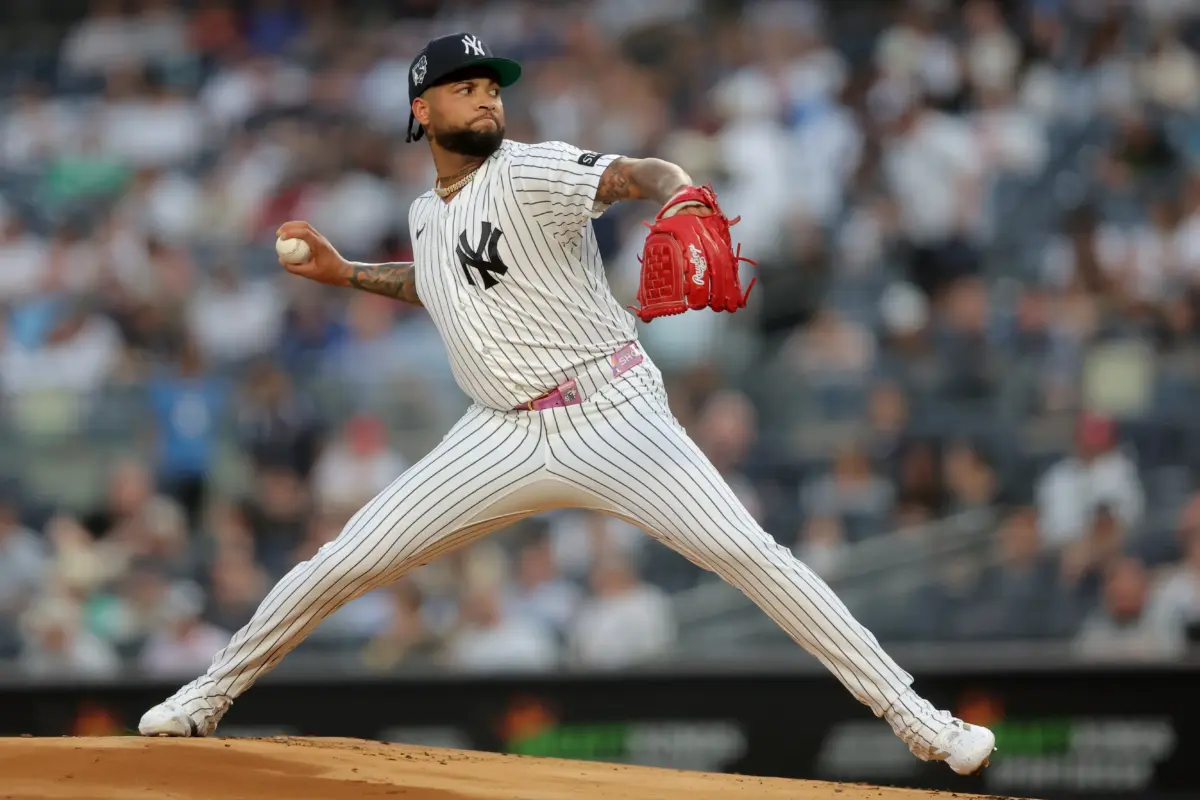
Physically, Gil looks good on the mound. He’s fundamentally sound, and he’s composed. The right-hander repeats his delivery well despite some outing troubles.
Luis Gil’s Analytics To Start 2026
The Yankees starter has been displaying some differences, which are primarily due to his return after not pitching in over a year. Command is the key focus for Gil’s success. He needs to be able to effectively locate his pitch options. Five walks in nine innings is the first statistic that stands out. Gil has a 50% first-pitch strike rate and a 58% strike rate of pitches thrown in games. In Gil’s outing against the Angels, he threw 83 pitches, only throwing 48 strikes.
This equals a 58% strike rate. Gil doesn’t get ahead and stay ahead often. This is an issue, as he’s constantly working from behind in his matchups. This increases his pitch count and forces a hitter’s count. Gil will throw more pitches in the zone, causing more vulnerability. In the third inning of Gil’s outing against the Angels, he let up a home run against Adam Frazier in a three-pitch at-bat.
He worked two four-seam fastballs out of the zone, going down 2-0. In an attempt not to go 3-0, Gil pumped a four-seam almost middle-middle, which led to the long ball. Gil’s fifth inning defined his command struggles. He allowed a leadoff home run on two pitches, one that missed in the zone to Logan O’Hoppe. Gil walked the third batter of the inning on four straight balls and then misplaced his second offering to Mike Trout for a long ball.
So far, he has a 50% hard-hit percentage along with a 14.3% barrel percentage, which is his highest ever. Gil’s velocity has been decent, getting up to 97 mph but averaging 95.6 mph, which is slightly lower than 96.6 mph. Overall, some statistics aren’t good for Gil at the moment, but it’s only been a few starts, and he’s progressing well. A few adjustments within the next few starts, and we’ll start to see improvements.
Main Photo Credit: Brad Penner-Imagn Images