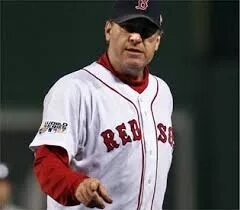

Few pitchers of the modern era have a résumé as powerful—and a legacy as complicated—as Curt Schilling.
On the mound, Schilling built the kind of career that typically leads to a plaque in Cooperstown. Off the mound, however, a series of controversies and public statements created a divide between the former ace and the very voters who decide entry into the National Baseball Hall of Fame and Museum.
The result is one of the most fascinating mysteries in modern baseball history: How does a pitcher this accomplished remain outside the Hall of Fame?
A Hall of Fame Resume on the Field
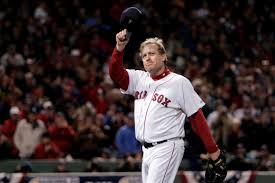
From a purely baseball standpoint, Schilling’s career is difficult to ignore.
Over 20 MLB seasons, he posted:
-
216 career wins
-
3.46 ERA
-
3,116 strikeouts
-
79.5 WAR
-
6 All-Star selections
Those numbers alone place him among some of the most accomplished pitchers of his generation. But Schilling’s reputation was truly forged in October.
Few pitchers in baseball history have performed better under postseason pressure.
In the playoffs, Schilling compiled:
-
11–2 record
-
2.23 ERA
He was a cornerstone of two historic championship runs.
First came the dramatic victory by the Arizona Diamondbacks in the 2001 World Series, where Schilling and teammate Randy Johnson dominated the powerful New York Yankees lineup. The two aces shared World Series MVP honors, cementing one of the greatest pitching duos ever seen in October.
Then came perhaps the most famous moment of Schilling’s career.
During the 2004 American League Championship Series, Schilling pitched for the Boston Red Sox despite a surgically repaired ankle that bled through his sock—creating the legendary “bloody sock” game. Boston completed a historic comeback against the Yankees and went on to win the 2004 World Series, ending an 86-year championship drought.
For many fans, Schilling’s postseason heroics alone seem Hall-worthy.
Yet, the voting story became far more complicated.
The Hall of Fame Voting Near Miss
Players are elected to the Hall of Fame through voting by the Baseball Writers’ Association of America (BBWAA). To gain induction, a candidate must receive 75% of the vote.
Schilling steadily climbed in support during his eligibility window.
His peak came in 2021, when he reached 71.1% of the vote, just a few percentage points short of an election.
Ordinarily, players who reach that level are eventually voted in.
But Schilling’s support suddenly declined in his final year on the ballot.
Why?
The answer lies largely in his off-field controversies.
The Controversies That Shaped His Legacy
Schilling’s candidacy became overshadowed by a series of public statements and social media posts that generated significant backlash.
Over the years, he shared posts that were widely criticized as anti-Muslim, anti-transgender, and politically inflammatory. One particularly controversial Facebook post compared Muslim extremists to Nazis, drawing condemnation across baseball media.
In another incident, Schilling shared a meme widely interpreted as mocking transgender people. The post led to public criticism and damaged his reputation with many voters.
He was also suspended by ESPN in 2016 after sharing that meme and later lost his analyst job with the network.
These controversies mattered because the Hall of Fame ballot includes a “character clause.” Voters are instructed to consider integrity, sportsmanship, and character in addition to playing ability.
Some voters publicly stated that Schilling’s behavior made it impossible for them to support his candidacy.
At the same time, Schilling frequently criticized journalists and members of the baseball media—the same group responsible for Hall voting.
He referred to some writers as “morons” and openly questioned the credibility of the voting process. The relationship between Schilling and the BBWAA became increasingly strained as his candidacy progressed.
A Dramatic End to His Ballot Eligibility

After narrowly missing the election in 2021, Schilling created another headline by asking the Hall of Fame to remove him from the ballot entirely.
Instead, he said he wanted his case evaluated later by a veterans-style committee.
The Hall declined the request, keeping him on the ballot for his final year.
In 2022, his support dropped sharply to 58.6%, ending his BBWAA eligibility.
The Ongoing Debate
Today, Schilling’s legacy remains one of baseball’s most polarizing debates.
Supporters argue that his postseason dominance, durability, and 3,000+ strikeouts clearly meet Hall of Fame standards. Critics counter that the character clause exists precisely for situations like this.
What is undeniable is that Schilling’s career represents a rare collision between historic athletic achievement and deeply divisive public persona.
And until an Era Committee eventually revisits his case, the mystery surrounding Curt Schilling’s Hall of Fame legacy will continue to linger over Cooperstown.