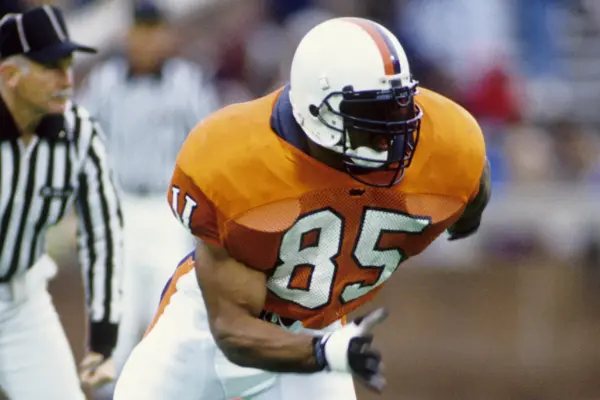
Men’s and women’s Tennis is getting cut in Fayetteville, so that football can keep getting fed. That is the story, and it is bigger than Arkansas.
Arkansas Football Ate Tennis
Arkansas is dropping both men’s and women’s tennis after the 2026 Spring season, citing financial reasons and the changing economics of college sports. The language in the written announcement is soft. There is talk of sustainability, alignment, and difficult decisions. But the hard reality is simple. Money is being pulled out of Olympic sports and pushed toward football. Administrators will not say that directly, yet the timing and the national context make it impossible to ignore. Essentially, Arkansas is playing Hungry Hungry Hippos with its athletics programs.
Big Money Era, Small Sports Pay the Price
College sports are entering a new cash era, with formal revenue sharing to athletes layered on top of name, image, and likeness money. That means real payroll style outflows, and not just scholarships and meal plans. For a Southeastern Conference school, the pressure is not spread evenly across the department. It is concentrated where the TV contracts and donor checks live, in football. When the bill comes due, non-revenue sports sit closest to the chopping block.
In Arkansas, tennis has become the first public casualty of that shift, not because it failed its mission but because it does not fill a stadium on Saturdays in the fall. Hence, why we say Arkansas football ate tennis. Tennis players do not headline media days. They do not drive a billion-dollar broadcast deals. They do not get their jerseys sold in the campus bookstore. In a balance sheet world, that makes them expendable. Both the men’s and women’s teams have had limited success in conference play in recent years, after an investment in upgraded facilities. In a campus community, this is a test of whether a university still believes in broad-based opportunity.
National Stress Test
This is not just an Arkansas story. In fact, it is a national stress test. Every school in a Power Four conference is running the same math. There is a new, massive line on the expense side, direct payments to athletes, and there is no new tier magically appearing to cover the difference. Something has to give. Presidents and athletic directors will insist that football is already lean, that every dollar is justified, that facilities and support staff are essential to maintain competitive standing. The public rarely hears the same urgency when the conversation turns to tennis, swimming, gymnastics, or track.
So tennis goes first. The savings, in relation to a football budget, are small but real. Coaching salaries, travel, equipment, recruiting, and scholarships above the bare minimum can all be zeroed out. That money will not sit in a vault either. It will be absorbed immediately into the engine that runs Saturdays, from keeping staff in place to making sure player revenue shares and retention packages stay competitive with rival programs, to paying the buyouts for fired football coaches. Football is not just a protected asset. It’s the front door, athletically. Furthermore, it is the hungry mouth that must be fed before anyone else is considered.
Show Me How You Feel, Arkansas
The risk is that the public begins to see the game for what it is. For years, college athletics marketed itself as a family, as a campus-wide ecosystem where every sport mattered, where the football success story sat alongside the Olympic athlete who trained in relative anonymity. When a flagship school in a flagship conference starts axing sports, it exposes that myth. It tells athletes and fans that the hierarchy is official now, that there are winners and there are disposable parts.
Recruits notice that. Families notice it. When a program cuts a sport that has existed for decades, it raises questions about stability and values that no glossy recruiting graphic can erase. If tennis can be sacrificed to make the books work, what else is on the table the next time the numbers do not add up? How far will schools go to preserve the image of unbothered football dominance while silently stripping away the rest?
Is College Tennis Gone?
This decision will also echo across the rest of college tennis. When an SEC brand walks away, smaller conferences and less wealthy schools feel the chill. It becomes easier for another administrator, in another state, to say the quiet part out loud in a private meeting. If they did it, we can do it too. One cut becomes precedent. Precedent becomes a trend. A trend becomes a new normal where only the richest and luckiest of the so-called non-revenue sports survive.
The cruelty is that Arkansas will be praised by some insiders as fiscally responsible. There will be talk of leadership and hard choices and the courage to adapt to new realities. But courage would have been standing up and saying that football can survive with less excess, that shared sacrifice means shared sacrifice, not sacrifice at the bottom to protect the top. Instead, an entire group of athletes and coaches is being told that they were always optional.
This is not just about courts in Fayetteville sitting empty where practices used to be. It is about the direction of an entire industry. College sports are moving toward a model where the only sports that are truly safe are those that can be packaged into prime-time television or sold as donor bait. The rest will live on year to year, subject to quiet budget reviews and boardroom conversations that athletes never hear about until the press release hits their phone.
Get Used To It
People around the country should pay attention, even if they do not care about tennis. The same logic used to kill those programs can be used, down the line, on anything that does not directly serve the football machine, including academic support, mental health resources, and community initiatives. Once a department proves it will erase opportunities for one group of students to keep a scoreboard bright for another, the line is gone.
Arkansas, and football did not just eat tennis. It planted a flag in the new landscape, announcing that in the era of athlete payouts and escalating football spending, there is no pretense left about what matters most. The question now is who is next, and how long the public will accept a system that tells some athletes their dreams are priceless and tells others that their dreams have a line item cost and an expiration date.
Main Image: Nelson Chenault-Imagn Images