
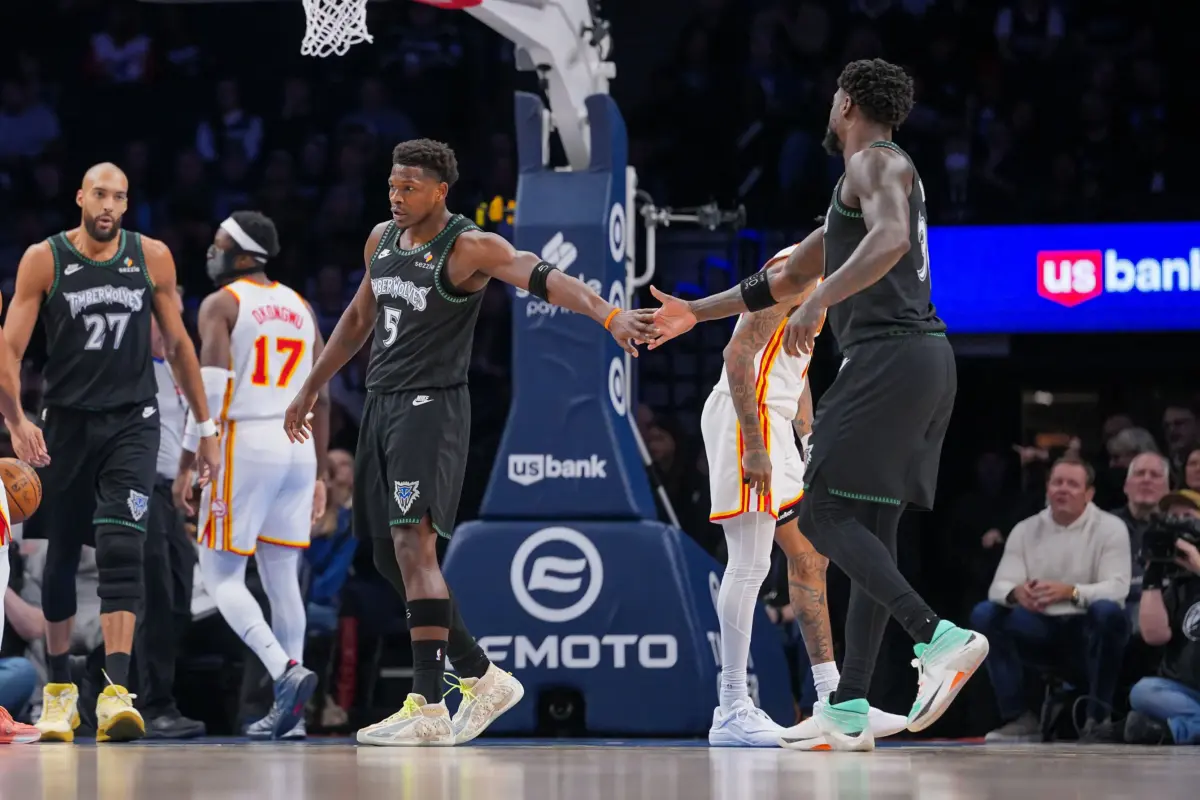

Questions regarding the Minnesota Timberwolves long-term payroll have resurfaced, but recent moves show the organization is firmly committed to its core. With lucrative, multi-year contracts secured for Anthony Edwards, Naz Reid, and Julius Randle, the front office has successfully answered the question of who to keep.
The main challenge now is improving the team’s roster while adhering to the NBA’s strict salary cap rules. With massive salary commitments, including max deals and veteran extensions like those for Rudy Gobert and Jaden McDaniels, the Timberwolves must maneuver to maintain roster flexibility without over-encumbering themselves against the luxury tax or second apron penalties.
The Timberwolves Have Their Core, But Now Comes The Hard Part
Minnesota Has Already Chosen Continuity
Over the past year, it felt like every conversation about the Timberwolves eventually came back to the same question: how long could they afford to keep this group together? With several key players due for significant raises and the NBA’s new financial rules making life harder for high-spending teams, many assumed Minnesota would eventually have to make a difficult choice.
Recent decisions point in the opposite direction. Reid reportedly agreed to a five-year contract worth $125 million, while Randle reportedly signed a three-year deal worth $100 million. Those moves increased Minnesota’s financial commitments rather than reducing them. The organization appears to believe its current foundation remains strong enough to compete in the Western Conference.
The significance goes beyond simply handing out new contracts. For months, there was a real debate about whether Minnesota would eventually have to choose between keeping this group together and creating financial flexibility. Instead, the Timberwolves made their position clear. They believe this core can contend, and they’re willing to pay to keep it intact around Edwards.
Why The Salary Cap Question Persists
The concern among fans is easy to understand. When a team starts handing out big contracts, people naturally wonder how long it can keep everyone together.
Edwards is on a maximum contract, and Gobert is still one of the highest-paid centers in the league. Add in the money committed to McDaniels, Reid, and Randle, and Minnesota has a large chunk of its payroll tied up in its core players. Looking at those numbers, it’s easy to see why some fans worry about the team’s long-term future.
Still, having an expensive roster does not automatically mean a team has to break it apart. If ownership is willing to spend, it can continue paying to keep key players in place.
That is why the real question has shifted. It is no longer about whether Minnesota can keep its core together. The bigger challenge is what happens after that. Once a team’s payroll climbs into apron territory, adding new talent and making upgrades becomes much harder.
That changes the conversation around the Timberwolves. They have already shown they are willing to keep this group intact. Now the focus turns to finding ways to improve the roster while working within the constraints of carrying such an expensive team.
The Hard Part Is Improving The Team
The NBA’s current CBA makes life harder for teams near or above the apron. Trades become more difficult, some roster-building options disappear, and adding outside talent is no longer as easy.
That creates a different problem for Minnesota. The Timberwolves are not trying to keep their core together anymore. By paying Edwards, Randle, Reid, and the rest of their key players, the organization has already made that choice.
The focus now is on finding ways to improve around that group with fewer tools available. That matters because the Timberwolves have already shown they can compete with the NBA’s best teams. Back-to-back Western Conference Finals appearances prove the roster has a great defense, but still needs more offense. The challenge is finding weaknesses and fixing them without the flexibility many other teams still have.
Recent Rumors Offer A Clue
Minnesota’s reported interest in Derrick White, Josh Giddey, and Ayo Dosunmu provides insight into the front office’s thinking. Those players have different skill sets, but they share one important characteristic: each can help with ball handling and offensive creation.
That focus offers a clue about how the Timberwolves view their roster. The players linked to Minnesota all bring some combination of ball handling, playmaking, and backcourt depth. That suggests the front office sees a need for additional offensive creation rather than major changes to the core of the team.
The rumors also indicate that Minnesota’s priority is improving around its existing foundation. Instead of searching for a new star or considering a significant roster overhaul, the Timberwolves appear focused on addressing specific weaknesses that became apparent during recent playoff runs.
The Answer To The Question
So what is the hard part now that the Timberwolves have their core?
The answer is to find ways to improve without sacrificing the continuity they have chosen to preserve or losing the Timberwolves’ identity. Minnesota has committed significant resources to its key players and appears comfortable carrying an expensive roster. The challenge is whether the front office can continue adding useful pieces while operating under increasingly restrictive financial rules.
That task will shape the franchise’s next phase. Keeping the core together was an important decision, but it was only the first step. The harder part is ensuring that a roster built around Edwards continues to improve rather than simply stay the same. As the 2026 offseason unfolds, that is the question that matters most for Minnesota’s championship ambitions, which is why this is the Timberwolves’ biggest offseason since drafting Edwards.
Featured Image: Brad Rempel-Imagn Images