
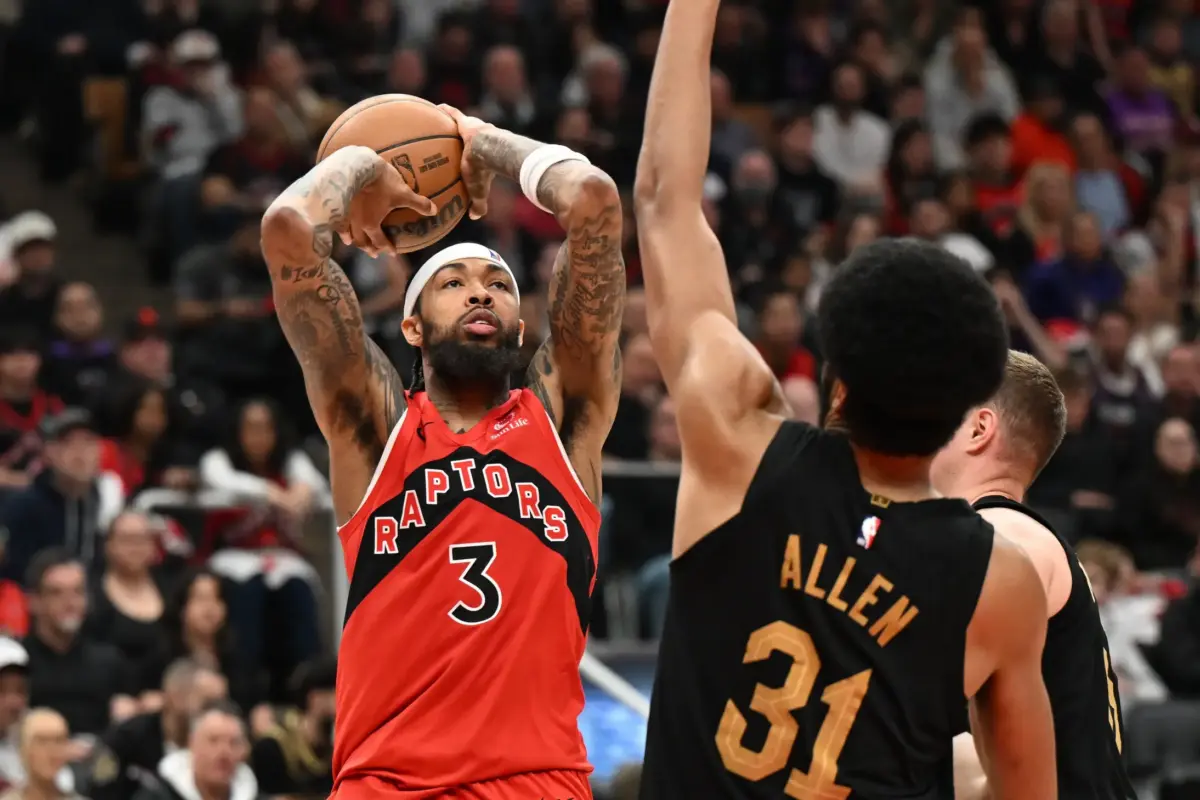

The Toronto Raptors’ offseason has entered a new level of significance.
After exceeding expectations and proving they can compete in the playoffs, the next step is no longer about development alone—it is about direction. Toronto has a young core, a clear centerpiece in Scottie Barnes, and enough talent to take the next leap.
Now comes the difficult part: making the right decisions. This offseason will define whether the Raptors stay on their current trajectory—or accelerate it.
Raptors Offseason Priorities: The Key Decisions Ahead
The Jakob Poeltl Decision
One of the biggest questions for the Raptors’ offseason revolves around Jakob Poeltl.
While he provides size and a traditional interior presence, his impact in the first round against the Cleveland Cavaliers raised serious concerns. He struggled to impose himself physically — particularly on the glass — and at times allowed Jarrett Allen to control the paint and look far more dominant than expected.
For a player in his role, that is a problem.
Poeltl is also on the tail end of a four-year, $78 million contract. That makes this evaluation even more critical. When a big man is not consistently protecting the rim or securing rebounds, it becomes difficult to justify that level of investment—especially in a system that increasingly values mobility and spacing.
Toronto now faces a clear decision. The Raptors can continue to rely on a traditional center who does not consistently impact the glass, or they can explore alternatives that better align with their evolving identity.
This is not just about performance. It is about fit, value, and direction moving forward.
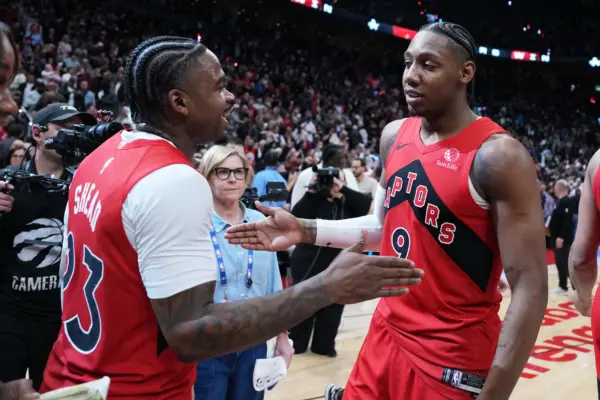
Bringing RJ Barrett Back on the Right Deal
RJ Barrett has been one of the Raptors’ most important players, especially during the playoffs. His physical scoring, confidence, and ability to take big shots elevated the team when it mattered most.
The question is not whether Toronto wants him back. The question is how.
A “home discount” scenario would be ideal. Barrett, as a Canadian player thriving in Toronto, fits both on and off the court. If the Raptors can retain him on a contract that maintains flexibility, it becomes a major win.
Overpaying, however, could limit future moves. This is about balance—rewarding production while protecting the team’s long-term ceiling.
The Gradey Dick Question
Gradey Dick represents another key decision point for the Raptors’ offseason.
His development as a shooter is critical for a team that has sometimes struggled with spacing. When he is confident and consistent, he adds a dimension that Toronto’s offense desperately needs.
But development is not always linear.
The Raptors must evaluate whether Dick is ready to take a larger role or if his inconsistency makes him a potential trade piece in a larger deal. Given the team’s timeline, patience makes sense—but so does realism.
His progression could quietly shape the offense next season.
Re-Signing Sandro Mamukelashvili
Every roster needs depth that fits its identity.
Sandro Mamukelashvili could be one of those pieces. His versatility, energy, and ability to stretch the floor make him a natural fit within Toronto’s system. Bringing him back using part of the mid-level exception would provide valuable depth without compromising flexibility.
These are the types of moves that do not dominate headlines—but often define successful teams.
The Brandon Ingram Question
Perhaps the most complex decision involves Brandon Ingram.
His talent is undeniable, but the playoffs raised legitimate concerns about his fit. Toronto’s offense often looked more fluid without him, relying on movement and shared creation rather than isolation-heavy possessions.
That does not automatically mean he should be moved. But it does mean the Raptors need clarity.
If the goal is to maximize Scottie Barnes, every piece must align with that vision. If Ingram cannot consistently fit within that structure, exploring trade options becomes a realistic path.
What Could a Trade Target Look Like?
If Toronto considers trading Ingram, the focus would likely shift toward a scoring guard.
Jamal Murray represents the ideal archetype. He provides shot creation, perimeter shooting, and the ability to perform in high-pressure moments. He also fits seamlessly next to a player like Barnes, allowing the offense to operate with more balance.
While a deal of that magnitude would depend on multiple factors—particularly what the Denver Nuggets decide to do—it illustrates the type of move Toronto could pursue.
Not just adding talent. Adding the right talent.
A Defining Offseason
The Raptors are no longer in the early stages of a rebuild. Even after a short playoff run, the priority is refinement.
Every decision—from Poeltl’s future to Barrett’s contract, from internal development to potential trades—must align with one goal: maximizing the Barnes-led core.
Because in today’s NBA, progress is not guaranteed. It must be managed.
The Last Word
The biggest priority of the Raptors’ offseason is not just one move. It is making the right combination of moves.
They have the foundation, flexibility and momentum. What they do next will determine whether this team remains promising—or becomes dangerous.
© Dan Hamilton-Imagn Images