

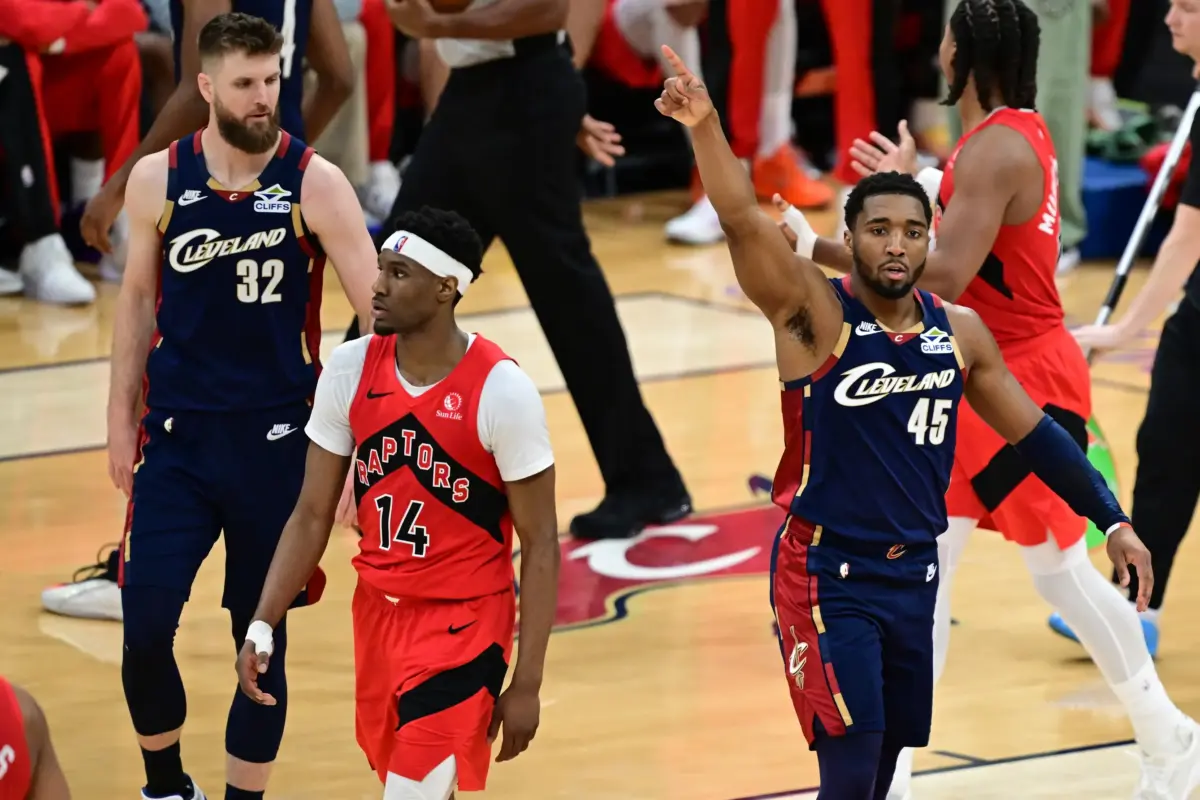

The Toronto Raptors’ Game 2 loss was not defined by a single run or one dominant performance from the Cleveland Cavaliers. Instead, it was a game shaped by recurring issues that continue to limit the team, with turnovers standing out as the most damaging factor.
Even in a competitive matchup, the Raptors struggled to maintain control, and that lack of execution ultimately made the difference.
Turnovers and Missed Opportunities Define Raptors Game 2 Loss
Turnovers Continue to Be a Major Problem
The most noticeable issue throughout the game was Toronto’s inability to take care of the basketball. They finished Game 2 with 22 turnovers.
Possession after possession, the Raptors committed unforced errors that disrupted their offensive rhythm and handed easy opportunities to the Cavaliers. These were not just difficult plays or forced mistakes — many came from poor decision-making, miscommunication, and a lack of composure.
Turnovers are especially costly in games where margins are already tight. Every lost possession removes a scoring opportunity and often turns into points on the other end.
That is exactly what happened Tuesday night.
Instead of building momentum, Toronto repeatedly gave it away. Fast-break points off turnovers allowed the Cavaliers to control the pace and create separation without needing to rely on half-court execution.
Offensive Flow Was Constantly Interrupted
Beyond the raw numbers, the timing of the turnovers made the situation worse. Several came during moments when the Raptors were starting to find a rhythm offensively. Rather than extending runs or cutting into the deficit, the mistakes immediately halted progress.
That inconsistency made it difficult for Toronto to sustain any offensive flow. Ball movement slowed down, players hesitated, and possessions became more predictable.
Players like Scottie Barnes are often tasked with initiating offense, and while he continues to impact the game in multiple ways, the lack of clean possessions around him limits what Toronto can fully generate.
In playoff games, maintaining rhythm is critical, and Toronto’s turnovers prevented them from establishing one.
Lack of Aggression Made Things Worse
Another issue tied to the turnovers was a lack of aggression.
At times, the Raptors appeared hesitant when attacking, opting for extra passes or forcing plays that were not there. This led to turnovers that could have been avoided with more decisive actions. Aggression does not just mean scoring — it also means making quick, confident decisions, which Toronto struggled to do.
Instead of putting pressure on the defense, the Raptors often allowed the Cavaliers to dictate the action.
Execution in Key Moments Was Not Enough
The game also highlighted problems in execution during key stretches. Whenever Toronto had a chance to shift momentum, mistakes followed. Turnovers, missed opportunities, and poor decisions prevented the Raptors from taking control.
These moments are where games are often decided. A single clean stretch could have changed the outcome, but the Raptors were unable to deliver it.
Defensive Effort Could Not Offset Mistakes
While there were moments of solid defensive effort, it was not enough to compensate for the Raptors’ offensive issues.
Turnovers placed additional pressure on the defense, often forcing the Raptors to defend in transition. That is one of the most difficult situations for any team.
Even strong defensive possessions can be undone when a team consistently gives the ball away.
The Bigger Concern Moving Forward
The most concerning part is that these issues are not new. Turnovers and inconsistent execution have appeared in multiple games, and they continue to limit the Raptors ceiling. Against disciplined opponents, those mistakes become even more costly.
In this series between Toronto and Cleveland, where adjustments and margins define outcomes, these details become even more critical.
If Toronto wants to take the next step, improving ball security must become a priority.
Final Thoughts
This loss was not about talent or effort. It was about execution. The Raptors showed they can compete, but until they take better care of the ball and eliminate unnecessary mistakes, results like this will continue.
Fixing the turnover problem will not solve everything, but it is the clearest starting point. Because in games like this, the difference is not always who plays better. Sometimes, it is simply who makes fewer mistakes.
© David Dermer-Imagn Images