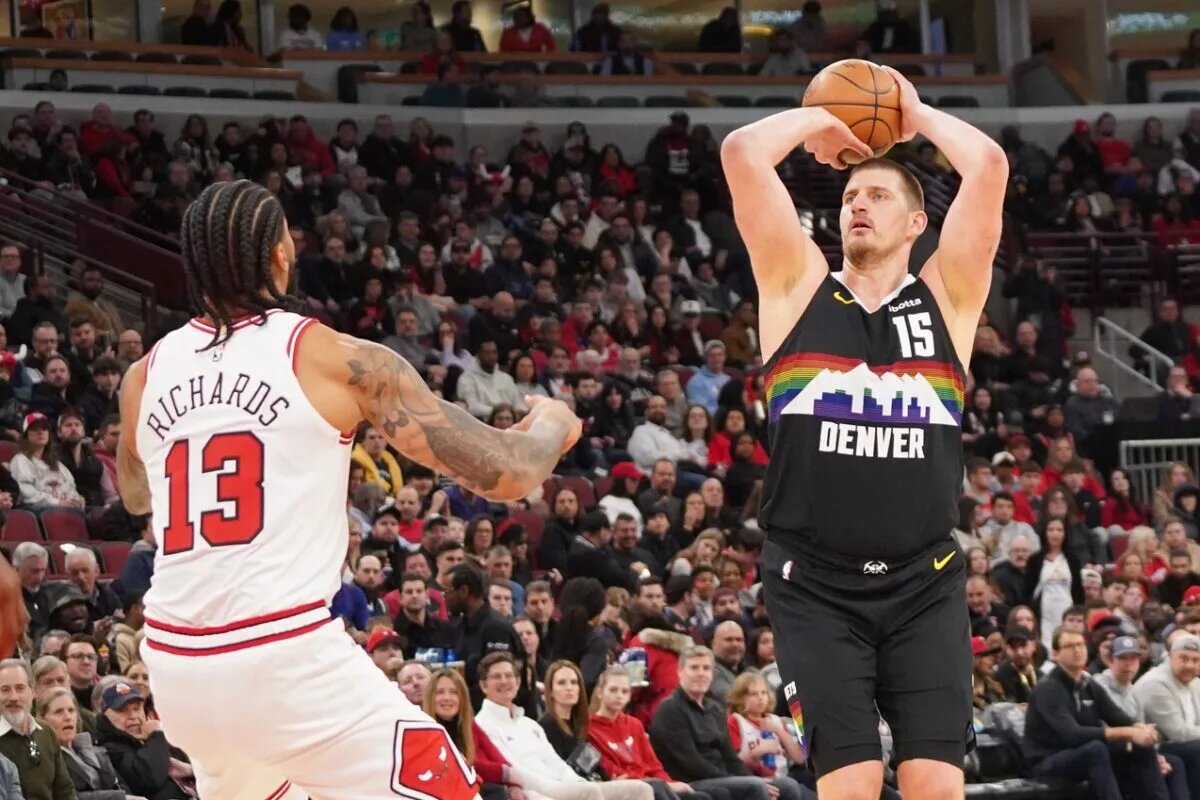
Russell Westbrook had a historic season in 2016-17. He achieved something many believed impossible in the modern NBA: averaging a triple-double. It was an unbelievable statistical milestone that legends like LeBron James and Jason Kidd had approached but never quite reached. Westbrook’s accomplishment was absolutely incredible and earned him the 2017 MVP award.
It seemed fitting that if anyone were to do it, it would be a ball-dominant perimeter player with absolutely incredible physical gifts. What would have been unfathomable is that another player would soon also average a triple-double as well. It wouldn’t be a young, upcoming wing or guard blessed with incredible physical gifts like Anthony Edwards, for example. Rather, it would be a slow, not traditionally athletic big man who was drafted during a Taco Bell commercial in the second round.
After his 22-point, 14-rebound, and 17-assist performance against the Bulls, Nikola Jokic officially passed Oscar Robertson on the NBA’s all-time triple-double list. He continues his march toward becoming the undisputed triple-double king.
A Center Passed The Big O In Triple-Doubles
The NBA fandom widely acknowledges the Serbian’s greatness. However, we may fully grasp the historic nature of what we are witnessing only after he retires—when decades pass without anyone like him appearing again.
In today’s NBA, many incredibly skilled centers push beyond the traditional expectations of the position. Domantas Sabonis, Bam Adebayo, and Alperen Şengün take on significant playmaking roles for their teams. Karl-Anthony Towns shoots from three at a level that rivals many of the league’s best perimeter players. Victor Wembanyama pairs absurd length with uniquely impressive ball-handling. However, only Jokic has truly transcended the traditional limits of offensive impact for a big man, controlling the game like a heliocentric guard while still operating as a true center. The triple-doubles perfectly reflect this.
What Sets Jokic’s Triple-Doubles Apart
For guards, the value of a triple-double comes mostly from scoring and assisting. The third statistic matters the least, because many of those boards are uncontested ones. Westbrook’s infamous free-throw rebounds during his MVP season offer the clearest example. His big men—most notably Steven Adams—boxed out so Westbrook could collect the ball. At the time, it was claimed that letting the guard secure the rebound would help the team jumpstart the offense in transition. But considering that in this copycat league, where any meaningful advantage gets replicated, and this one wasn’t, it’s clear it was stat padding dressed up as strategy.
Despite averaging fewer raw numbers in this category, Adams was the cornerstone of the Thunder’s elite 2016–17 rebounding percentage on both ends.
For most positions, rebounding numbers are relatively negligible and don’t reflect actual contribution. For centers, however, this area is critically important. As the biggest players on the floor, they have the obligation to keep opposing bigs away from the ball, and with their length, they’re most often responsible for truly ending the defensive possession. This is what makes the Jokic triple-doubles a bit different. Because his work on the glass isn’t a bonus—it’s actually a very important part of Denver’s defensive system.
The Importance Of Jokic’s Rebounding In Denver’s Defense
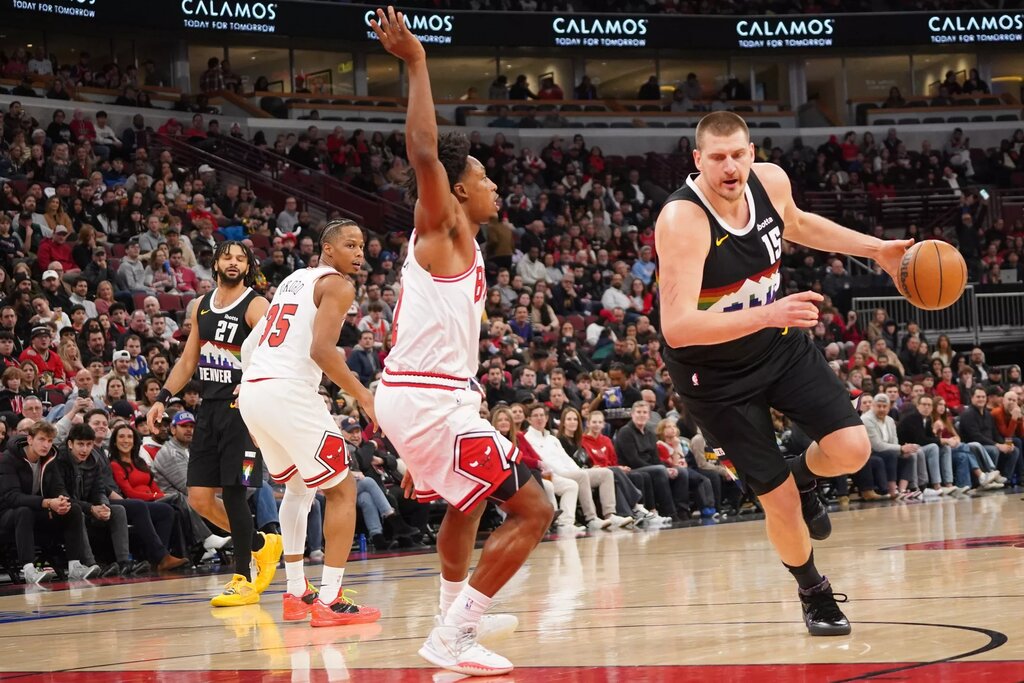
The Nuggets have long recognized that the Joker lacks the physical tools to protect the rim effectively. He also can’t overcommit to strong drives because he can’t risk foul trouble—especially since the offense runs through him.
So Michael Malone designed a defense around his strengths. Denver positions the Serbian high in pick-and-roll coverage, where his quick feet and hands pressure the ball handler effectively. This scheme has two major weaknesses. For one, it constantly creates 4 vs 3 situations for the offense, and secondly, even if the opposition misses the shot, the rolling center has an advantageous rebounding position since a smaller weakside defender picked him up.
Jokic’s elite rebounding ability helps mitigate the latter weakness. He uses his strength to dislodge opposing bigs and his extraordinary hands to secure rebounds that seem out of reach.
The Triple-Double King Deserves His Crown
Passing Oscar Robertson marked a historic moment—especially for a center. Barring catastrophe, Jokic has only taken another step toward becoming the undisputed triple-double king. He will have his crown by surpassing Russell Westbrook atop the all-time list. When his career ends, it will be fascinating to see whether anyone in the near future can chase down the standard he sets. His reign as the triple-double king may last as long as the Big O’s record did—if not longer.
Featured Image: David Banks-Imagn Images