
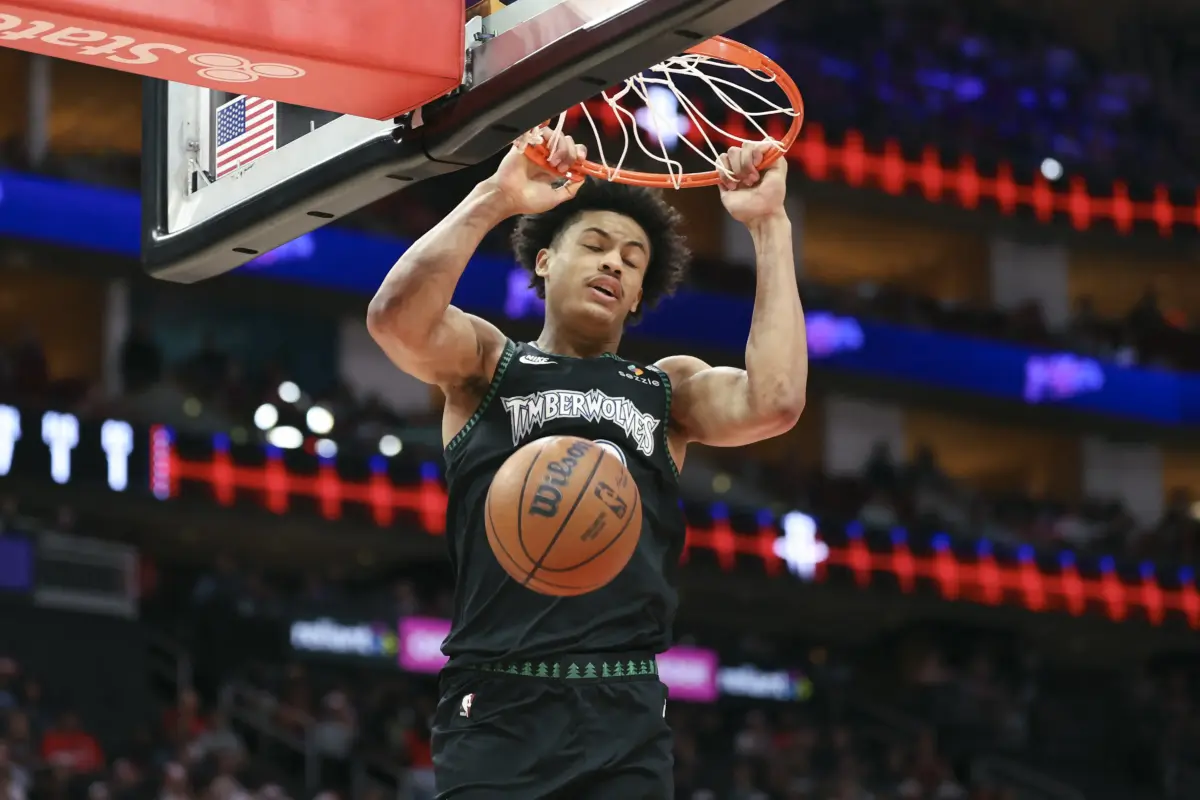

Joan Beringer entered the NBA with a long-term outlook. One year later, the Minnesota Timberwolves may need him much sooner. Changes in the frontcourt have opened a clearer path to regular minutes. If Beringer proves ready, he can give Chris Finch another trusted center behind Rudy Gobert during an 82-game season.
Joan Beringer May Hold Key to Chris Finch’s Regular Season Plan
Minnesota’s frontcourt looks different entering the new season. The departures of Julius Randle and Naz Reid have created more opportunities for young players after the franchise’s biggest summer in years. Team president Tim Connelly recently called it a “crucial year” for Beringer, who now projects more naturally as Gobert’s backup.
That does not mean the 19-year-old has already earned the role. Training camp and preseason will decide the rotation. The opportunity, though, is much larger than it was as a rookie.
Rudy Gobert Cannot Carry Every Night
Gobert remains one of the NBA’s top defensive centers. He has anchored Minnesota’s defense for multiple seasons and continues to handle difficult assignments around the basket.
The regular season also demands depth. Eighty-two games place a heavy load on starting centers. Coaches need reliable backup minutes to manage that workload without changing the team’s identity.
Minnesota’s defensive identity has been built around rim protection for several years. That system becomes harder to maintain if the drop-off behind the starting center is too large. A dependable backup helps preserve that approach throughout the season.
Minnesota Has A Clear Opening
As a rookie, Beringer spent much of the season learning behind experienced veterans. He appeared in 40 games but played more than 10 minutes only seven times because of the frontcourt competition. That competition has lessened this offseason.
More available minutes do not guarantee a larger role. They do create a real chance to earn one.
That makes this offseason different from last year. Instead of waiting behind an established group, Beringer enters camp with a clearer path to meaningful playing time.
Chris Finch Needs Trust
Young centers often need time before becoming regular contributors. The position demands communication, positioning, and disciplined defense. Mistakes usually lead to easy baskets.
Finch has consistently rewarded players who understand their assignments and play within the team’s system. Maintaining that team identity will not become easier simply because the roster has changed.
For Beringer, earning trust may matter more than scoring. Defensive rotations, rebounding and limiting fouls are the areas that usually decide whether a young center stays on the floor.
The Regular Season Starts With Depth
Minnesota already knows what it has in its starting center. The bigger question is who can keep the frontcourt steady when Gobert rests.
That answer could become more important as the season moves forward. Injuries, back-to-backs and a long schedule test every roster. Teams with dependable depth often handle those stretches better than teams forced to overplay their starters.
If Beringer develops into a reliable backup, Minnesota gains more than another player in the rotation. It gives Finch another center he can trust without changing the team’s defensive approach.
Joan Beringer’s Opportunity Has Changed
The discussion around Beringer should not begin with statistics or comparisons. His biggest opportunity comes from Minnesota’s current roster.
The Timberwolves no longer have the same frontcourt depth that limited his minutes as a rookie. That gives him a realistic chance to compete for a larger role.
Whether he earns it will depend on his play during training camp and the regular season. If he does, Minnesota may solve one of its biggest regular-season questions by developing a young center already on the roster.
Photo Credit: Troy Taormina. Imagn Images via Reuters Connect