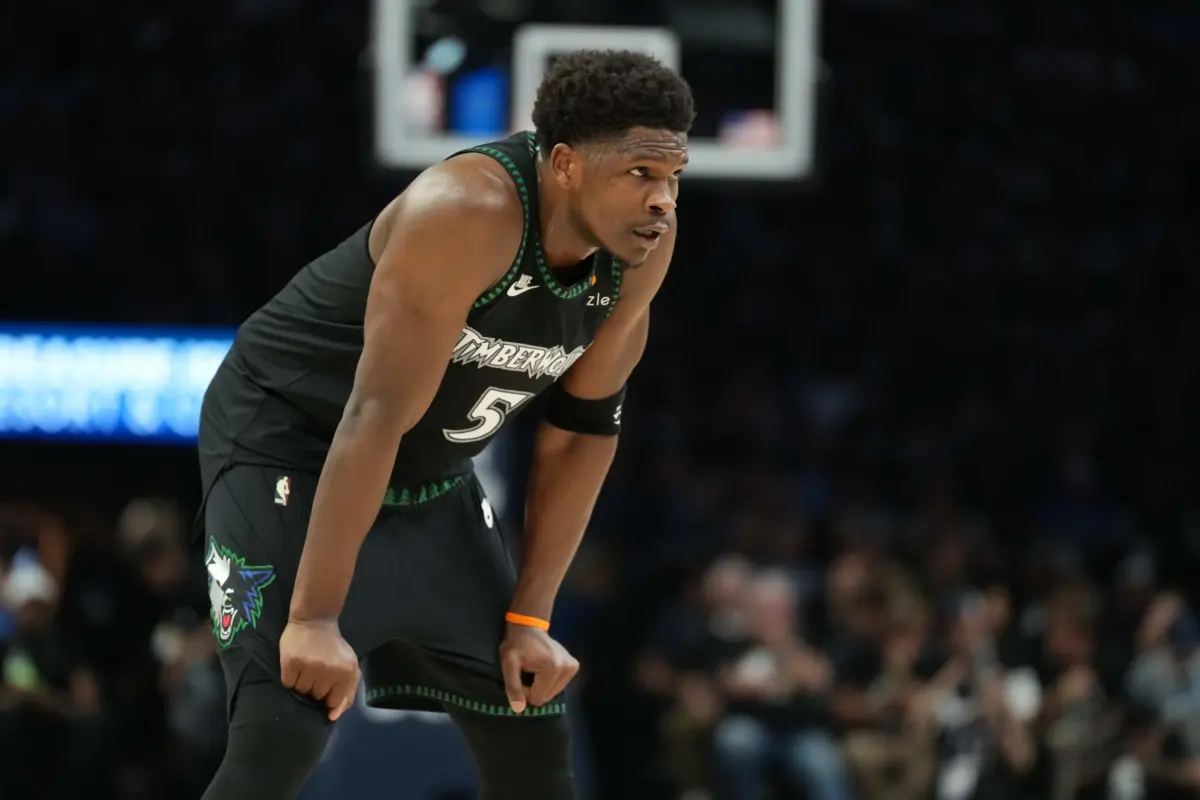

Every NBA team builds around its best player. Few openly admit that the player also helps shape the roster. The Minnesota Timberwolves did exactly that this week when Tim Connelly described Anthony Edwards‘ role inside the organization. His comments revealed more than one offseason decision. They showed Minnesota has entered a new stage where its franchise player is becoming part of the team’s long-term planning, not just its long-term future.
Tim Connelly Clarifies Anthony Edwards’ Off-Court Role
Tim Connelly Chose To Make It Public
Front offices usually keep internal discussions private. Executives rarely explain how much influence players have because those conversations stay inside meeting rooms. That is why Connelly’s latest comments stood out.
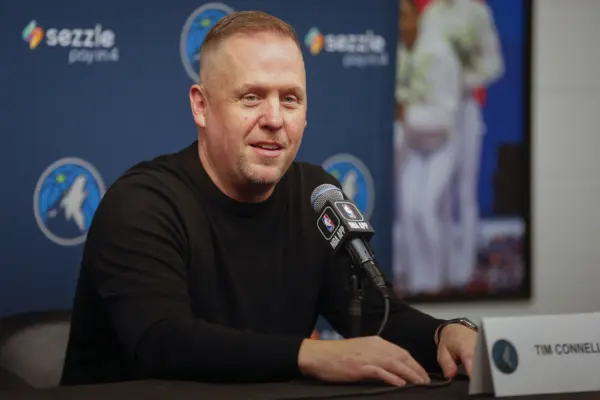
The Timberwolves’ president of basketball operations spoke with Dan Barreiro on KFAN radio. He said that star player Edwards has a lot of power when the team chooses new players. Connelly explained that Edwards has “as big a voice” as anyone in the building during these team meetings.
Connelly also said that Edwards wants to play with Charlotte Hornets guard LaMelo Ball. According to him, Edwards has “long talked about” Ball and truly believes he would be “a great addition” to the Minnesota team.
Tim Connelly told .@DanBarreiroKFAN just now that Anthony Edwards has “as big a voice” as anybody in the building on roster moves.
Connelly also noted that Edwards has “long talked about” LaMelo Ball, thinking that he would be a “great addition.”
— Charlie Walton (@CharlieWaltonMN) July 15, 2026
These words showed that Minnesota does not just listen to Edwards. They prove to everyone that the team now trusts its best player with big decisions that change the future of the whole organization. That transformation reflects the franchise’s biggest offseason since Edwards arrived.
This Was About Trust, Not Authority
Giving a player a voice is different from giving him control. The Timberwolves still evaluate contracts, draft picks, salary rules, and long-term roster planning before completing any move. Those decisions remain the responsibility of the front office.
What has changed is the way Minnesota gathers information. Edwards spends every day competing against the league’s best players. He understands which teammates make his job easier and which skills the roster still lacks. That perspective has value because it comes from the court rather than the front office.
Organizations often reach this point after a young star proves he can carry greater responsibility. Minnesota appears to believe Edwards has earned that level of trust through both his performance and his growth as the face of the franchise.
The Timberwolves Wanted More Than Another Star
The comments about Ball offered the first public example of that approach. Minnesota could have searched for scoring, rebounding, or another veteran presence during the offseason. Instead, it committed significant assets to acquire a player whose strengths addressed one of the team’s clearest needs.
For much of last season, Edwards handled responsibilities normally shared with a primary playmaker. He created offense, initiated possessions, and often faced defenses designed to stop him before anyone else. That workload exposed Minnesota’s incomplete offense. Adding Ball gives Minnesota another player capable of directing the offense while allowing Edwards to attack in different ways.
The basketball fit helps explain why Ball appealed to both the front office and its franchise player. Minnesota did not simply add another talented guard. It targeted a skill set that complements its existing star as the team continues building around Edwards.
Relationships Matter After Trades Become Official
Building a roster does not end when a trade call reaches the league office. Teams still have to develop chemistry over months of practice, travel, and games. Minnesota appears confident that part of the transition is already underway.
Earlier this week, Edwards said Ball had been spending time at his house after the trade. He also explained why those relationships matter. “The closer you and your team are, the more chance ya’ll got to win a championship,” he said at Fanatics Fest.
Anthony Edwards said LaMelo Ball has been at his house the last couple days and they talked about how they have to cut their profanity back during post-game interviews. pic.twitter.com/d82D7QAXr6
— Sportico (@Sportico) July 17, 2026
That belief reflects something the Timberwolves cannot measure with statistics alone. Talent may determine how high a team’s ceiling is, but trust often determines how consistently that talent appears during difficult stretches of a season. However, a duo of Edwards and Ball is a talented pairing in their own right.
Minnesota’s Message Reaches Beyond One Trade
The most significant part of Connelly’s interview may have nothing to do with Ball. Front offices make trades every offseason. They rarely tell the public how much influence their young superstar had during the process.
Minnesota chose to do exactly that. Whether intentional or not, the message was clear. The organization no longer views Edwards only as the player expected to lead the team on game nights. It also values his perspective while building the roster around him.
That change could matter long after this offseason ends. Rosters will continue to evolve, players will come and go, and future trades will create new questions. If Connelly’s comments are any indication, one thing appears settled already. The Timberwolves have decided that Edwards is no longer just the centerpiece of the franchise. He has become one of the voices helping shape where it goes next.
Featured Image: Jesse Johnson-Imagn Images