
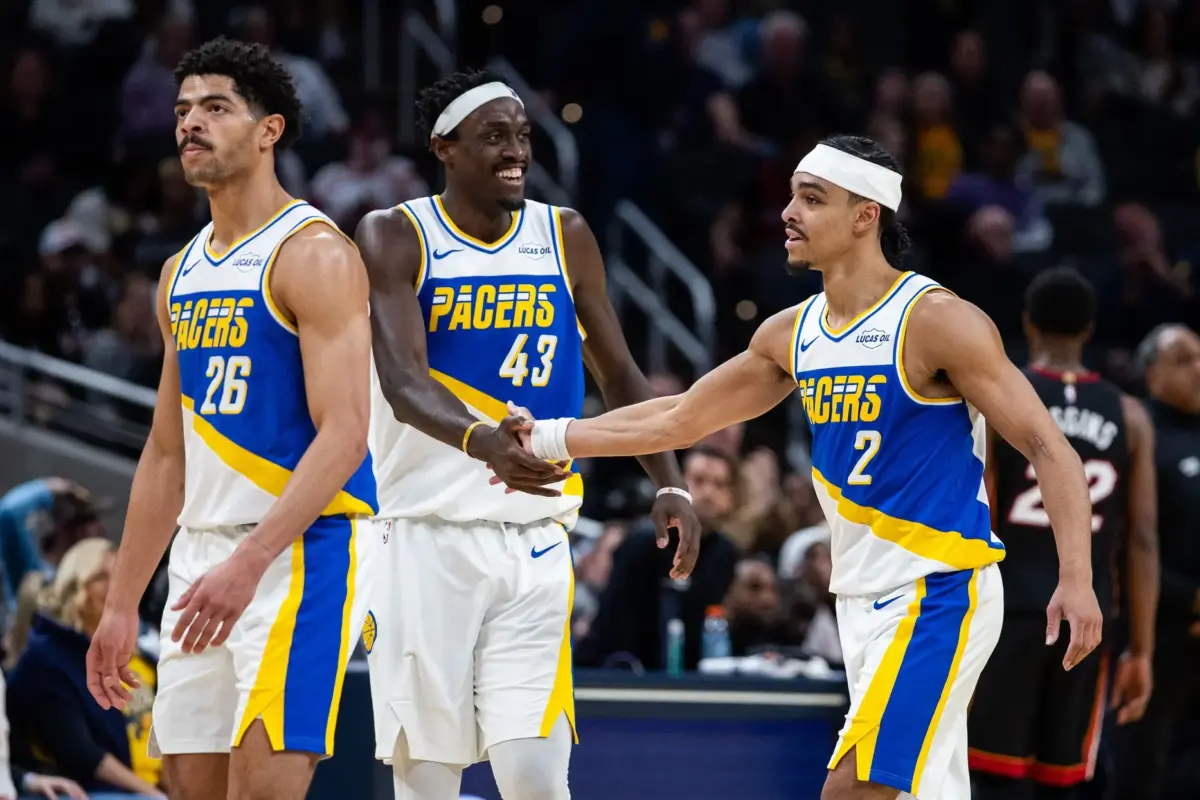

INDIANA — The postseason has officially established a clear blueprint of what it takes to hoist the Larry O’Brien trophy. As the Indiana Pacers look to firmly cement their status in the elite tier of the Eastern Conference, the front office is closely evaluating how their current roster construction stacks up against true title heavyweights. There are 2 drastic lessons the Pacers learnt from the ECF and WCF on how they matchup against elite competition that will dictate their entire approach this summer.
2 Drastic Lessons The Pacers Learnt From The ECF And WCF
Indiana’s front office has no intentions of taking a slow, patient approach to building a winner. Following a brutal draft lottery night that saw their protected pick convey outside of the top four, President of Basketball Operations Kevin Pritchard made the organization’s championship motivations crystal clear. Pritchard explicitly reminded the fan base that “this team deserved a starting center to compete with the best teams next year,” validating the aggressive posture the team will maintain as they pursue ultimate contention.
To turn that championship mandate into reality, Indiana must directly address the structural truths exposed during the Eastern and Western Conference Finals.
Lesson 1: The Absolute Mandate for Physical, Switchable Wings
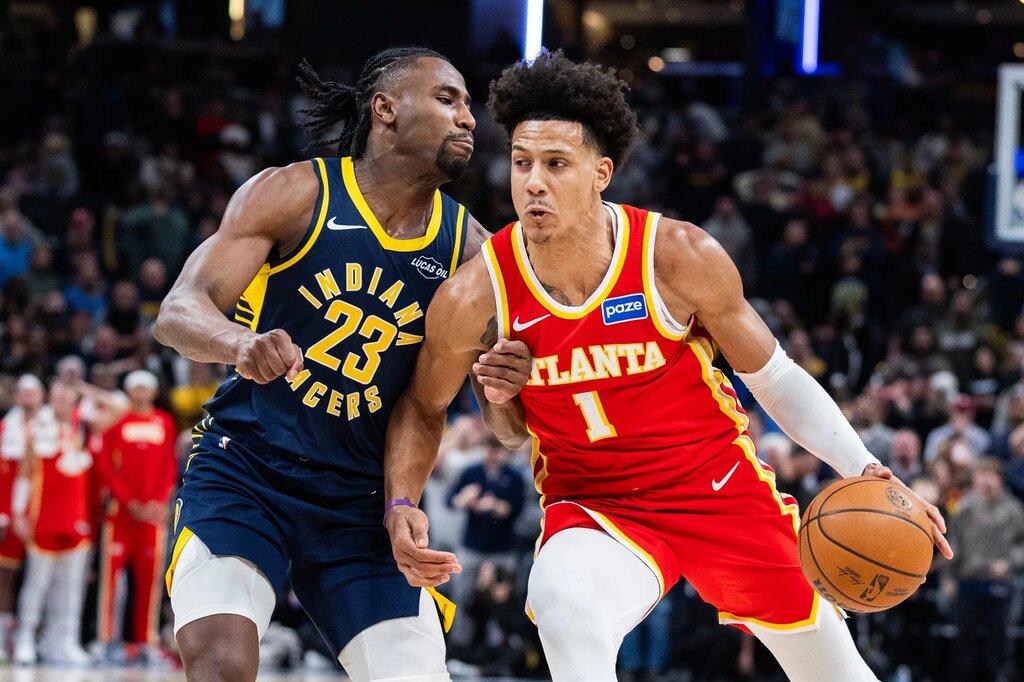
The first unmistakable trend of the late-stage postseason is the absolute necessity for oversized, physical 3-and-D wings. In the modern NBA ecosystem, standard perimeter defense is no longer enough to contain elite offenses. Teams must possess raw, physical muscle on the wing because the gold standard of the Eastern Conference is currently defined by the relentless size of the New York Knicks, Boston Celtics, and Detroit Pistons.
While Indiana possesses incredibly high-level perimeter defenders, the physical matchups in the playoffs exposed a glaring physical deficit. Aaron Nesmith and Andrew Nembhard are remarkably disciplined, high-motor swingmen defenders, but they are undersized when forced to check elite modern wings over a grueling seven-game series.
They simply do not have the physical frame to handle players like OG Anunoby and Mikal Bridges of the Knicks, Jaylen Brown and Jayson Tatum of the Celtics, or the hyper-athletic Ausar Thompson of the Pistons. When smaller guards and wings are forced to play above their weight class, defensive rotations break down, and premium perimeter engines get to their preferred spots on the floor at will.
This exact physical deficiency is why Indiana must prioritize targeting an established, physically imposing wing like PJ Washington via the trade market. Adding a switchable defender with legitimate size allows the backcourt to stay in their natural defensive slots while giving the coaching staff an explicit counter to the giants of the East.
Lesson 2: It is Unmistakably a Big Man’s League Again
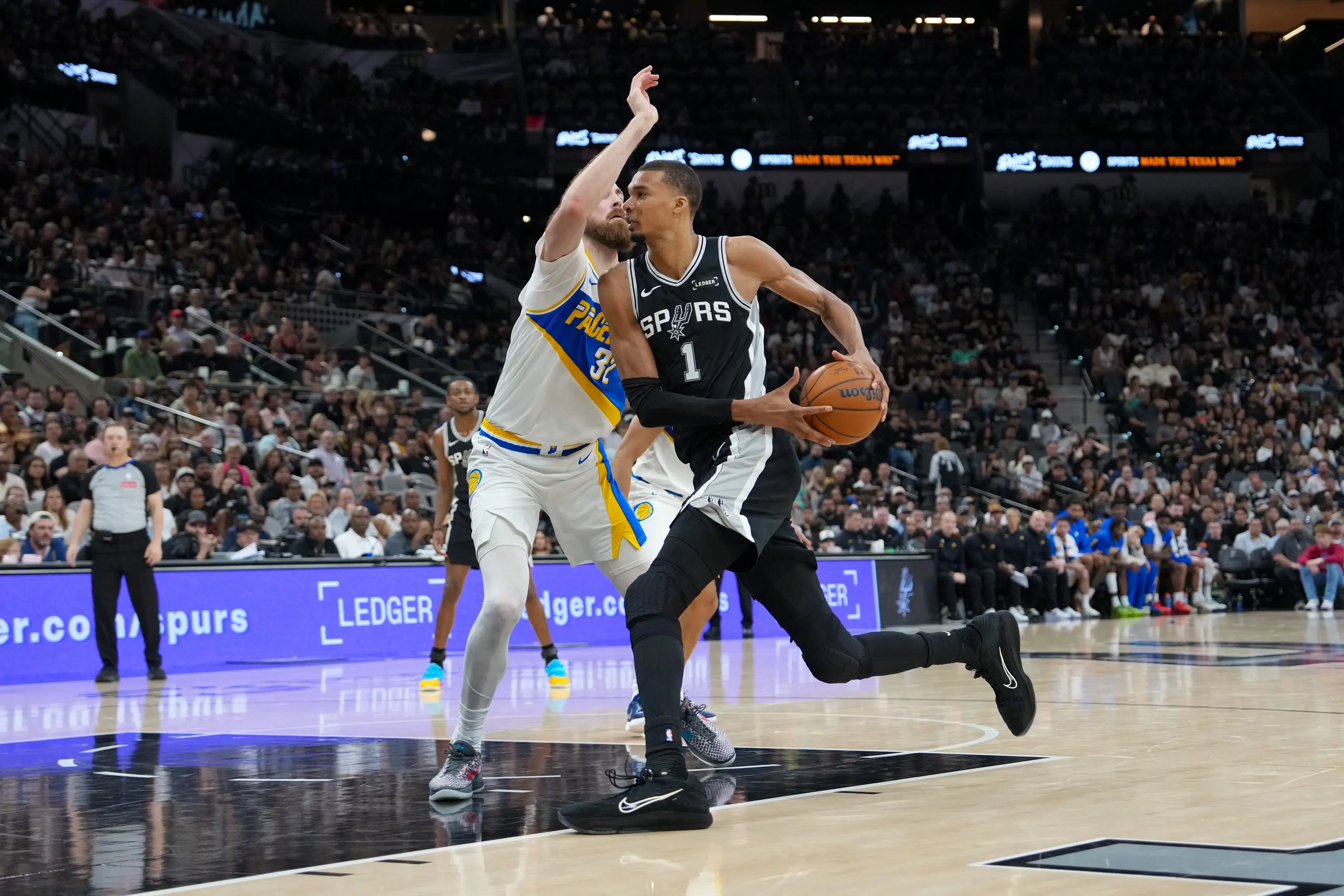
For years, small-ball variations dominated NBA championship circles, but the postseason emphatically proved that the league belongs to the giants once again. No storyline made this clearer than Victor Wembanyama dragging the San Antonio Spurs to the NBA Finals after knocking off the defending champions in a grueling Western Conference battle.
Every remaining title contender boasts elite rim protection and interior size. Beyond Wembanyama’s historic baseline dominance, centers like Isaiah Hartenstein and Chet Holmgren have transformed their respective frontcourts into completely immovable forces that deter opponents from even attempting to challenge the paint.
The Pacers clearly anticipated this shift when they acquired center Ivica Zubac at a steep asset price at the trade deadline. Ivica Zubac gives Indiana a true, traditional 7-footer who possesses the physical strength and structural baseline to guard up there with the absolute best interior forces in basketball.
Furthermore, Indiana’s depth at the position is quietly formidable with the emergence of Jay Huff as a reliable backup big. Standing at an imposing 7-foot-1, Huff provides elite secondary size off the bench. While critics may occasionally question his lateral foot speed on perimeter switches, his defensive production in the paint is completely undeniable. Jay Huff remarkably finished second in the entire NBA in total blocks, trailing only Wembanyama by registering 153 blocks on the season.
With Ivica Zubac anchoring the starting unit and Jaylen Huff acting as a premier interior deterrent off the bench, Indiana is significantly better equipped on this end of the floor to survive the physical onslaught of a modern NBA playoff run.
Credit:© Trevor Ruszkowski-Imagn Images