
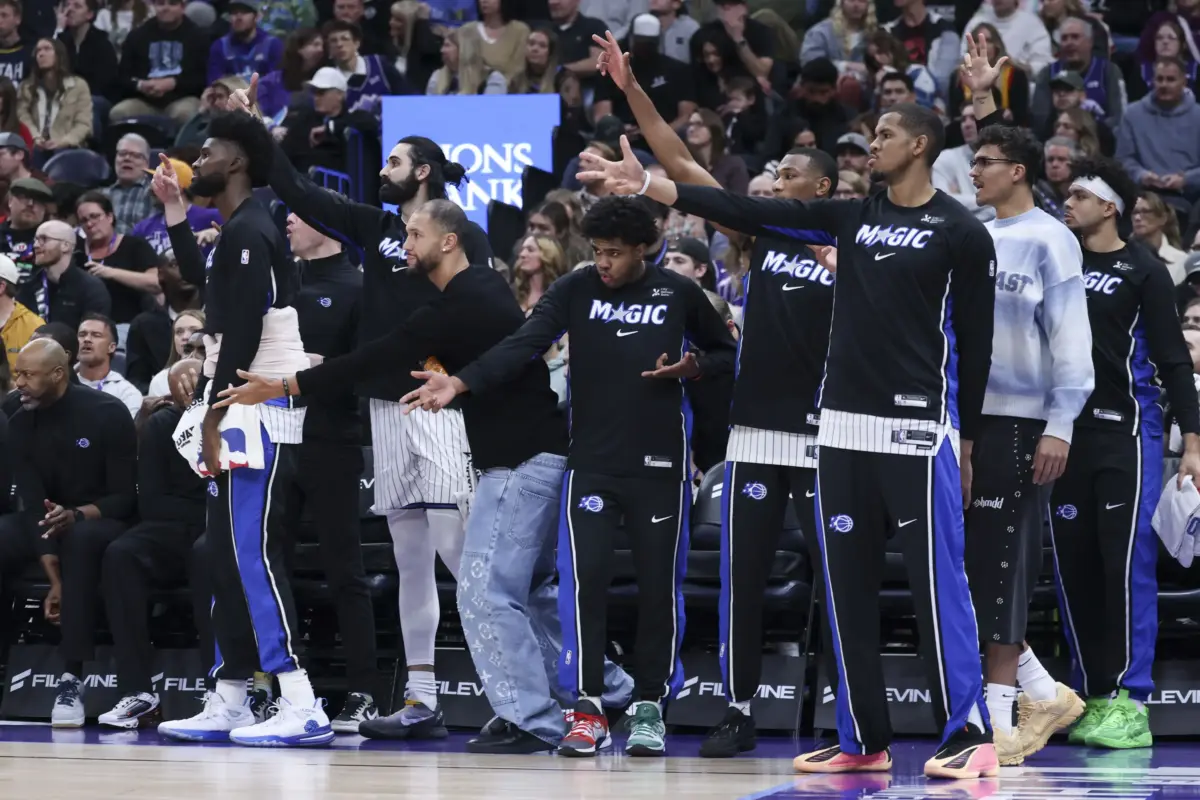

ORLANDO — When a front office pushes its chips into the center of the table for a massive blockbuster trade, analyzing how Sean Sweeney unlocks the Magic star core becomes the defining storyline of the franchise. Last summer, the Orlando Magic sacrificed significant draft equity to acquire Desmond Bane, assembling a formidable, high-upside young nucleus alongside Paolo Banchero, Franz Wagner, Jalen Suggs, and Anthony Black. Yet, despite the immense talent of this group, Orlando’s half-court offense frequently devolved into a clunky, paint-packed gridlock that ultimately resulted in their third consecutive first-round playoff exit.
How Sean Sweeney Unlocks The Magic Star Core To Unclog The Paint
The problem wasn’t a talent deficit but rather a severe failure of offensive geometry. Under Jamahl Mosley, the team’s offensive execution routinely underperformed relative to the sheer processing power and physical advantages present on the roster. Enter new head coach Sean Sweeney. By importing the hyper-modern, fluid tracking system he ran alongside Mitch Johnson in San Antonio this season, the newly appointed bench boss is uniquely equipped to reshape Central Florida’s floor spacing.
Digging into the tactical film reveals precisely how the new scheme will maximize potential by weaponizing continuous player movement to dissolve the predictable, stagnant offensive frameworks of the past.
Dismantling the Stagnant Half-Court Cage
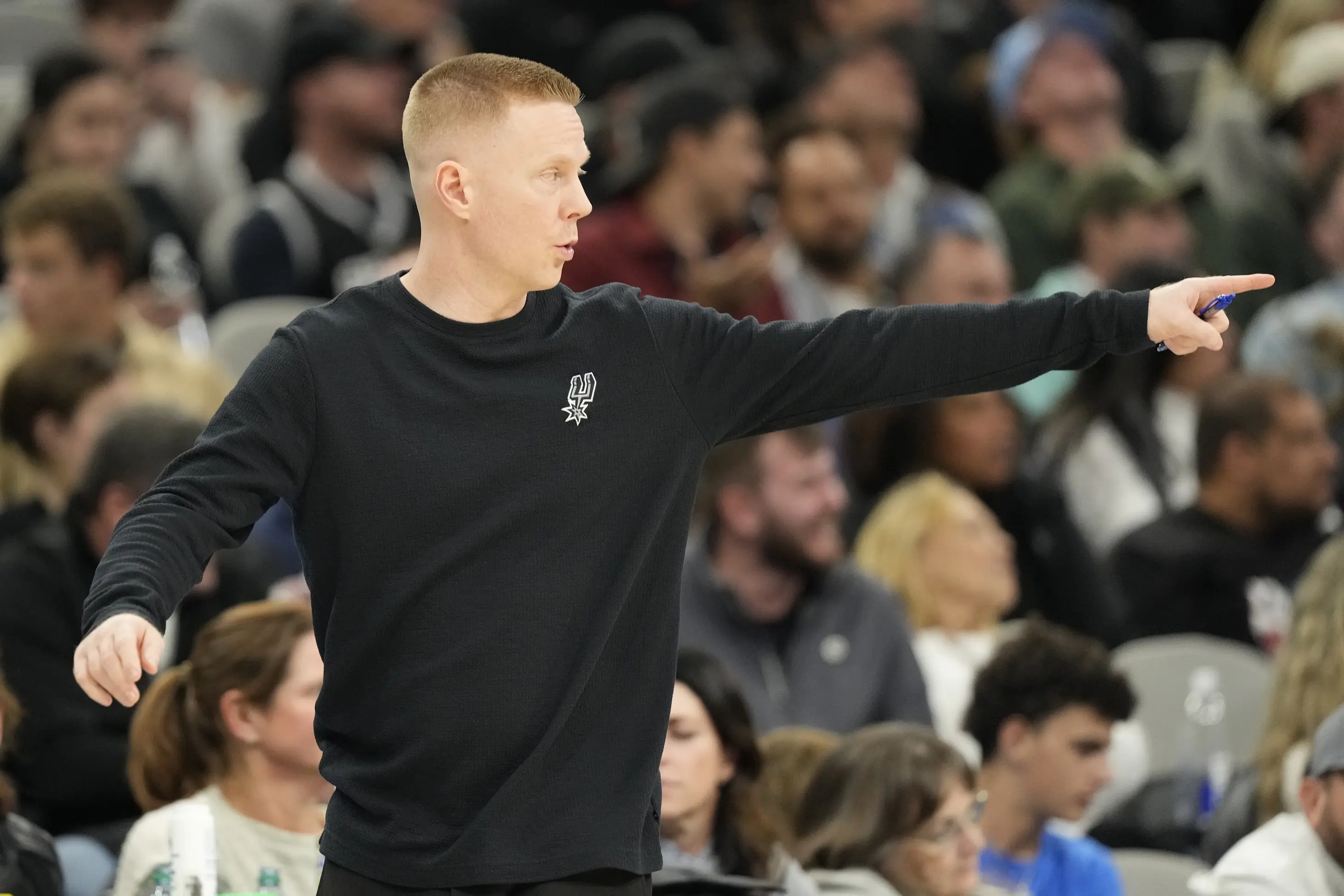
Under the previous coaching staff, Orlando’s half-court approach operated like a state-of-the-art smartphone saddled with a clunky, ten-year-old operating system. It possessed incredible processing power in its individual parts, but the structural programming forced it to lag under heavy stress. Non-shooters were routinely parked in the dunker spot, which effectively allowed opposing help-defenders to form a human wall directly in the path of Banchero and Wagner’s downhill driving lanes.
During the regular season, Orlando managed to mask some of these glaring flaws through sheer defensive separation and transition scoring. The Magic had an offense outside the bottom-10 for the first time since the 2011-12 season this last regular season, finishing 18th in the league. However, when the game slowed down and teams scouted their tendencies in a seven-game series, the lack of spatial discipline proved fatal. Their offense was the worst in the playoffs, completely cratering against disciplined defensive shells that dared Orlando to beat them with fluid off-ball counters they simply didn’t possess.
Sweeney’s offensive style demands the exact opposite. Mirroring the five-out structural fluidity that defined San Antonio’s offense under Mitch Johnson, Sweeney rejects the concept of a stationary floor spacer. His system relies on a continuous loop of weak-side cutting, hard baseline slips, and immediate diagonal relocation from the corners. Instead of forcing players to stand still and watch a point-forward orchestrate from the top of the key, Sweeney uses dynamic player motion to manipulate the visual fields of help-defenders, creating and open real estate in the middle of the paint.
Orlando Magic Head Coach Sean Sweeney talking about NBA spacing. pic.twitter.com/xTcaxhWGDN
— WeltGawd (@WeltGawd) May 29, 2026
Weaponizing Desmond Bane and Tristan da Silva
This shift completely transforms how Desmond Bane will be utilized. In a stagnant offense, an elite perimeter sniper like Bane is treated as a luxury kick-out option who waits passively on the wing. Opposing defenses can simply face-guard him, effectively neutralizing his impact while crowding the interior.
Under Sweeney, Bane becomes an absolute off-ball nightmare. Rather than operating out of a fixed perimeter spot, Sean Sweeney unlocks the Magic star core spacing by putting Bane into constant, looping motion. By running him through complex baseline stagger screens and requiring immediate relocation upon a drive, the defense is forced to make a catastrophic decision. If a help-defender pinches into the lane by even a single step to disrupt a Banchero spin move, Bane’s rhythmic relocation to the open passing window acts as an instantaneous release valve.
This environment is also where Tristan da Silva is uniquely positioned to break out as a vital rotation piece. Da Silva’s specialized off-the-catch shooting and highly intelligent off-ball movement fit Sean Sweeney’s offensive style like a glove. He does not need the ball in his hands to dictate defensive rotations. Because da Silva naturally understands how to fill empty space, drift along the perimeter to maintain optimal passing angles, and dive to the rim the moment a defender turns their head, he can seamlessly blend into lineups. His presence gives Sweeney another dynamic, high-IQ connector who ensures the ball never sticks on one side of the floor.
Activating Suggs and Black in the Passing Lanes
The downstream benefits of this fluid baseline-to-sideline structure will directly accelerate the growth of Jalen Suggs and Anthony Black. Both guards possess elite athletic burst and high-level basketball IQ, yet both have struggled when forced to operate in crowd-heavy, slow-tempo half-court sets.
Sweeney’s system doesn’t require every player on the floor to be a 40% volume shooter from beyond the arc to be effective. By forcing opposing defenses to constantly stretch their perimeter coverage to account for Bane’s looping gravity and da Silva’s constant relocation, massive secondary driving corridors will open up for Suggs and Black.
When Banchero draws a double-team on the block, the subsequent weak-side defensive rotation will be forced to travel a significantly longer distance. This structural delay allows hyper-athletic slashers like Suggs and Black to catch the ball on the move, instantly attack a scrambling closeout, and make high-velocity plays at the rim.
The Bottom Line
Orlando doesn’t need to panic-sell their assets or completely overhaul their roster infrastructure to fix their offensive efficiency problems. They simply needed a master tactician capable of teaching a powerhouse core how to stop standing on each other’s feet. By applying the modern spatial principles built during his elite assistant coaching stops across the league, it’s clear that Sean Sweeney unlocks Magic star core chemistry by fixing the geometry first. The rest of the Eastern Conference has been officially warned because the paint in Orlando is finally clear.
© Rob Gray-Imagn Images