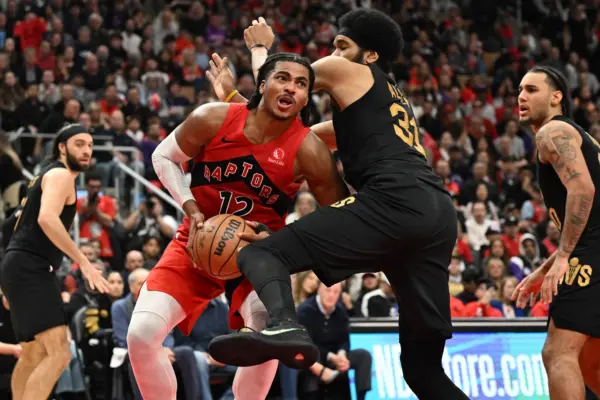



The Coby White Hornets contract situation has been the most discussed topic in Charlotte since the season ended, and ESPN’s Bobby Marks just gave the debate a concrete number to argue about.
Marks listed White as the fourth-best unrestricted free agent on the market and projected a three-year, $54 million deal as the fair offer. The first year sits at $16.5 million, increasing each season, with a player option in the third year. Charlotte holds his Bird Rights, meaning they can exceed the salary cap to retain him — an advantage that would not exist had they not acquired him at the February trade deadline.
Is $54 Million the Right Deal for Coby White and the Charlotte Hornets?
Most fans in Charlotte agreed the number is reasonable. Some felt it was too high for a player who averaged 15.6 points in just 21 games as a bench player. Others pointed out White was reportedly seeking $30 million annually when he was still in Chicago.
So who is right? Is $54 million fair, too much, or actually not enough to keep him?
Why White Was Worth Every Minute in Charlotte
Beyond the numbers, White brought exactly the composure and experience a young team still learning how to win needed in big moments. A veteran since 2019, he has already played in play-in games, high-pressure situations and hostile environments. At 26 years old, White is experienced enough to make an immediate impact while still young enough to grow alongside LaMelo Ball, Kon Knueppel and Brandon Miller for several more years.
The Case That $54 Million Is Fair Value
The Andrew Nembhard comparison is the most relevant anchor point. Nembhard signed a four-year, $58 million extension with Indiana, but by most objective measures, White is the better player. White has a higher scoring ceiling, better shooting splits, and more playoff experience. The fact that Marks priced him $4 million below Nembhard’s total suggests he is actually being conservative rather than generous.
Consider what $18 million per year buys on the open market in 2026. It is roughly what role players with limited offensive creation earn on max mid-level deals. White is not a role player; he is a legitimate scorer who can create his own shot at all three levels, operate as a secondary ball handler, and shoot off the dribble or off the catch in equal measure. The player option in the third year also protects Charlotte’s financial flexibility. If White outperforms the deal — which based on his trajectory is quite possible — he opts out and Charlotte saves money in year 3. If he declines, they can move on.
There is also the Detroit angle that cannot be ignored. The Pistons have the $15 million non-taxpayer mid-level exception available, and White has been identified as a target. Marks specifically listed Detroit as a best fit alongside Charlotte. If president Jeff Peterson hesitates or lowballs the offer, White has a legitimate alternative. Losing him to a direct Eastern Conference rival would be one of the most painful outcomes of the entire offseason.
The Case That $54 Million Is Too Much
The honest counterargument starts with role clarity. White averaged 15.6 points in 19.3 minutes per game for Charlotte, all off the bench. He is not a starter on this team. Ball runs the offense, while Knueppel and Miller are the respective second and third scoring options. White is an elite sixth man — perhaps one of the best in the Eastern Conference — but committing $18 million per year to a bench player on a team that also needs to extend Miller and address the frontcourt is a real financial consideration.
Charlotte also needs to be realistic about the full roster picture. Miller’s extension is expected to be somewhere in the $25-30 million annual range. Re-signing White at roughly $18 million per season, adding frontcourt reinforcements, and eventually negotiating a new deal for Moussa Diabate would cause the cap obligations to stack quickly for a team trying to stay below the luxury tax while maintaining long-term flexibility. Every dollar committed to White is a dollar unavailable for the frontcourt upgrade Charlotte needs most: a physical rim protector that the roster has been missing all season.
Coby White Hornets Contract: What Charlotte Should Do
The $54 million projection is fair and Charlotte should sign it without hesitation. The debate about whether White is a starter or a bench player misses the point entirely.
On this specific roster, in this specific system, White is irreplaceable. No other player on the market provides what he brings to the second unit at anywhere near a similar price point. The player option protects Charlotte’s flexibility, and Nembhard comparison confirms the pricing is rational.
The risk is not the $54 million. The risk is losing him. White has been vocal about wanting to stay in Charlotte, but players who want to stay still leave if the offer is not right. Charlotte has the Bird Rights, the cap space and the public leverage of White’s stated preference. Using all three to close this deal quickly, before Detroit or anyone else enters the room, is the only smart play.