
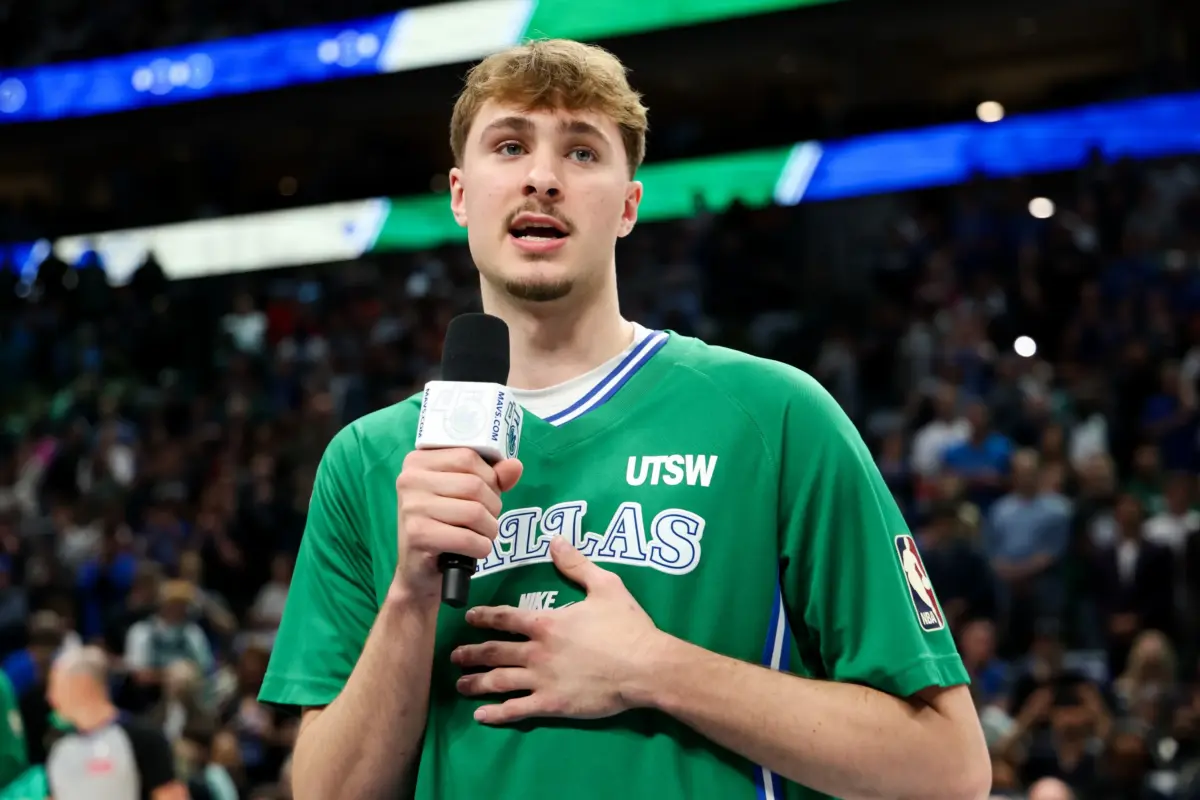

Cooper Flagg winning the 2026 NBA Rookie of the Year award over Kon Knueppel settles one of the most genuinely difficult award debates in years. Let’s explore why the Cooper Flagg beat out Knueppel for the 2026 Rookie of the Year award, and why this race was so close.
Why Cooper Flagg Won ROTY Over Kon Knueppel
Flagg took the trophy with 412 total vote points to Knueppel’s 386, a margin of just 26 points, the second smallest in over two decades. Flagg claimed 56 of 100 first-place votes. Knueppel claimed the other 44.
Two former Duke teammates, two extraordinary rookie seasons, one razor-thin decision. So why did Flagg win?
What Flagg Did That Voters Could Not Ignore
The answer starts with a stat line that belongs in a different era. Flagg averaged 21.0 points, 6.7 rebounds, and 4.5 assists per game for the Dallas Mavericks, a team that finished 26-56 and traded away Anthony Davis mid-season, leaving Flagg as the lone pillar of a collapsing roster.
Critically, he led the Mavericks in points, rebounds, assists, and steals simultaneously. The last rookie to accomplish that was Michael Jordan in 1984-85. The likes of Jordan, Larry Bird, Luka Doncic, Kareem Abdul-Jabbar, Oscar Robertson, Sidney Wicks, and Elgin Baylor are the only rookies before Flagg to average at least 20+ points, six-plus rebounds, and four-plus assists per game simultaneously. That company alone tells the story.
Furthermore, Flagg did not just produce numbers. He produced them under pressure. Over his final 15 games of the season, he averaged 24.7 points per game with 6.8 rebounds and 5.3 assists. He scored 51 points against Orlando in April, becoming the first teenager to score 50 in an NBA game. When voters needed a reason to lean toward Flagg, he handed them several in the final weeks of the season.
Knueppel’s Case Was Historically Strong
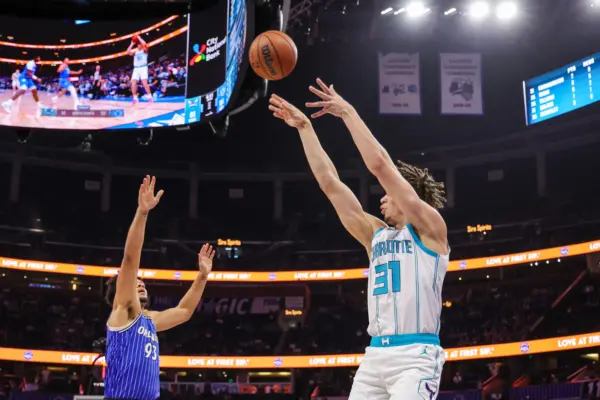
None of that diminishes what Knueppel built. He became the first rookie in NBA history to lead the entire NBA in three-pointers made, finishing with 273. He averaged 18.5 points, 5.3 rebounds, and 3.4 assists while shooting 42.5% from three, joining Bird and Paul Pierce as the only rookies ever to average 15 points and five rebounds while shooting better than 40% from deep. Knueppel helped transform Charlotte from 19-63 to a play-in team, a 25-win improvement that reshaped the entire franchise’s identity.
Moreover, Knueppel was a critical piece of a winning system for the Hornets. The argument for him was compelling: historic shooting, elite efficiency, team success, and availability. Many voters agreed. Forty-four first-place votes are not a consolation prize. It is a near miss.
The Real Reason Flagg Won: Control Vs Contribution
Here is the true difference between these two seasons, and it is not really about statistics.
Flagg controlled games. Everything in Dallas ran through him by necessity. On a broken roster, he created his own shots, generated his own opportunities, and produced at an elite level with nobody around him to lean on. That narrative of carrying a team, being the primary option, the engine, and the identity all at once – voters have consistently rewarded that story.
Knueppel, by contrast, excelled within a system. LaMelo Ball‘s playmaking created his best looks. The Hornets’ spacing gave him clean catch-and-shoot opportunities. His shooting was elite, his efficiency was real, and his contribution was genuine. However, he was not the first option, nor was he the second. Flagg needed to score 30 to give his team a chance. Knueppel needed to hit threes inside a machine that was already working.
Additionally, timing played a role. Knueppel’s back injury in late March quietly drained his shooting form in the last games of the regular season through the play-in. Going a combined one for twelve from three across the two play-in games he played, while ballots had been delayed and voters were still watching, almost certainly shifted a handful of votes. It was not the defining factor, but in a 26-point margin, everything matters.
The Last Word
Flagg was the better individual player. Knueppel had the better context. Both are true simultaneously, and that is what made this race genuinely hard. Voters chose individual dominance over team success and historic specialization over all-around control.
In most years, either case wins. This year, Flagg’s finishing surge and the ballot timing combined to tip the scales by the slimmest of margins.
However, Knueppel’s career is only beginning. He will have opportunities to settle this debate on the court for years to come.
Featured Image: Kevin Jairaj-Imagn Images