

Since the transfer portal opened in 2021, college basketball has changed, and not for the better. What was originally sold as a player-friendly, revenue based structure designed to maximize NIL opportunities has instead begun contradicting its competitive nature.
Lawsuits, temporary eligibility windows, even eighth-year seniors; none of this was supposed to be part of the deal. Yet here we are.The 2025–26 season is a warning: if former professional players continue to funnel back into college basketball, the idea of “amateur” competition will be thrown out the window.
When Pros Return: College Basketball’s Biggest Controversy
So what went wrong? And how did we get here?
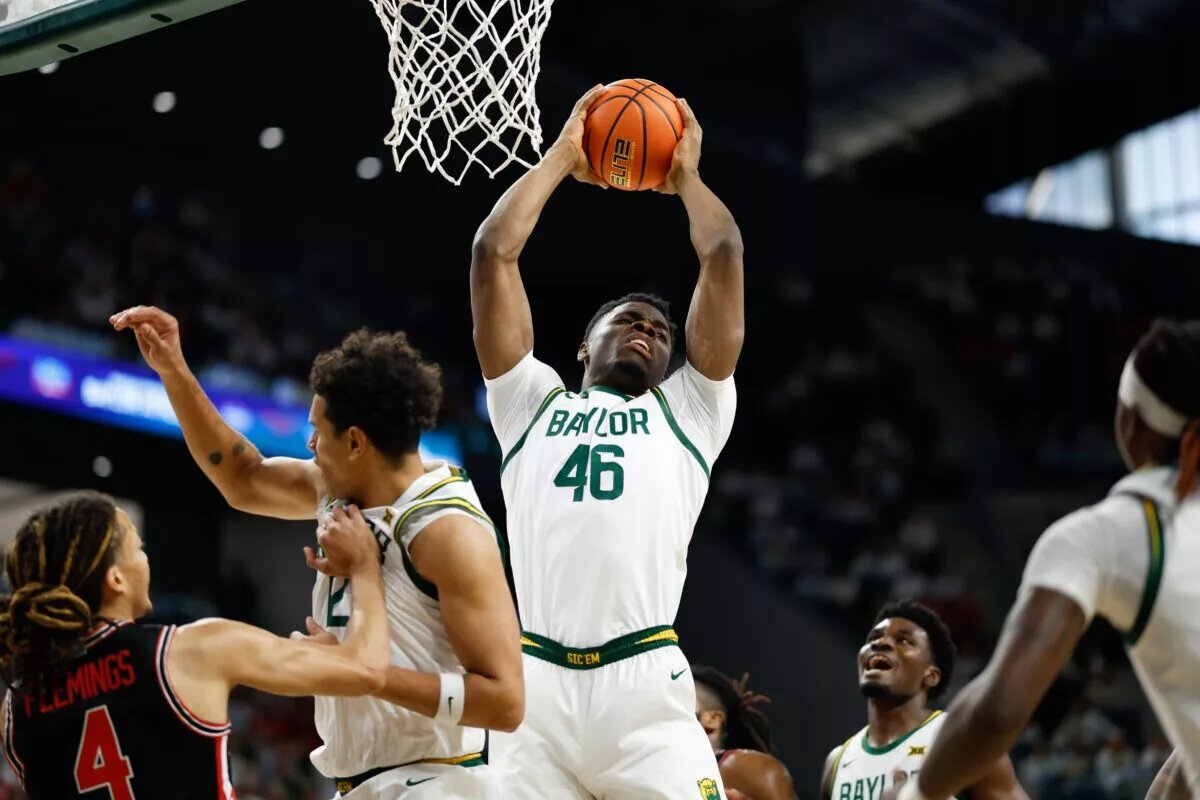
On Christmas Eve 2025, Baylor announced the addition of James Nnaji—the 31st overall pick in the 2023 NBA Draft. Nnaji never played a minute of college basketball. Instead, he developed professionally with FC Barcelona in Spain, was drafted by the Detroit Pistons, later traded in the deal that sent Karl-Anthony Towns to New York, and spent time in the G League.
Now, just a season removed from professional basketball, he’s suiting up for Baylor.
The reaction was loud. And for good reason.
On paper, however, the move is perfectly legal. The NCAA doesn’t restrict players who bypass college entirely and turn professional; its eligibility rules only apply to athletes in the United States who leave college for the draft. It’s the ultimate eligibility loophole.
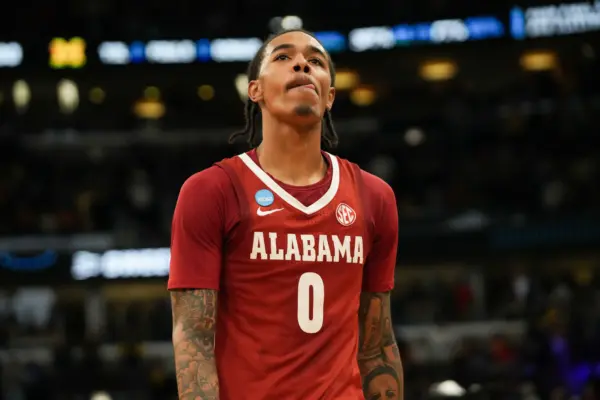
And Nnaji isn’t alone. Just a few days ago, Alabama announced the return of former center Charles Bediako, who played for the Crimson Tide from 2021–23. Get this: his case explicitly cites Nnaji as precedent.
That’s where the system starts to look less like reform and more like chaos.
When Eligibility Depends on the Player
Unlike Nnaji, Bediako had to sue the NCAA to get back on the floor. Despite having played professionally for two and a half years, and being roughly the same age as many players currently on Alabama’s roster, his eligibility was granted on a temporary, 10-day basis with a full hearing scheduled for Jan. 27.
Let that sink in. Two players. Similar professional timelines. Completely different paths to “eligibility.”
The difference? One never played college basketball. The other did. That’s not a rule—that’s a contradiction.
And the fix isn’t complicated. If the NCAA wants to preserve even an ounce of competitive integrity, it needs to put a simple rule in writing: once you declare to play professional basketball, your NCAA eligibility ends. That’s it.
Coaches Are Calling It ‘The Wild West’
The frustration isn’t limited to fans. Coaches across the country are openly questioning whether anyone is actually in charge anymore.
Arkansas head coach John Calipari has been the most vocal speaking on the current system, advocating for better futures of his players and their families. In one media availability, Calipari joked that NIL money was “going to guys with beards paying alimony.” In another interview, he acknowledged that many coaches are no longer prioritizing high school recruits at all.
Purdue’s Matt Painter echoed the sentiment on the same SportsCenter segment: “We just want to know the rules… Because that’s who they’re for. The rules are for the people who abide by them.”
Even UConn head coach Dan Hurley couldn’t hide his disbelief, tweeting: “Santa Claus is delivering midseason acquisitions… this s*** is crazy!!”
Different programs. Different philosophies. Same message.
As Calipari said, “If you get sued, you get sued. But do the right thing.”
College basketball doesn’t need more loopholes, it needs clarity. Until that line is drawn between amateur and professional basketball, the sport will continue drifting toward something unrecognizable.
And once that line is gone, it’s not coming back.
© Chris Jones-Imagn Images