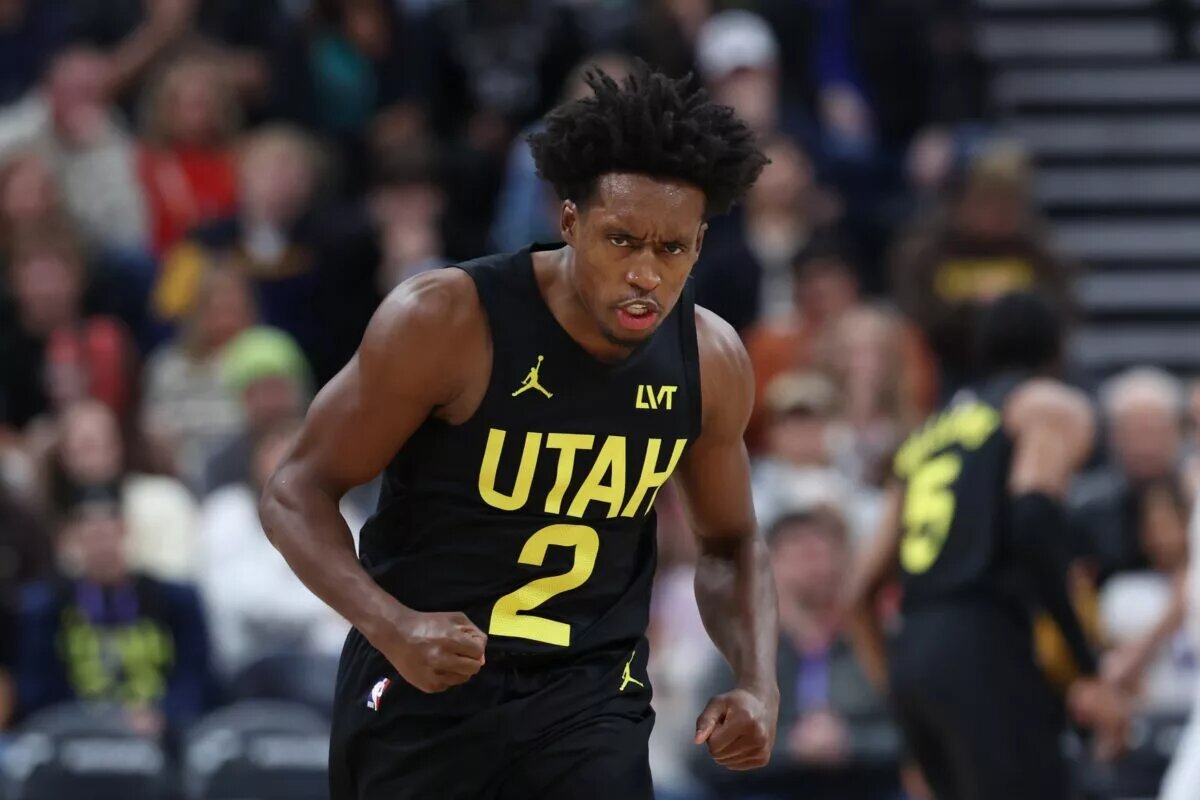

The Utah Jazz have revealed that seven-year veteran Collin Sexton sustained “a fourth finger distal interphalangeal joint avulsion fracture” during their loss to the San Antonio Spurs on Oct. 31.
Jazz Injury Updates:
Collin Sexton was injured during the third quarter of last night’s game vs San Antonio and was diagnosed with a left fourth finger Distal Interphalangeal (DIP) joint avulsion fracture. He will continue to play as tolerated.
Jordan Clarkson began…
— Utah Jazz (@utahjazz) November 1, 2024
Sexton’s fractured finger won’t prevent him from playing, in part due to his toughness and pain tolerance. Furthermore, it’s possible that the injury heals without surgery by the end of the season. However, he may opt to undergo a surgical or non-surgical procedure to repair the digit when the season ends.
Jazz Guard Collin Sexton’s Injury Could Have Wide-Ranging Implications
If Sexton does decide to go the procedural route, it could affect the amount that he can practice, which may or may not be problematic depending on how long the rehab will take. If Sexton is unable to take part in basketball-related activities for an extensive period, he could come out the gates a bit slower next season. Yet, it might also prevent him from getting injured during training or a pickup game, which are common occurrences.
Additionally, one has to wonder whether it’ll affect the likelihood of him being traded. To this point, the Jazz have yet to firmly commit to Sexton. This and the 25-year-old’s steadily approaching contract year makes him a prime trade candidate.
Utah has motivation to get a deal done as soon as possible though.
The End Is Near
Sexton has played well over the past couple of seasons, particularly as a starter.
Nonetheless, if the Jazz don’t believe he’s part of their puzzle, then they should move him before an inactive offseason that might affect his future play. With that being said, if Sexton is injured or perceived to be banged up, it might not halt trade offers. However, it might affect how many they see and the type that they get, especially as his trajectory has been impacted by two serious injuries. A fractured finger isn’t career-altering, but it doesn’t inspire confidence about his durability.
If Sexton takes another step before his contract expires in 2026 though, it’s a double-edged sword for the Jazz. He’ll increase both his trade and free market value. As a result, it’s likely he’ll receive competitive offers from other teams in the 2026 offseason. He could subsequently leave Utah without them getting any assets in return.
As that’s clearly not an ideal route, this season’s trade deadline is an ideal time for the Jazz to move him.