

Washington Redskins legend Monte Coleman has died at the age of 68. He was, without question, one of the greatest defensive players in Washington history, and arguably one of the greatest Redskins of all time.
Washington Redskins Legend Monte Coleman Has Died at the Age of 68
Coleman spent his entire sixteen-season career in the NFL with the Washington Redskins. In today’s NFL, the thought of a player lasting that long with one team sounds like an anomaly.
Monte Coleman: The Early Years
Players change teams now before fans even learn how to spell their names correctly. Not Monte Coleman. He came to Washington as an 11th-round pick in 1979 and somehow turned that into 215 regular-season games, three Super Bowl rings, and a spot in the now Washington Commanders’ Ring of Fame. As someone who was picked up in the 11th round and would presumably be a camp body, he did pretty well for himself.
Turns out, former Redskins General Manager Bobby Beathard saw something special in Coleman. Beathard had a knack for identifying talent, and he did not miss the mark on Coleman.
Coleman’s Numbers Don’t Lie
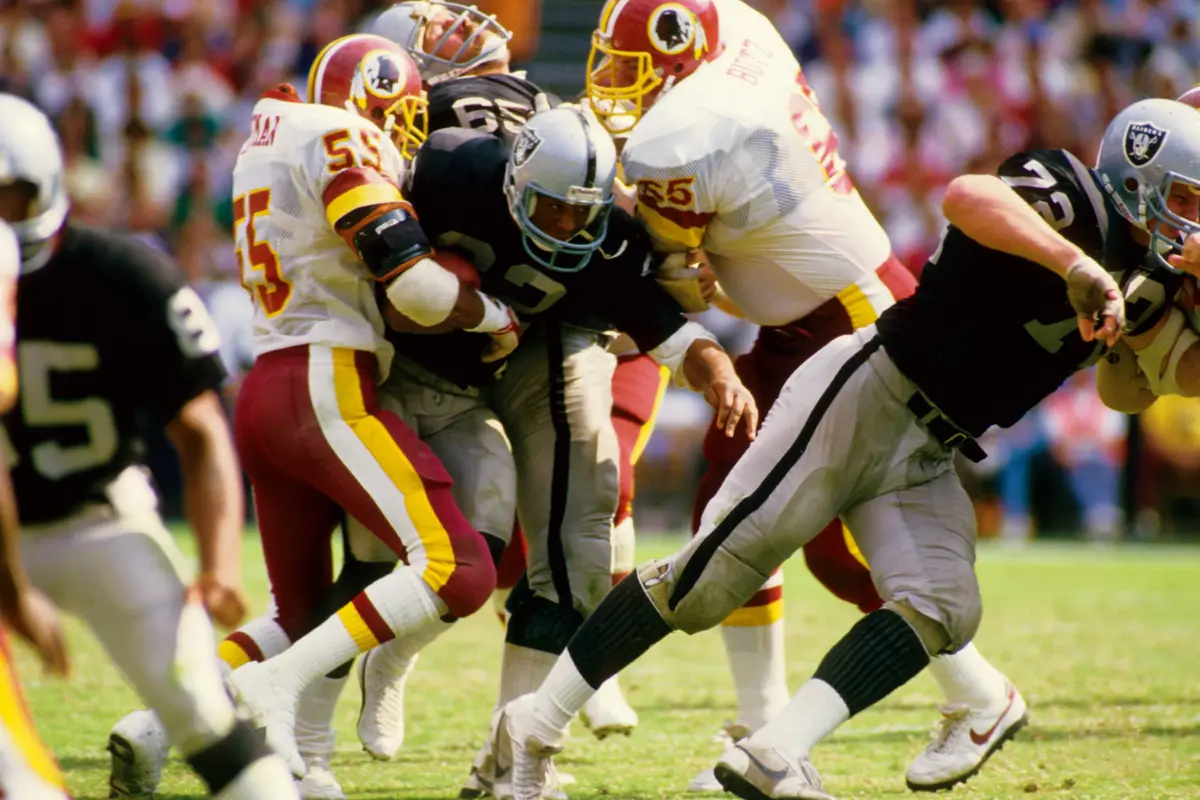
Coleman wasn’t the loudest piece of those Washington defenses. He didn’t need to be. Those teams already had enough names, attitude, and enough Sunday afternoon violence to fill a VHS shelf. Coleman just kept showing up in the middle of it, doing the kind of work that doesn’t always get romanticized until years later, when everyone realizes that players like him are the glue that holds the team together.
Coleman’s stats throughout his time in Washington were remarkable. He finished with 999 solo tackles, 49.5 sacks, and 17 interceptions. Coleman also ranks second in franchise history in games played, only behind another Redskins legend, Darrell Green. That is an excellent company to be in the same discussion as.
What Made Monte Coleman Different
What made Coleman different wasn’t just his consistent production. Plenty of players had the production that he did. The difference between Coleman and others was his staying power. He started as a safety in college, became a linebacker, bulked up, kept his speed, and carved out a career that ran from 1979 to 1994. That is the very definition of surviving a league that spends every offseason trying to replace you with someone younger and cheaper.
And he never gave Washington a good reason to do it.
That’s the part fans should really think about when remembering Monte Coleman.
Why “Old School” is Cool
He came from an era when Washington still had an identity you could actually recognize without a marketing department explaining it to you. Tough. Uncomfortable to play against. Full of guys who weren’t trying to become brands before they became football players. Maybe that sounds old school. Fine. Some things are worth sounding old about.
Life After the NFL
After football, Coleman stayed with the game. He coached at Arkansas Pine Bluff and later led the program to a SWAC championship in 2012, which is not surprising. Guys like that usually don’t just vanish into golf polos and autograph shows. They teach, lead, and give back to the game by passing on the valuable information they have accrued to the next generation.
Washington has spent a long time trying to get back to what it used to be. New names, uniforms, and stadium plans. Every year, there is a new speech about culture, toughness, and accountability.
Monte Coleman didn’t need the speech.
He was already the example.