
Kenyon Sadiq is the type of prospect that makes NFL teams salivate the moment they turn on the tape, but the truth is, only certain systems are going to actually unlock what he can become.
Kenyon Sadiq NFL Projection: Scheme Fit Will Define His Ceiling
His athletic profile is absurd. His production is rising. But the real conversation is the fit and development. Because he isn’t a plug-and-play tight end.
In a lot of ways, this is where the Vernon Davis comparison comes in. The tools are obvious. The speed jumps off the screen. But part of his success is going to require ownership from the coaching staff and from Sadiq himself, because the raw ability alone won’t be enough.
Where he lands matters. What he’s asked to do matters even more.
- Elite athlete, still developing as a complete tight end
- Best used as a matchup weapon, not a traditional TE
- Scheme fit will define early career production
Athletic Profile
Sadiq’s athletic profile is exactly why scouts fall in love with him.
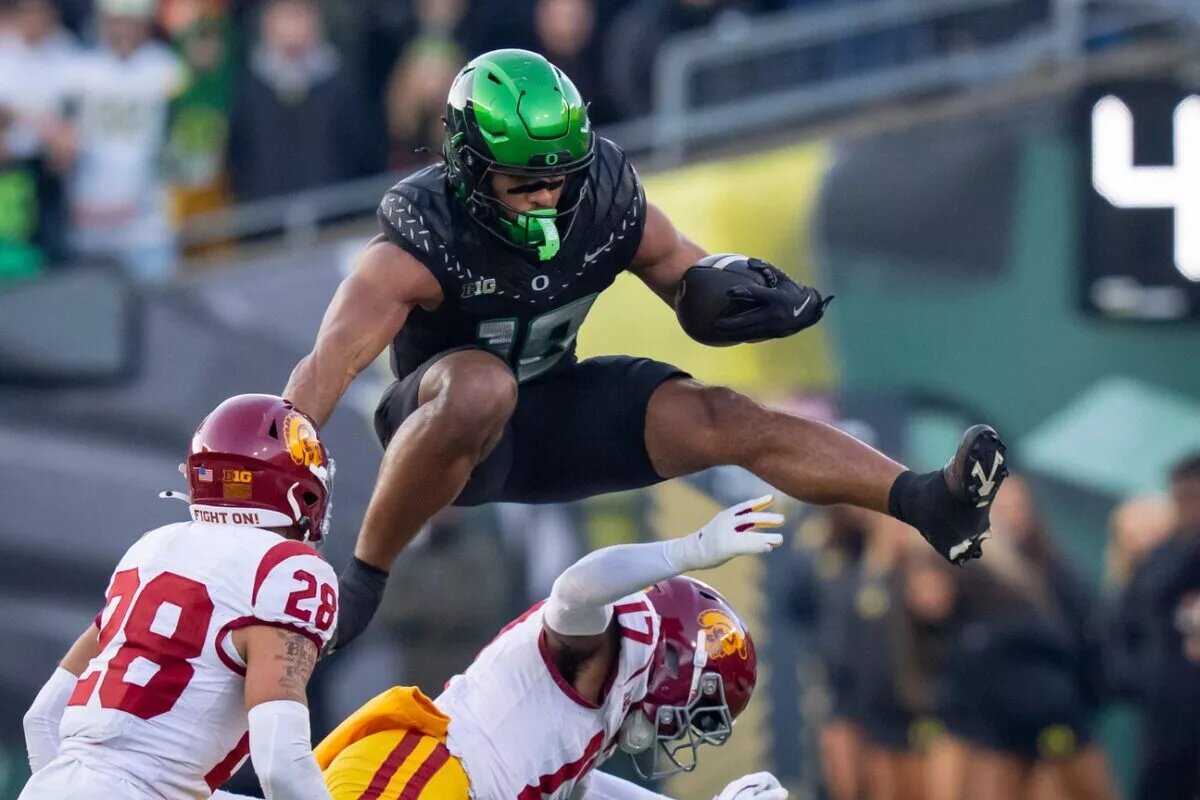
A 4.39 40-yard dash at tight end is already insane, but when you pair that with his explosiveness and size, you’re talking about a player who can completely stress a defense vertically. That speed alone makes him a true seam threat the second he steps on the field.
But it’s not just straight-line speed. It’s what that speed does to defenders in space. Linebackers can’t run with him. Safeties have to respect him over the top. And once he’s past the second level, he’s gone.
Still, there’s nuance here. He’s not a sudden, twitchy route technician. He’s a build-up athlete who wins with acceleration and stride length more than short-area wiggle.
- Best-in-class vertical speed for the position
- Dangerous seam and explosive pass game weapon
- Elite run-after-catch potential
- More linear than lateral as an athlete
Strengths
This is where Sadiq becomes exciting as a role player immediately and a potential star long term.
The biggest thing is how defenses have to account for him. He can win in multiple alignments, and that alone forces communication breakdowns if he’s used correctly. When he’s moving pre-snap or flexed out, he becomes a matchup problem instantly.
There’s also real YAC ability. He isn’t just a straight-line speed player. He has shown the catch, turn, and run move. An ability to break through arm tackles and pursuit angles. That’s where the Travis Kelce-style conversation comes in, not as a carbon copy, but as a player who can live in space and punish defenders who misfit leverage.
- True vertical field stretcher from TE alignment
- Strong YAC ability in the open field
- Alignment versatility (inline, slot, motion, H-back)
- Natural feel for attacking space when used properly
- Dangerous secondary/tertiary option in the passing game
Used correctly, he can easily become a 700+ yard type weapon early in his career without being the focal point.
Weaknesses
Compared to someone like Brock Bowers, Sadiq is not nearly as refined a route runner. He doesn’t consistently win with technique. He wins with his athletic advantage. That works in college. In the NFL, it’s more complicated.
He also cannot be treated like a primary receiver right away. If a team tries to force him into that role, the inconsistencies will show up fast. He’s at his best when he’s option two or three in the passing structure.
And then there’s the blocking. This is where development has to happen. Right now, he can function in space and as a move piece, but asking him to consistently handle NFL defensive ends or be a true in-line presence is a stretch.
- Raw route-running with limited refinement
- Not yet a true WR1-style tight end option
- Needs functional strength and blocking development
- Can be inconsistent as a complete offensive piece
NFL Projection
The best way to understand Kenyon Sadiq is through how modern NFL systems are built to use movement, space, and stress rather than static alignments.
This is about drafting him for a system identity.
The Miami Dolphins were the blueprint for motion-heavy structure, but that influence has spread. Late 2024 into 2025, offenses like the Los Angeles Rams, Green Bay Packers, and Buffalo Bills all leaned more into pre-snap movement, condensed formations, and shift-based conflict creation. That’s the environment Sadiq needs.
Even more importantly, there’s a natural fit developing with the Los Angeles Chargers. With Mike McDaniel now the Offensive Coordinator, leading a run-heavy offense that already has an identity built around physicality, adding motion and misdirection elements with Sadiq makes a lot of sense. You’re not changing who they are. You’re layering explosives onto it.
That’s the key with Sadiq. He doesn’t need a system rebuilt around him. He needs a system that already stresses defenses pre-snap and allows him to operate in space instead of being boxed in as a traditional in-line tight end.
In those environments, he becomes a problem immediately, without being asked to be a complete player on day one.
- Best fit: motion-heavy, condensed, timing-based offenses
- Ideal early role: TE2, motion weapon, vertical seam stressor
- Chargers (McDaniel system): run identity + added motion conflict pieces
- Rams / Packers / Bills: strong schematic fits due to pre-snap movement usage
- Development focus: blocking growth + middle-field timing with QB
Long term, the projection is simple: let the movement unlock the athlete first, then build the refinement behind it. If that hits, you’re not just drafting a tight end, you’re drafting a matchup problem defenses never fully solve.
Last Word on Kenyon Sadiq
Kenyon Sadiq is going to force a coaching staff to make a decision: Are you going to use him, or are you going to develop him?
Because those are two different things.
The Vernon Davis comparison makes sense in the sense that the tools are rare and the early career arc may be uneven. But there’s also risk here if people expect instant production without patience. You can also find a cautionary path like Dustin Keller, a player with athletic traits who never fully maximized them in a stable role.
At the end of the day, Sadiq shouldn’t be judged just on raw stats or highlight plays. He needs to be evaluated on impact:
- Does he force coverage adjustments?
- Does he change defensive structure?
- Does he create conflict for linebackers and safeties?
If the answer becomes yes consistently, then the team that drafts him didn’t just get a tight end; they got a weapon.