


Dynasty sleepers aren’t always easy to nail. The early round prospects are the ones everyone hears about, and guys drafted later by NFL teams often have red flags in the first place. Understandably, nothing is ever fully a lock when digging for sleepers that could end up being gems, but three tantalizing prospects stand out as massive ceiling picks.
Landing late-round dynasty sleepers is more important than ever, as some people don’t have a first or second-round pick to work with. Finding the next Puka Nacua isn’t easy (nor should it be expected), but these three dynasty rookies have stud potential and can be had in virtually every rookie draft.
3 Must-Draft Dynasty Sleepers Available in Every Rookie Draft
Skyler Bell, WR, Buffalo Bills
Wide receiver is a top-heavy position this year, but there’s still room for some dynasty sleepers to emerge. The obvious ones go early, as Carnell Tate is going within the first five picks in every rookie draft, while Jordyn Tyson isn’t far behind in most others. Makai Lemon, KC Concepcion, Omar Cooper Jr., Antonio Williams, and Denzel Boston are all must-have dynasty options that are hearing their names called at the end of round one or early in round two, as well.
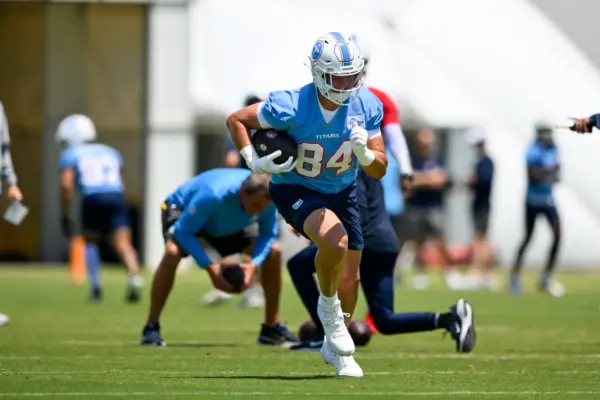
After that wave of top-shelf wide receiver talent, you have a big group of mid-to-late second-round options, with guys like Germie Bernard, De’Zhaun Stribling, Zachariah Branch, and Chris Bell garnering attention the most. One name flying a bit under the radar behind all of these prospects? New Buffalo Bills wideout, Skyler Bell.
Bell is especially intriguing due to the lack of investment required in most rookie drafts. Some leagues may demand a second-round pull, but he often slides into the third round. Buffalo made him a fourth-round pick in the NFL Draft, but there is a very strong argument that the guy drawing Ja’Marr Chase comparisons should have gone earlier.
.@davehelman_ believes Bills WR Skyler Bell could be “Ja’Marr Chase lite” in the NFL. pic.twitter.com/u2ZK39QSf2
— SleeperNFL (@SleeperNFL) April 26, 2026
While Bell didn’t make any noise at his first stop in college football at Wisconsin, a transfer to UConn really put him on the map. First, he showed his big-play ability in 2024, when he averaged 17.2 yards per catch, turning 50 grabs into 860 receiving yards and five scores.
Bell’s second season with the Huskies is what really showed his upside, of course, as he doubled his production with a mind-boggling 101 catches for 1,278 receiving yards and 13 touchdowns. In one season, Bell was showing how he can generate chunk plays, and the next, he showcased his red-zone chops and ability to carry an offense with reliable chain-moving.
The best part? Bell is a freak athlete. The UConn alum has average size for the position, but he dropped a 9.83 Relative Athletic Score (RAS), showcasing strong timed speed and fantastic overall athleticism.
With Buffalo investing solid draft capital in him, it’s worth wondering just how quickly that combination of athletic traits and proven production could be put to good use.
Eli Heidenreich, RB, Pittsburgh Steelers
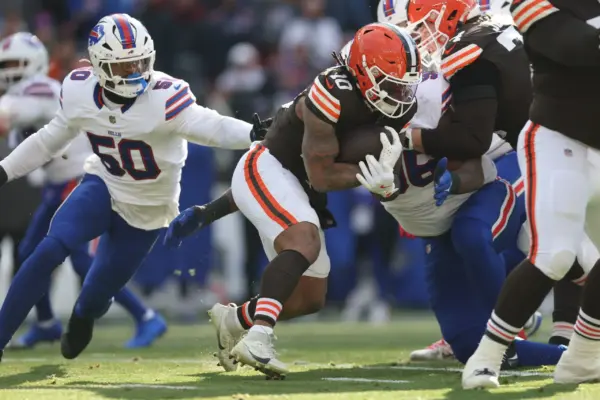
If you want some dynasty sleepers that can be had even later in rookie drafts, take a dip in the running back pool and consider Navy offensive weapon, Eli Heidenreich. If being compared to Ja’Marr Chase isn’t enough, perhaps a prospect that has been likened to the great Christian McCaffrey might move the needle.
Eli Heidenreich vs Christian McCaffrey #Steelers #NFL pic.twitter.com/DaKEksfY2V
— Steelers Depot 7⃣ (@Steelersdepot) April 25, 2026
That comparison isn’t very fair, but there’s still no denying how tantalizing a prospect Heidenreich is. The Pittsburgh Steelers thought enough of him to snag him in round seven, but based simply on his raw athleticism, it’s a wonder how he lasted that long.
Heidenreich was a matchup nightmare for the Midshipmen, as Navy deployed him all over the field, using him as a runner and receiver. His size and versatility have him profiling as a compelling running back prospect, but his athletic traits and ability to do whatever is asked of him could make him a position-less force to be reckoned with.
Navy’s star weapon didn’t have crazy volume to work with, but he was nothing if efficient. He showed he can make an impact with touches out of the backfield (6.8 yards per carry for his career), but he really left his mark with chunk plays in the passing game. Heidenreich caught a career-high 51 balls in 2025, turning those opportunities into 941 yards and six scores, while posting a robust 18.5 yards per catch average.
Heidenreich doesn’t grade out quite as well as Bell athletically, but he’s still quite good. He enters the NFL with a 9.25 RAS grade, as he has solid timed speed and is an exceptional overall athlete.
Unlike Bell, Heidenreich does not have quality draft capital. His college production was still impressive and hyper-efficient, but the overall numbers still won’t blow people away. On top of that, another red flag is that he comes into a Steelers backfield that has three backs firmly in front of him.
Truth be told, this is unlikely to be a guy who makes a huge first-year impact. However, the new Steelers head coach has a history of turning dynamic athletes such as Randall Cobb and Ty Montgomery into useful weapons. And with Heidenreich available in round three of virtually every rookie draft (if not later), the cost to stash him is non-existent.
Matt Hibner, TE, Baltimore Ravens
There are a lot of interesting 2026 rookies that could be argued as potential dynasty sleepers. Some combination of draft capital, raw athleticism, opportunity, or college production has to exist to take a leap with a prospect, however. New Baltimore Ravens tight end Matthew Hibner certainly won’t check off the “college production” box, but he gets a pass in every other regard.
Hibner did next to nothing for three years at Michigan before transferring to SMU. Even with the Mustangs, his 2025 campaign was his best (31 catches), and even then, the stats weren’t eye-popping. He showed enough during his two years there, however, displaying solid athleticism and soft hands, while turning limited opportunities into eight touchdowns.
The overall production wasn’t impressive, but the efficiency was. Hibner follows Bell and Heidenreich as another compelling prospect who passes the eye test athletically, but his drills also proved it, as he enters the league with a stout 9.25 RAS grade. In fact, his athletic score was so good that he ranks 112th out of over 1,400 tight ends graded since 1987.
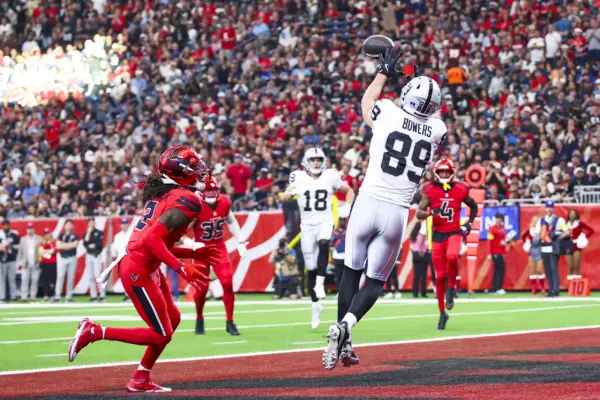
It gets better. The college performance and athletic traits were there, and that’s precisely why the Baltimore Ravens plucked him off the draft board in the fourth round. The draft capital is there, while the Ravens watched dynamic tight end Isaiah Likely depart in free agency. Now, all that’s stopping Hibner from a breakout in the NFL is an aging Mark Andrews.
A recent Mark Andrews contract extension likely means Hibner is won’t unseat him right away, but he could be the future at the position for Baltimore, and if things break just right, he can go from being a late-round rookie draft stash to one of the best dynasty studs worth targeting.
Overall, these three dynasty sleepers are easy to get to in 2026 rookie drafts, and they have a lot going for them. In what has been deemed a “weak” rookie class, it’s important to turn over every stone to maximize draft picks. Even if one of these players hits and becomes a stud, it’ll be worth drafting all three of them.