
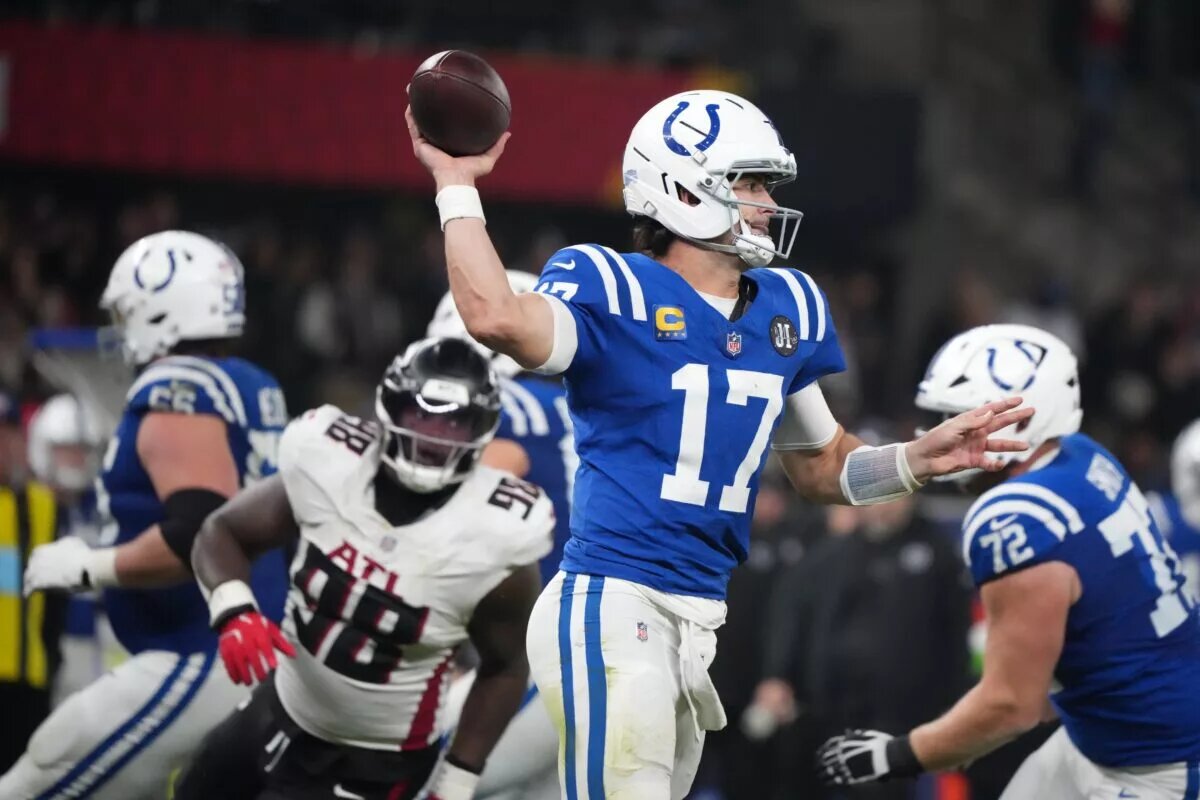

The Indianapolis Colts’ to-do list has had several important items checked off this offseason, yet those moves have not inspired much confidence around the league. A glance at post-draft report cards shows most analysts believe Indianapolis took a step backward entering 2026.
Still, general manager Chris Ballard’s vision was clear. The Colts retained Daniel Jones and Alec Pierce — two players the organization clearly views as foundational pieces — while aggressively trying to rebuild a defense that lacked speed, depth, and physicality last season.
Despite those moves, the Colts are not a finished product. They aren’t even, it could be argued, as good as they were amid last season’s 8-2 start. But they do have more than $20 million in cap space, according to Over The Cap.
Colts to-do List Should Include These Five Moves
Training camp is approaching, and for the Colts to compete in a loaded AFC, there are several moves they should make before training camp begins. Here are five they need to focus on.
1. Sign Bobby Wagner
At this stage of his career, Wagner is no longer an every-down linebacker capable of carrying a defense. But as he nears his 36th birthday, Wagner is exactly what the Colts need: A team leader (and future Hall of Famer) who can mentor young players.
Second-round pick C.J. Allen projects as a future centerpiece of the linebacker room. Adding Wagner would give the defense a veteran voice capable of helping accelerate that development. Few linebackers in NFL history understand preparation, positioning, and leadership the way Wagner does. And he still has gas in the tank. Wagner finished fifth in the league in total tackles last year with the Washington Commanders, while earning PFF’s ninth-best grade among all qualified linebackers.
Just as importantly, Wagner would likely come cheap; estimates are in the $6-8 million range for a one-year deal. Indianapolis doesn’t need Wagner to play 1,100 snaps. It needs him to stabilize a young defense, help on running downs, and mentor players who are expected to become long-term starters.
2. Sign Deebo Samuel
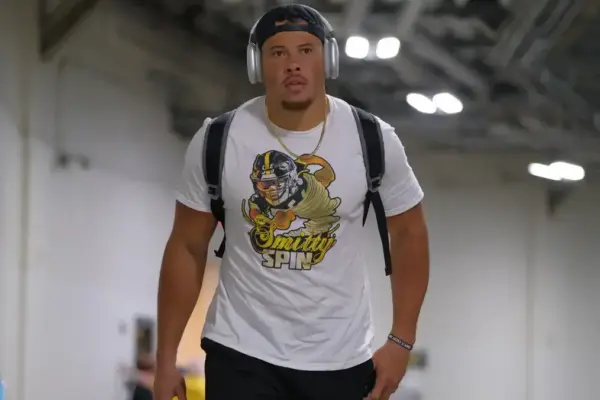
Trading Michael Pittman Jr. to the Pittsburgh Steelers created a major void in the offense, regardless of how much the Colts believe in Pierce’s continued ascent.
Yes, seventh-round rookie Deion Burks was one of the steals of the draft and gives the offense legitimate speed. But relying too heavily on a Day 3 rookie would obviously be risky, as would relying too much on Josh Downs or Nick Westbrook-Ikhine, especially considering Daniel Jones is returning from a torn Achilles and will need as much help as possible early in the season.
Samuel is not a true No. 1 receiver, but he remains productive and versatile. He can line up outside, in the slot, and in the backfield, giving head coach Shane Steichen another movable piece capable of creating yards after the catch. More importantly, Samuel would likely be available on a relatively affordable contract — he played on a one-year, $9 million deal with the Commanders last season, producing 72 catches for 727 yards and five touchdowns. He could likely be signed for a bit less in his age-30 season.
3. Prioritize Health of Daniel Jones, DeForest Buckner
Nothing matters more for Indianapolis this season than the health of Jones and Buckner.
Jones is returning from a torn Achilles, while Buckner is working back from a herniated disc in his neck. The Colts’ ceiling on both sides of the ball depends heavily on those two being healthy and effective.
Because of that, Indianapolis should resist any temptation to rush Jones back onto the field if he is not fully ready by Week 1, and the same goes for Buckner. In fact — based on one quirk of the Colts’ 2026 schedule — it may make sense to let Riley Leonard start the first two or three games at quarterback if necessary.
Indianapolis opens the season with a brutal three-game stretch, and the Colts will almost certainly be underdogs in all of those matchups (they opened as 3.5-point home ‘dogs against the Ravens in Week 1, then they’ll face the Chiefs and Texans). Even with Jones and/or Buckner, a 0-3 start is very much in play. Allowing Jones extra recovery time could pay massive dividends over the course of a 17-game season.
Leonard also showed promise in his lone start last season, which came against the NFL’s best defense in Houston. If he can keep the offense functional for two or three games, Indianapolis would gladly accept that tradeoff if it means Jones is healthier for the long haul.
4. Trade Anthony Richardson
There has been growing chatter recently suggesting a twist in the Colts-Richardson saga, with the quarterback reporting to voluntary workouts. Despite his trade request, Richardson remains on the team long after free agency and the draft.
But it feels less like a genuine pivot and more like an attempt to generate trade interest. Ballard said there was basically no interest in Richardson from other teams during the draft. Getting him offseason reps is not only greatly needed by the oft-injured quarterback, but it could also help boost his stock.
Keeping Richardson after handing Jones an $88 million extension simply does not make much sense financially. It would be illogical for the Colts to keep Richardson for the fourth year of his rookie deal — a $10.8 million cap hit for a projected backup — after declining his fifth-year option (which would’ve been $22.5 million for 2027).
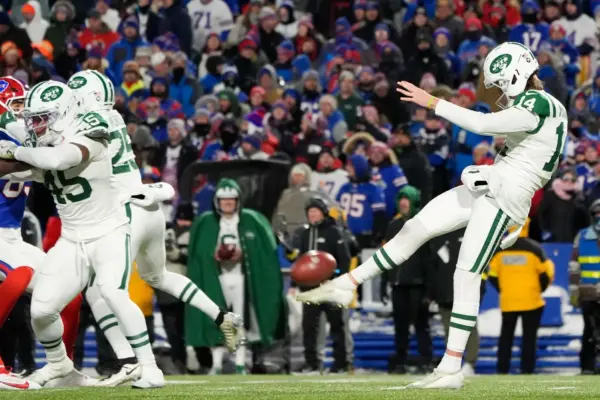
Realistically, the Colts are probably not getting more than a sixth- or seventh-round pick in return. But even a late-round selection would be preferable to forcing an awkward situation into training camp. Finding a trade partner — Dolphins? Jets? — should certainly be on the Colts to-do list.
5. Plan for Jonathan Taylor, Quenton Nelson
The Colts have another major issue looming: the futures of Jonathan Taylor and Quenton Nelson.
Arguably, the two best players on the roster are both entering contract years, and extension talks are unlikely to be simple. Nelson remains one of the premier guards in football, while Taylor is still among the NFL’s most dynamic running backs when healthy.
Elite guards and running backs can still command massive contracts, but teams have become increasingly hesitant to hand out top-tier money at those positions. Indianapolis may encounter serious sticker shock trying to keep both players long-term.
Ideally, the Colts find a way to retain both. But if extensions are not reached before the season, the organization could be staring at a difficult franchise-tag decision next offseason.
That is not a situation the Colts should allow to linger unresolved.
Indianapolis established a clear direction this offseason. But whether it becomes a legitimate AFC contender — rather than simply a fringe playoff team — may depend on how many more items can be checked off the Colts to-do list before training camp begins.