


When you look at the Kansas City Chiefs, this isn’t an organization guessing its way through the draft. Under Brett Veach and Andy Reid, they’ve built a system rooted in preparation, development, and role clarity.
Kansas City Chiefs 2026 Mock Draft: Smart, Disciplined Roster Building
They’ve done an excellent job identifying talent, gathering the right information, and trusting their process. Just as important, the coaching staff has consistently put players in positions to succeed and developed them once they get in the building. That’s why this draft matters.
Not because they need to rebuild, but because they need to sustain. When you’re operating inside a championship window, every pick is about maintaining structure, reinforcing depth, and avoiding mistakes that set you back.
This mock follows that same mindset.
No trades. No forcing picks. Just letting the board come to you, and adding players who can step into defined roles and help this roster keep moving forward.
Round 1, Pick 9: Rueben Bain Jr., EDGE (Miami)
This is the cleanest, most stabilizing pick on the board for Kansas City. Rueben Bain Jr. gives you exactly what this defense has historically valued under Steve Spagnuolo: control at the point of attack, discipline in the run game, and consistent pressure without needing to manufacture chaos every snap. He’s not a flashy pass-rush-only piece. He’s a complete defensive end who plays with structure.
In this system, that matters more than anything. Bain sets a firm edge in the run game, plays with natural leverage, and wins with controlled power rather than freelancing. He doesn’t chase sacks. He builds pressure through consistency. That’s how you stabilize a defensive front and allow the rest of the system to work behind him.
- Strong, disciplined edge setter vs. the run
- Heavy-handed rusher with consistent pressure ability
- Plays within structure, rarely takes himself out of reps
- True three-down defensive lineman profile
- Scheme fit: ideal for Spagnuolo-style front control
Alternative Defensive Pick: Caleb Downs, S (Ohio State)
If Bain is off the board, this becomes a pivot from “fix the front” to “control the back end.”
Caleb Downs is one of the most complete defenders in the class, and at this point in the draft, you’re not forcing positional need. You’re adding impact. In today’s NFL, elite safety play is not optional anymore, especially for a defense that lives in communication-heavy coverage shells.
Downs gives you instant stability in the middle of the field and raises the floor of the entire defense.
-
- Elite instincts and route anticipation
- Range to erase mistakes over the top
- High-level communicator and coverage organizer
- Immediate starter with scheme versatility
- Defensive tone-setter in the secondary
Alternative Offensive Pick: Kenyon Sadiq, TE (Oregon)
This is the break-glass emergency option on the board.
At this point, both preferred targets are gone, and the remaining offensive tackles are not graded highly enough to justify forcing the pick. On top of that, this staff believes they can find a comparable wide receiver value later in the draft. So instead of reaching for need, they pivot to upside and offensive stress.
Kenyon Sadiq becomes the cleanest remaining impact piece available.
This is not a “we need a tight end” selection. This is a “we need explosive versatility somewhere in the offense” selection. Sadiq brings rare 4.39 speed, alignment flexibility, and vertical seam ability that immediately changes how defenses have to structure coverage when he’s on the field.
He’s not stepping in as a finished product or focal point. He’s a movement weapon, a secondary stressor, and a matchup creation piece while the rest of his game develops.
- Break-glass offensive weapon, not a need pick
- Preferred WR/tackle options off the board or overvalued
- Explosive 4.39 speed from TE alignment
- Immediate motion + vertical seam stress role
- Long-term upside as a mismatch TE2/weapon
In short, this isn’t the plan A pick, but it might be the best way to maximize value once the board doesn’t break your way.
Round 1, Pick 29: Denzel Boston, WR (Washington)
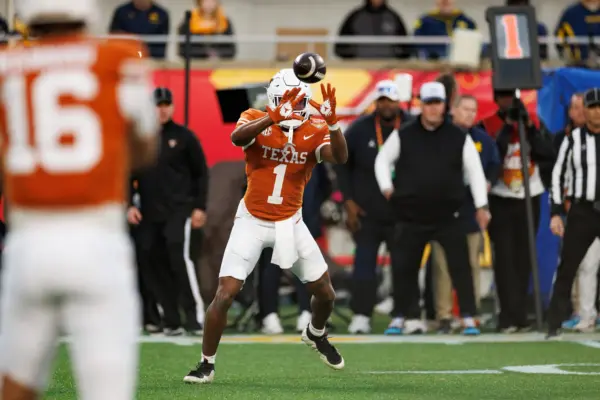
This is a fit pick. Boston gives Kansas City a true X receiver, something this offense has lacked in terms of consistency. He’s not here to separate at an elite level every snap, but here to finish plays. He gives Patrick Mahomes a reliable target in tight windows and brings a physical presence that shows up when the field shrinks.
- True X receiver with size and physicality
- Reliable in contested catch situations
- Red-zone effectiveness
- Third-down conversion target
Alternative Offensive Pick: Kadyn Proctor, OT (Alabama)
If the board leans offense early or Boston is gone, this is a ceiling swing in the trenches.
Proctor gives you rare size and raw power. At 6’7”, 352 pounds, he’s the type of lineman who can physically overwhelm defenders when he’s right. The upside is clear: you’re betting on development and consistency.
Kansas City doesn’t need a tackle immediately, but they always invest in protecting their quarterback long-term.
- Elite size and physical traits
- Heavy hands and natural power
- Generates movement in the run game
- High ceiling with positional flexibility (OT/G)
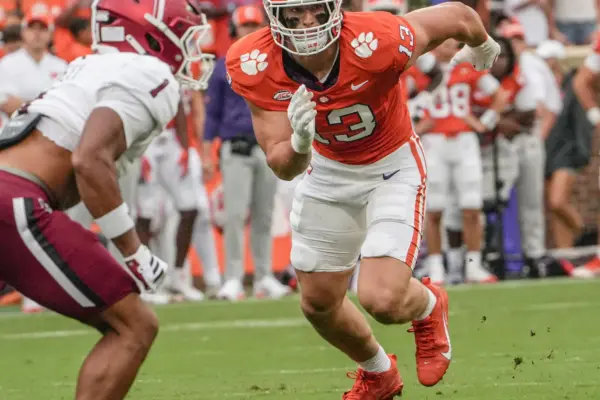
Alternative Defensive Pick: T.J. Parker, EDGE (Clemson)
If you didn’t address the edge earlier, or the value is too good to pass up, this becomes the cleanest defensive pivot.
Parker fits exactly how Kansas City builds its defensive line: disciplined, reliable, and able to stay on the field. He’s not a projection. He’s a player you trust immediately.
- Strong vs. the run
- Consistent pass-rush production
- Disciplined, high-effort play
- Three-down capability
Round 2, Pick 40: Chase Bisontis, OG (Texas A&M)
This is one of those picks that doesn’t get the headlines, but absolutely shapes how the entire offense functions.
Chase Bisontis fits the exact mold Kansas City consistently values: physical, steady, and technically grounded interior offensive line play. This is not a flashy selection. This is an “everything starts up front” decision. The Chiefs have always prioritized protection inside because it stabilizes both the run game and quarterback timing. Bisontis gives you that baseline immediately, while still offering long-term starter upside as he develops.
He’s not being drafted to fix everything on Day 1, but he does give you reliability you can build around.
- Strong base with natural play strength
- Technically sound and controlled in pass sets
- Experienced across multiple interior spots
- Starter upside with developmental ceiling
- Scheme fit: interior stability in timing-based offense
Alternative Defensive Pick: Chris Johnson, CB (San Diego State)
If the board shifts defensively and value meets need, this is where things get interesting.
Chris Johnson is an ascending corner who has quietly built momentum through the predraft process. Multiple evaluators have pointed to him as one of the most underrated risers in the class, and there’s a real chance he ends up going earlier than expected. Kansas City would be betting on traits, toughness, and system fit here, especially in a secondary that needs more consistency in preventing explosive plays.
He brings a physical presence at the catch point and has enough versatility to contribute early in rotational packages while developing into a larger role.
- Physical corner with strong catch-point competitiveness
- Scheme-versatile defender (press or zone looks)
- Immediate rotational contributor with starter upside
- Developmental trajectory tied to technique refinement
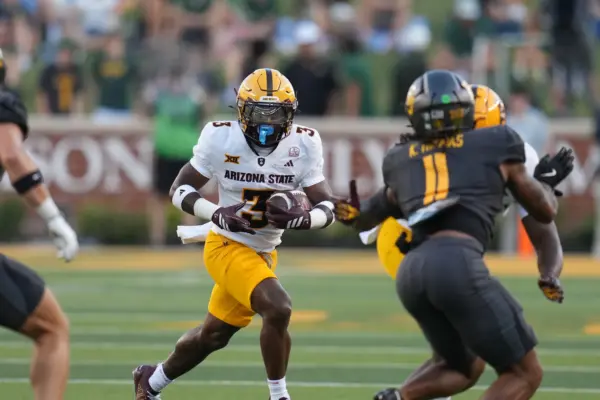
Alternative Offensive Pick: Germie Bernard, WR (Alabama)
If the board drops wide receiver value into their lap, this is the cleanest fit.
Germie Bernard isn’t the flashiest athlete in the class, but he’s one of the most polished and efficient separators. He wins with detail, timing, and understanding of leverage, traits that translate quickly into NFL offenses.
In a system that already values structure and timing, Bernard gives you something the offense can use immediately: a reliable separator who understands how to get open consistently.
- High-IQ route runner with advanced detail
- Reliable hands and chain-moving ability
- Strong separation skills vs zone and man concepts
- Immediate rotational receiver with long-term WR2 upside
Round 3, Pick 74: D’Angelo Ponds, CB
This is the kind of adjustment good draft boards make, value meets scheme instead of forcing need or reach.
D’Angelo Ponds fits exactly what this defense wants from its cornerbacks: discipline, awareness, and the ability to execute within structure. He’s not a size or athletic-profile corner in the traditional sense. He’s an instincts-and-processing corner who understands spacing and timing in zone coverage.
In a system that asks its secondary to communicate and stay disciplined rather than chase plays, Ponds fits naturally. He’s not trying to win every rep physically, he’s winning with positioning, anticipation, and ball awareness.
- Elite zone awareness and route recognition
- Quick feet with smooth transitions in space
- Strong ball production and anticipation skills
- Assignment-sound, disciplined defender
- Scheme fit: zone-heavy or split-field coverage system
Alternative Defensive Pick: Julian Neal, CB (Arkansas)
If Ponds is off the board or the evaluation shifts slightly, this becomes a very similar profile pivot.
Julian Neal offers a comparable structural fit, another corner who thrives within defined rules rather than chaotic man-coverage situations. He’s steady, developing, and projectable within a system that emphasizes communication and alignment over pure isolation wins.
He’s not a flash pick, but he is a functional one.
- Strong spatial awareness and zone discipline
- Scheme-versatile defender with rotational value early
- Developmental upside tied to technique growth
- Reliable depth piece with starter potential
Alternative Offensive Pick: Mike Washington Jr., RB (Arkansas)
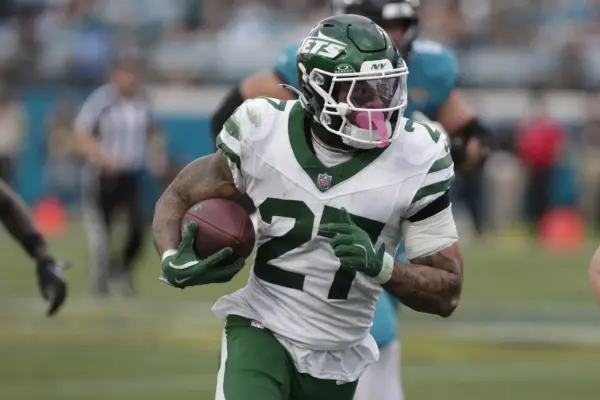
Even with Super Bowl MVP Kenneth Walker III established as the lead back, this is where smart roster building shows up, you don’t just rely on one runner to carry the full load over a long season.
Mike Washington Jr. gives you versatility, balance, and depth in the run game. He’s not being drafted to replace anyone immediately, he’s being drafted to complement and sustain the offense across a full season.
He brings contact balance, functional vision, and enough versatility to handle meaningful touches early while developing into a rotational piece.
- Physical runner with strong contact balance
- Capable of handling rotational workload early
- Adds depth behind primary backfield option
- Scheme fit: complementary zone/inside-run system back
Round 4, Pick 109: Zane Durant, DT (Penn State)
This is exactly the kind of value pick that fits how Kansas City builds a roster, patient, early, then aggressive when the board meets value.
You didn’t force a defensive tackle in the early rounds, and because of that, you still land a rotational interior player with real disruptive traits.
Zane Durant brings movement, effort, and interior quickness that translates immediately in a rotational role. He’s not being drafted to be the anchor of the front, he’s being drafted to keep the interior fresh, active, and unpredictable in waves.
This also fits the broader defensive line philosophy you’re building in this mock: you already invested in edge control earlier, now you’re layering interior disruption behind it. That’s how you sustain a front over a full season.
- Quick first step and interior penetration ability
- High-motor rotational defensive lineman
- Experience against top-tier competition
- Immediate rotational value with developmental upside
- Scheme fit: attacking interior role in structured front
Alternative Offensive Pick: Jude Bowry, OT (Boston College)
If the board shifts back toward offensive line value, this is a developmental swing that fits long-term planning.
Jude Bowry gives you size, length, and developmental traits at tackle, more of a future swing tackle profile than an immediate starter. This is a “build the pipeline” pick, not a plug-and-play answer.
-
- Long-term developmental tackle traits
- Ideal depth piece for offensive line pipeline
- Size/length profile fits NFL tackle projection mold
- Low-risk, high-development upside selection
Alternative Defensive Pick: Chris McClellan, DT (Missouri)
If the board shifts away from penetration-first interior defenders, this is where Kansas City can lean into size, power, and familiarity right in their backyard.
Chris McClellan is a long, powerful interior defender who brings NFL-ready mass and strength to the defensive line rotation. At 6’4”, 313 pounds, he fits the mold of a traditional interior presence who can hold his ground in the run game and flash enough power as a pass rusher to stay on the field in rotational packages.
This is not a splashy pick, but it’s a stabilizing one. McClellan gives you a body who can absorb blocks, occupy space, and keep linebackers clean behind him. In a defensive system that values structure and controlled pressure, that matters.
There’s also clear developmental upside as a rotational rusher. When he wins, it’s with power, bull rushes, leverage, and interior disruption rather than finesse or speed.
- Big-bodied interior defender with an NFL frame
- Strong vs. the run with good point-of-attack strength
- Power-based pass rush traits in a rotational role
- Local “backyard” prospect with scheme familiarity appeal
- Developmental upside as a rotational DT early in career
Round 5, Pick 148: Harold Perkins Jr., LB (LSU)
This is exactly the type of swing you take in this range if the board falls your way.
Harold Perkins Jr. brings speed, chaos, and versatility to the second level, traits that translate immediately in sub-package football even if the role isn’t traditional early on. This isn’t a “plug him in as your MIKE linebacker” pick. This is a move him around, stress protections, and create disruption type of selection.
In today’s NFL, linebackers who can’t run are liabilities. Perkins eliminates that problem instantly. The question isn’t whether he can move, it’s how you deploy him so his speed actually dictates matchups instead of getting lost in structure.
He fits best as a hybrid piece early, with long-term upside depending on how well he develops discipline and consistency within a defined role.
- Elite range and closing speed
- Natural blitz and pressure ability off the edge or interior
- Coverage upside in sub-packages
- High-end athletic profile with positional flexibility
- Best usage: movable chess piece, not traditional LB
Alternative Offensive Pick: Justin Joly, TE (NC State)
If the board leans offensive or you want to continue building depth and versatility on that side of the ball, this is a clean developmental option.
Justin Joly adds athleticism and versatility to the tight end room. He’s more of a functional depth piece early, but he gives you alignment flexibility and enough receiving ability to contribute in specific packages.
This is not a high-usage projection early. It’s a developmental piece with utility value.
- Athletic tight end with alignment flexibility
- Developmental receiving upside
- Depth piece with situational usage potential
- Scheme fit: rotational/matchup-based TE usage
Alternative Defensive Pick: Jake Golday, LB (Cincinnati)
If you want a more traditional developmental linebacker instead of a hybrid weapon, this is the steady option.
Jake Golday projects as a depth linebacker who can grow into a rotational role over time. He’s not as explosive as Perkins, but he offers structure, physicality, and a more straightforward developmental path.
This is a “build the room” pick rather than a “change the defense” pick.
- Physical developmental linebacker profile
- Reliable rotational potential on special teams early
- Straight-line, assignment-based defender
- Scheme fit: depth + developmental LB rotation
- Physical, developmental running back profile
Round 5, Pick 169: Jakobe Thomas, S (Miami)
This is about depth that turns into function over time. Kansas City consistently invests in defensive backs who can contribute on special teams early and grow into rotational roles, and this pick fits that exact mold.
Jakobe Thomas brings a high-IQ profile with enough versatility to stick on a roster while developing within sub-package defensive looks. He’s not being drafted to start immediately. He’s being drafted to stabilize depth, contribute on special teams, and grow into situational defensive usage.
In a system that rotates defensive backs and leans on communication and awareness, Thomas gives you a reliable developmental piece who understands spacing and assignment football.
- High football IQ and processing ability
- Immediate special teams contributor
- Rotational defensive upside in sub-packages
- Scheme fit: depth safety with developmental trajectory
Alternative Offensive Pick: Adam Randall, RB (Clemson)
If the board shifts toward offensive upside, this is a developmental runner who adds size, versatility, and long-term value to the backfield.
Adam Randall is a physical, toolsy back with untapped offensive production potential. He’s not a finished product, but he offers enough athletic traits and flexibility to carve out a rotational role and develop into a complementary piece.
This is a long-term upside swing rather than an immediate contributor.
- Physical, developmental running back profile
- Versatile athlete with offensive upside
- Can contribute in rotational packages early
- Scheme fit: complementary back with growth potential
Alternative Defensive Pick: Latrell McCutchin Sr., CB (Houston)
If the board leans back toward defense, this is a classic depth-and-development corner selection.
Latrell McCutchin Sr. gives you size, experience, and rotational upside at cornerback. He’s not a headline player, but he fits the type of defensive back room Kansas City consistently builds with multiple players who can rotate, cover in structure, and contribute on special teams.
He’s a developmental piece with enough physical tools to compete for a roster spot early.
- Length and size at the corner position
- Scheme-capable defender in zone or match looks
- Special teams value early in career
- Developmental rotational upside
Round 6, Pick 210: CJ Donaldson, RB (Ohio State)
At this point in the draft, you’re not chasing upside. You’re defining roles. That’s exactly what this pick represents.
CJ Donaldson brings a physical, downhill presence to the backfield that shows up most clearly in short-yardage and goal-line situations. He’s not being drafted to compete for touches with your primary backs. He’s being drafted to finish drives and stabilize specific situations where efficiency matters more than explosiveness.
In a structured offense, having a back you can trust in condensed field situations is valuable. Donaldson gives you that immediately, along with enough functional traits to stay on the field in limited rotational work and pass protection packages.
- Short-yardage and goal-line reliability
- Physical, downhill running style
- Functional pass protection ability
- Defined role contributor rather than volume back
Alternative Offensive Pick: Drew Shelton, OT (Penn State)
If you want to continue reinforcing the offensive line pipeline, this is a developmental tackle option.
Drew Shelton gives you size, athletic traits, and long-term upside at tackle. He’s not expected to step in immediately, but he adds depth and developmental stability to a position group that always requires investment.
This is a future-focused protection pick.
- Developmental tackle with athletic traits
- Offensive line depth and pipeline investment
- Long-term starter upside
- Scheme fit: pass-protection development system
Alternative Defensive Pick: Logan Fano, EDGE (Utah)
If the board leans back toward defense, this is a rotational pass rush swing with upside.
Logan Fano brings effort, length, and rotational pass-rush potential. He’s not a polished three-down defender yet, but he fits the mold of a developmental edge piece who can grow into a situational rusher while contributing on special teams early.
This is a depth-and-upside pass rush addition late in the draft.
- Developmental edge rusher with upside traits
- Rotational pass rush and special teams value
- High-effort defensive profile
- Scheme fit: rotational edge development role
Undrafted Free Agent: Haynes King, QB
You don’t invest heavily in Mahomes; you take a smart swing late. King gives you developmental traits without using valuable draft capital.
- Athletic profile
- Developmental upside
- Low-risk roster investment
The Last Word on The Kansas City Chiefs Mock Draft
When you look at the Kansas City Chiefs, this isn’t an organization chasing headlines or reacting to pressure. This is a team that understands exactly who it is, and more importantly, how it wins.
Under Brett Veach and Andy Reid, the foundation has never changed: preparation, development, and role clarity. Every decision is filtered through that lens. That’s why this draft isn’t about finding stars; it’s about maintaining structure.
Because sustaining a championship window is harder than building one.
This mock reflects that reality.
There were no forced picks. No reaching for need. No overvaluing traits over function. Instead, the focus stayed consistent:
- Add players who fit the system
- Reinforce depth across key positions
- Build in layers, not quick fixes
- Avoid mistakes that create long-term holes
From stabilizing the defensive front with Rueben Bain Jr., to adding a true X receiver in Denzel Boston, to reinforcing the interior offensive line with Chase Bisontis, every move connects back to how Kansas City operates on Sundays.
Even the later picks follow that same philosophy:
Defined roles. Special teams impact. Development within structure.
That’s how this organization stays ahead.
Because at this level, success isn’t just about hitting on picks.
It’s about minimizing misses.
And if this draft class does that, if it simply keeps the machine running, then it’s done exactly what it was supposed to do.