

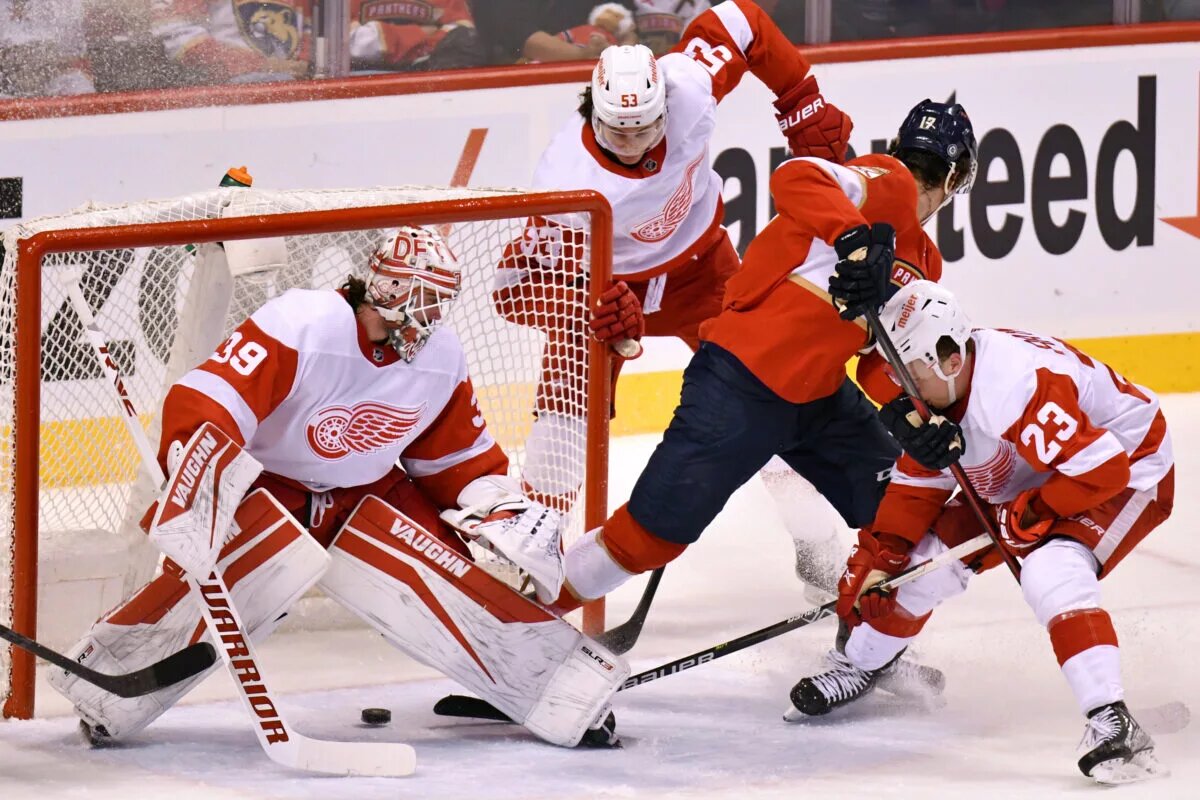
When a team collapses, it stings. But there is something worse about the latest Detroit Red Wings collapse. The Wings looked more than like a surefire Stanley Cup Playoff contender this season. At times, they were the team to beat.
Detroit Red Wings Collapse Leaves a Bitter Taste
On January 25th, the Red Wings were tied with the Carolina Hurricanes for the most points in the Eastern Conference. Lucas Raymond had 58 points and 18 goals, and he was running away for team most valuable player recognition. Detroit’s goaltending picked up, with John Gibson in mid-season form after a rough start. There was no stopping this team.
Credit Image: © Dirk Shadd/Tampa Bay Times via ZUMA Press Wire
With most of February comprising the Olympic break, March rolled around, and the team had high hopes, despite a few slip-ups. Only, they crashed and burned worse than any fan could have expected. Even those who may have anticipated negative regression didn’t expect the team to go 7-10-3 between March 1st and April 11th. Especially after Detroit won its first game in March in a 4-2 victory over the Nashville Predators.
This is why the latest collapse feels different. In 2024-25, Detroit was struggling when they replaced Derek Lalonde with Todd McLellan. It took two seven-game winning streaks under McLellan to make the team relevant as the playoff race approached, and they entered March in a Wild Card spot.
Detroit was in the same position to open March this year. But they knew what being the best felt like when they were leading the division and the conference. Expectations changed from “yeah, this is a Wild Card-calibre team” to “wait, they’re a top-three team in their division.”
The 100th Anniversary Celebration Made the Collapse More Painful
The Red Wings have been around for 100 years and they’ve won 11 Stanley Cups. That success made the 100th anniversary more special. When you think of the most successful American-based franchises in North American sports, the Red Wings are often the first NHL team fans think about.
Insert a general manager like Steve Yzerman who played a massive role in that success. Plus their strong run during the first half of the season, and fans were having flashbacks. You can also throw in the fact that they finally retired Sergei Fedorov’s number. These were all essential ingredients for motivating a team facing a decade-long playoff drought to break through the barrier.
Now, Year 100 will be one of the most infamous seasons in team history. For a while it looked like one of the most celebratory. But everyone involved with Year 100 will remember the fans booing the team off the ice following the season’s final home game. You can’t write a more tragic script than this.
Detroit’s Playoff Drought Has Reached a New Level of Infamy
Before the season began, nobody thought highly of the Buffalo Sabres. Yet, here the Sabres are, potentially winning a division the Red Wings once led. Buffalo also holds the infamous distinction of an NHL-record playoff drought at 14 seasons.
While the Wings are a few seasons from tying that record, their current drought is now the longest currently. It would be one thing if this team still played with the same lack of talent they had in 2022-23, before they looked like true contenders. Fans wouldn’t have expected a playoff appearance. And any kind of playoff contention would have built momentum.
That’s not the case, so the Wings get to “celebrate” the rest of Year 100 by watching the playoffs. Worse yet, watching a team that just broke the longest active playoff drought potentially enjoy home-ice advantage in the first round. And knowing that, in January, they were in position to have that home-ice advantage if only they could have stayed consistent.
Overall, this season was a real heartbreaker. Now, an offseason of uncertainty begins. One that involves trying to keep star players around long term, and looking for ways to acquire enough talent to make this team deep enough for an eventual playoff appearance.
Main Photo: Jim Rassol-Imagn Images