
The SEC Haterade was flowing at Big Ten and ACC Media Days on Tuesday. Why were they so angry? Last Word has boots on the ground in Las Vegas and Charlotte, but we want to look at three quotes and break them down from an SEC perspective. One person we will save from scrutiny is ACC Commissioner Jim Phillips. Phillips is usually a good punching bag, but not today. The ACC Commissioner was asked about his feelings regarding the SEC’s favored status by ESPN; both networks have their media deals through Bristol. His response was honest and commendable. “I may feel that way sometimes, but we have to perform better, too. We can’t go 2-11 in postseason bowl games. We have to do our part.” Thanks, Jim. Now that we have Phillips straightened out, perhaps we can find a way to calm their anger or at least show them why they should reconsider their comments…
Drinking the SEC Haterade: ACC & B1G Media Day Recap
Tony Pettiti, B1G Commissioner
“8-4 is a winning percentage, if you project that winning percentage in every other sport, I’m pretty sure they make the postseason.”
“If you’re 6-3 in the Big Ten, I would argue that’s a good record. If you stumble in the non-conference I don’t know why that would disqualify you (from playoff contention)”
Greg Sankey was criticized at the start of the summer for providing a media packet explaining why the SEC was built differently. He used statistics and data to demonstrate that the conference is not only deep but also balanced (more on this in a moment). Rather than show the data, Sankey should have just let Pettitti cook.
Pettiti and the B1G are the only ones left arguing for a 4-4-2-2-1-3 expanded format. Not only does it involve too much math. Too confusing to explain easily. And just a bad name; it is an acceptance of mediocrity. Rather than the 5+11 plan, which we so eloquently argued a few weeks ago, Pettiti’s plan accepts mediocrity. It limits and restricts his conference to just four spots. But let’s face it. There is a reason. 6-3, 8-4 are acceptable in B1G country. In the SEC, we just want more. Something Pettiti and the gang may never understand.
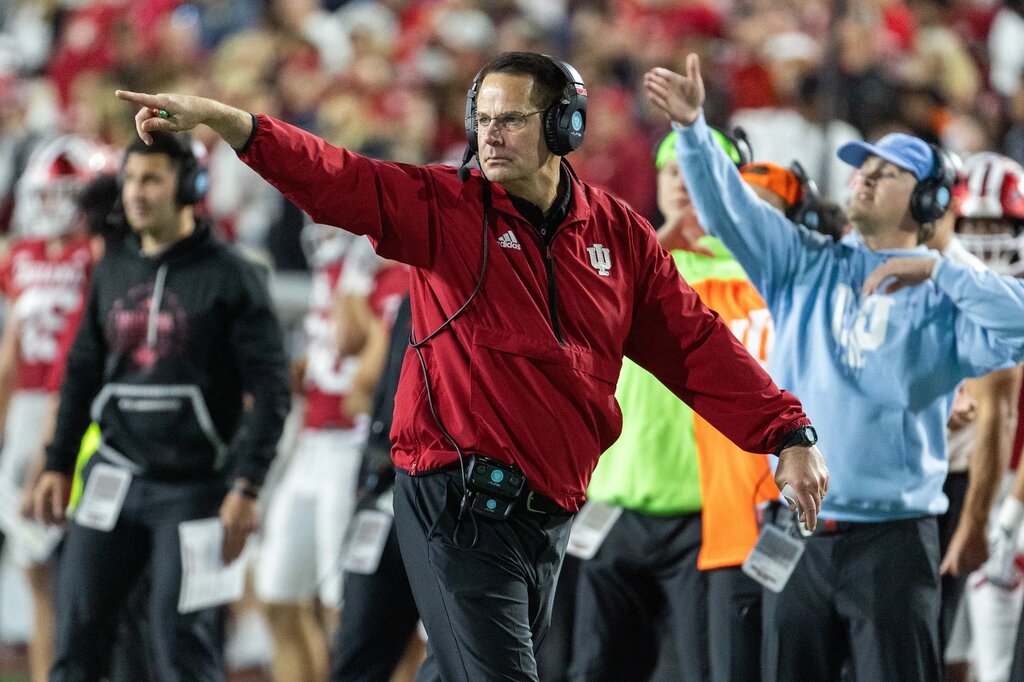
Curt Cignetti, Indiana Hoosiers
“We figure we’d adopt an SEC scheduling philosophy.”
That’s a bold move, Cotton. Let’s see how it works out for them. For the second straight year, Indiana has ducked playing a meaningful (Power 4) opponent and instead opted to play an FCS school. In 2024, the Hoosiers replaced a game against Louisville with Western Illinois. In 2025, they have opted out of a game with Virginia and replaced it with Kennesaw State. Now, the SEC is no stranger to playing their FCS Brethren. The cupcakes are usually sweetest in November and come under the most ire from the rest of the conferences.
That’s not the rub. The real rub is that SEC teams are required to play a Power 4 team in the non-conference. Before we discuss the eight versus nine game conference games, let’s call it what it is. If it looks like a duck and quacks like a duck, the Hoosiers are a duck. It worked for them in 2024; they were able to make the College Football Playoffs. However, maybe if the Hoosiers want to win a playoff game, they should consider scheduling tougher non-conference opponents. Here is a taste of some of the P4 opponents the SEC will play in 2025. They aren’t all at home either. We have some elite SEC road games.
- Alabama: @Florida State AND Wisconsin
- Arkansas: Notre Dame
- Auburn: @Baylor
- Florida: Miami AND Florida State
- Georgia: Georgia Tech
- Kentucky: Louisville (take that, Cignetti)
- LSU: @Clemson
- Ole Miss: N/A, Wake Forest ducked out and got out of playing in 2025
- Missouri: Kansas
- Oklahoma: Michigan
- South Carolina: Virginia Tech AND Clemson
- Tennessee: Syracuse
- Texas: Ohio State
- Texas A&M: @Notre Dame
- Vanderbilt: @Virginia Tech
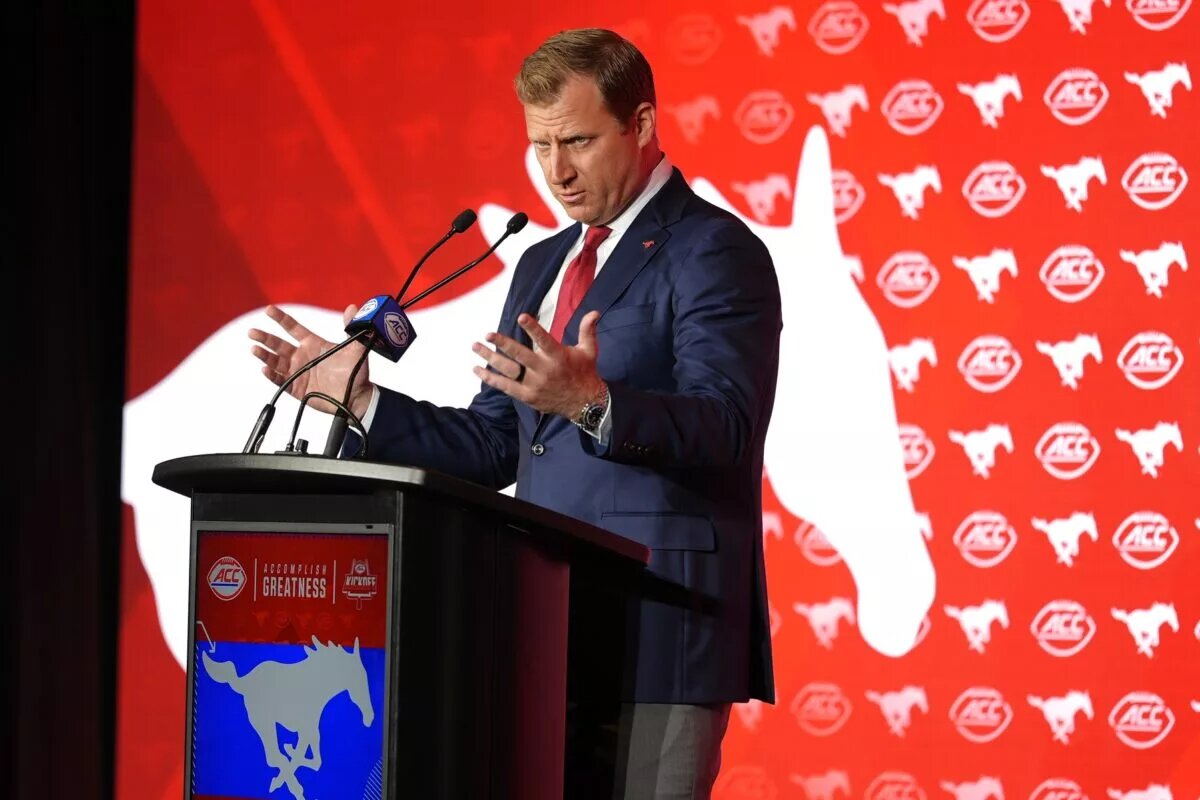
Rhett Lashlee, SMU Mustangs
“The same six schools have won the SEC since 1964. Not a single one is different from 1964.
That’s top heavy, that’s not depth.”
Lashlee had a nice year in 2024. He led the Ponies to an undefeated regular season and appearances in the ACC Championship and College Football Playoff. He has done well, and if things don’t go right on The Plains in 2025, he could find himself back in the SEC. But this response isn’t the flex he thinks it is. Let’s break it down for our ACC brethren.
Just six teams have won a national championship since 1964? Well, that’s actually pretty, pretty, pretty good. That’s 50% of the schools that have been in the league since 2012, 43% since 2012, and now 38% of the teams since Texas and Oklahoma joined. That seems good. The Big Ten has what, Ohio State and Michigan (a lot less than 38%), the Southwest/Big 12 has Texas and Oklahoma (now part of the good guys), and the ACC has Clemson, Georgia Tech, and Florida State. Remember, Miami was part of the Big East when “The U” was a thing. Here is a closer look at how the SEC has ebbed and flowed since 1964 and, of course, who has won all those national championships.
- 1964: SEC has 11 teams when Georgia Tech leaves for the ACC.
- Alabama: 1964, 1965
- 1966: SEC has 10 teams when Tulane leaves the SEC.
- 1991: SEC increases to 12 teams when Arkansas and South Carolina join.
- Florida: 1996
- Tennessee: 1988
- 2012: SEC increases to 14 teams when Texas A&M and Missouri join.
- 2024: SEC increases to 16 teams when Texas and Oklahoma join.
- Texas and Oklahoma have won national championships, but not as members of the SEC (yet).
Main Photo: Jim Dedmon-Imagn Images