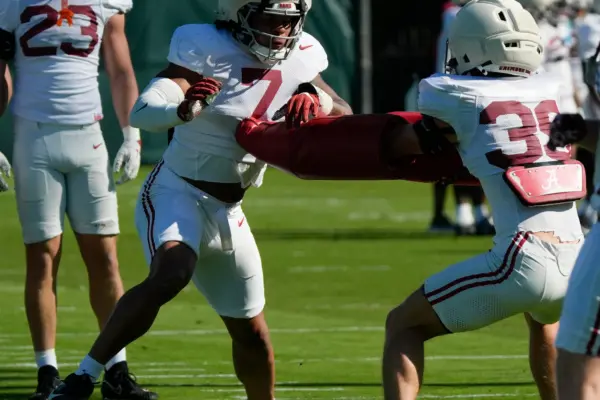

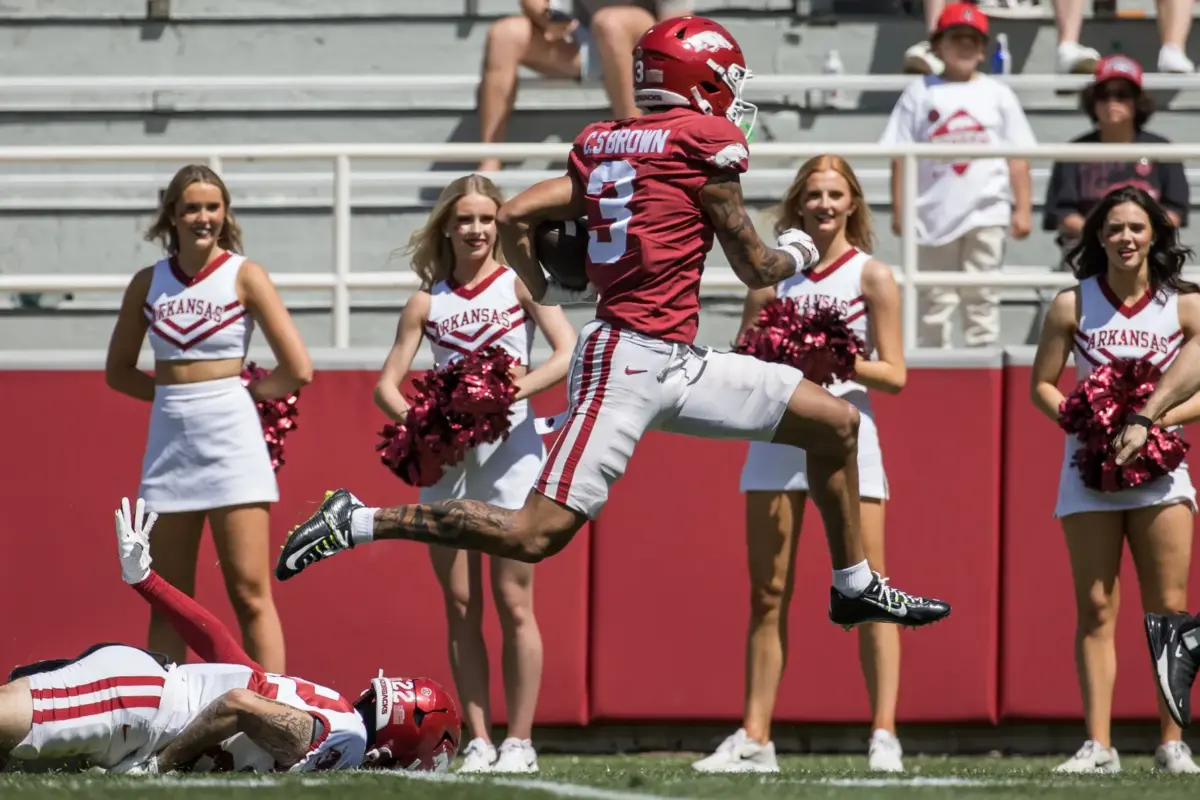

By the time the last throw dropped and the noise rolled through Reynolds Razorback Stadium, Arkansas had accomplished what Spring football is designed to accomplish. It gave people a finish to remember, a few highlights to replay, and just enough hope to carry into the Summer. The Red beat the White 14-13, the quarterbacks shared the spotlight, and the crowd left with something that felt like momentum.
Spring Sells For Arkansas Football
What Did Spring Ball Accomplish?
Spring games have always been built on suggestion. They offer glimpses, not verdicts. They let a fan base fill in the blanks with whatever it most wants to believe. A sharp throw becomes confirmation. A long touchdown becomes evidence. A defensive touchdown becomes toughness. Before long, a controlled afternoon starts getting treated like a revealing one.
And that is where honesty has to step in and slow the whole thing down.
Arkansas did not leave the field Saturday looking finished. It left looking neat. There is a difference.
KJ Jackson gave the day its most convincing quarterback moments. He looked calmer, cleaner, and more decisive, and he delivered the kind of late throw that sends people home talking. CJ Brown provided the sort of explosive play that Arkansas has badly needed more of. The defense created its own headline with a pick-six. None of that should be dismissed. But none of it should be stretched beyond what it was, either. This was a Spring game, not a stress test. It was football in a controlled climate, not football under consequence.
And yet this is the time of year when programs are most often judged by atmosphere instead of substance. Everything sounds promising in April. Everybody is faster. Everybody is deeper. Every position battle is healthy. Every new staff voice is refreshing. It is the season of polished optimism, and college football is very good at selling it. Arkansas is hardly the only place where that happens, but it is certainly not exempt from it.
That is why the only useful way to view this game is from a distance.
QB Still Murky
If Arkansas wanted to leave Spring with a settled offense, it did not. The clearest takeaway from Saturday is also the most important one. The quarterback conversation is still alive because it still has to be. Jackson may have nudged himself forward with the better afternoon, and he deserved to. He was more efficient, more comfortable, and more memorable. But one April scrimmage should not be allowed to decide what months of camp and real competition are meant to reveal.
That is where Spring can fool people. It encourages quick conclusions because it gives everyone a scene they can point to.
Jackson’s late sequence will live a long time in postgame conversation, but the real issue is bigger than one throw. Arkansas still needs to know which quarterback can lead the offense when the game gets loud, protection breaks down, and every read carries weight. That answer was not delivered on Saturday. It was only teased.
AJ Hill’s day fits into that same uncertainty. He had moments, but he also looked like a quarterback still trying to separate himself rather than one demanding the job. That matters. Not because losing a Spring game stat line is fatal, but because Arkansas needed more clarity than it got. At quarterback, “still competing” can sound healthy in a news release. In reality, it often means the search remains unfinished.
And when the quarterback search remains unfinished, everything else around the offense becomes harder to define. Receivers can flash. Backs can show burst. The line can look steadier. But until the quarterback spot brings order, the entire unit still feels like an outline waiting to be filled in.
Flash Isn’t Proof
Spring football is a magician’s favorite season. It asks you to watch the shiny object and ignore the empty space around it. That long touchdown to CJ Brown was real. So was the pick-six. So were the sacks and the crowd reaction, and the late-game tension. But a handful of memorable moments is not the same as learning what a team truly is.
That is the question Arkansas still has not answered.
What is the offense supposed to look like when the season begins? Is it built around tempo, around vertical shots, around a quarterback run element, around controlling the game on the ground? What is the defensive identity beyond a few splash plays in a controlled setting? Can this team consistently create pressure, or did the format flatter the pass rush?
Can the offense sustain drives, or did it simply produce one or two moments worth clipping for social media? These are not cynical questions. They are the only questions that matter.
Because teams do not live on flashes in the Fall. They live on repeatable traits. More importantly, they live on identity. In the end, these teams live on knowing exactly what they are when the game stops being friendly.
Hype Has Limits
Arkansas may get there. Ryan Silverfield may very well build something sharper, tougher, and more coherent than what was on display Saturday. But if you are evaluating this Spring game honestly, then you have to admit the Razorbacks are still asking for trust they have not yet fully earned. They showed pieces and they showed potential. They showed enough to keep intrigue alive.
What they did not show was certainty. And that may be the fairest way to leave this Spring, not with a declaration, but with a warning. Arkansas gave its fans a reason to keep watching. It did not give them a reason to stop asking hard questions. That is not failure. It is simply where this team still lives — somewhere between possibility and proof.
That space can be exciting. It can also be misleading. For now, Spring sells for Arkansas football. While it remains more interesting than convincing. That is enough to hold attention. It is not enough to settle doubt.
Main Photo: Brett Rojo-Imagn Images