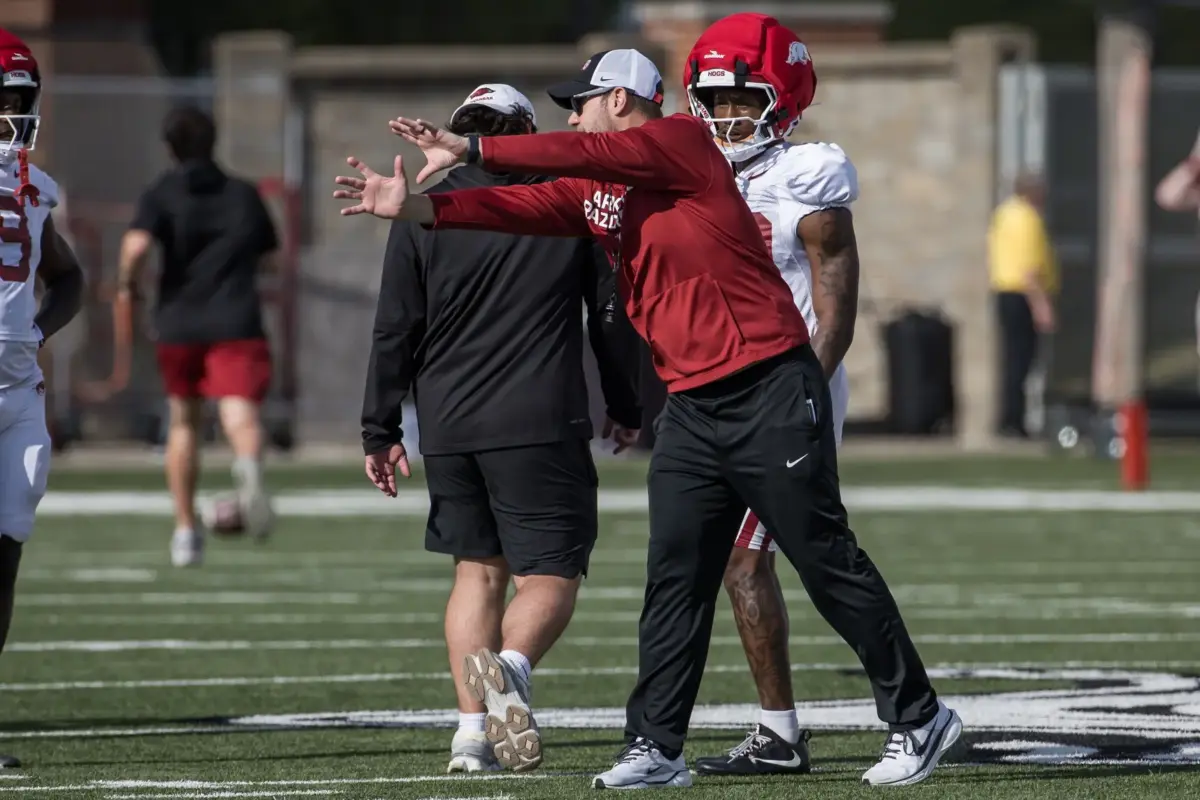

On Saturday, Arkansas will dress it up like it is playing a game. The band will make its loop, the video board will sell the future, and the score will vanish by sundown. What really matters in the Arkansas spring game? The things that linger are the tape and a simple question: Do the Razorbacks finally look like a program with a plan on defense, at quarterback, and across the depth chart?
What Really Matters in Arkansas’ Spring Game
This isn’t about winning a scrimmage in April. It’s about seeing whether the Spring talking points, faster on defense, steadier on offense, more professional in how the roster is built, survive contact with a live setting. Additionally, it will finally cease the constant propaganda pushing from the media team on the hill, maybe. Lastly, Spring games lie with their scoreboards. They tend to tell the truth in the small details.
The Defense Is on Trial
If you want to know how serious this reset really is, don’t start by watching the ball. Watch the eleven helmets on the defensive side before the snap.
For years, Arkansas defenses have talked about speed and aggression. Too often, Spring games have exposed confusion more than conviction. Late checks. Hands waving. Safeties are looking to the sideline as the ball is snapped. That has to change if this staff expects to survive the SEC grind.
The first grade on Saturday is organization. Are they getting lined up cleanly when the offense motions and shifts, or does the secondary still look like a group project trying to meet a deadline? Do the linebackers own the front, or are they passengers? A “win” for the defense isn’t an interception in a scripted two‑minute drill. It’s three straight snaps where everybody gets to the right spot without panic.
The second grade is urgent. You’ll know in a series whether this front seven has real juice or just practice‑field energy. Are edge players squeezing plays back inside? Are interior linemen collapsing pockets? Or are there multiple helmets in on first contact? Arkansas doesn’t need to look exotic on defense in April. It needs to look decisive.
Nothing warps spring‑game perception like the quarterback position, but the defense will shape the narrative as much as any throw. If the unit walks off the field looking ahead of where it was in November, that’s the best news Arkansas can take out of the day.
Quarterbacks, the Line, and the GM Lens
Quarterback play always steals the conversation, and spring is built to help it. These scrimmages are structured to make the offense look serviceable, and the quarterbacks look comfortable. The call sheet is trimmed. The pass rush is toned down. Coverages stay basic by design.
The only way around the mirage is to grade the job, not the numbers. Command is the first tell. Does the starter get the huddle in and out without wasted motion? Does the offense break the huddle with enough time to adjust to a late defensive look? When the tempo cranks up, is he controlling the pace or hanging on?
Third‑down and red‑zone snaps are the second tell. Spring touchdowns on double moves against vanilla coverage don’t travel well to October. A quarterback who throws on time to the sticks on third‑and‑medium is worth noting. So is the one who gets them into the right run check against a light box near the goal line. If Arkansas leaves the spring game believing there is at least one quarterback who can run the show without shrinking when the picture changes, that’s a real step.
Not Giving Away Too Much
Up front, the offensive line gets its own honesty test. Nobody is emptying the defensive playbook in April. You won’t see every pressure in the package. But you will see basic movement: twists, slants, and an edge rusher determined to win his job. If the first‑team line can’t pass off stunts, can’t keep the pocket from collapsing on simple third‑and‑medium looks, or can’t generate even a handful of clean run fits, that won’t magically fix itself in September.
Layered on top of all of this is the new front‑office structure. For the first time, Arkansas has a dedicated roster‑builder evaluating the same scrimmage the fans are watching. He isn’t asking who “won the day.” He’s asking how many playable corners there really are, how steep the drop‑off is at tackle, and which young defender just turned into a portal insurance policy. The tape from this game will feed directly into the next wave of decisions.
The score will be manufactured on Saturday, the format bent to whatever the staff wants. That’s fine. The points aren’t the point. Success looks like a defense ahead of the offense without gimmicks, an offense with flashes of cohesion even on training wheels, and a team that spends more time playing than looking around for answers. Looking at the scoreboard will tell a lie. The film, and the body language on both sidelines, won’t. What really matters? You now know.
Main Images: Brett Rojo-Imagn Images