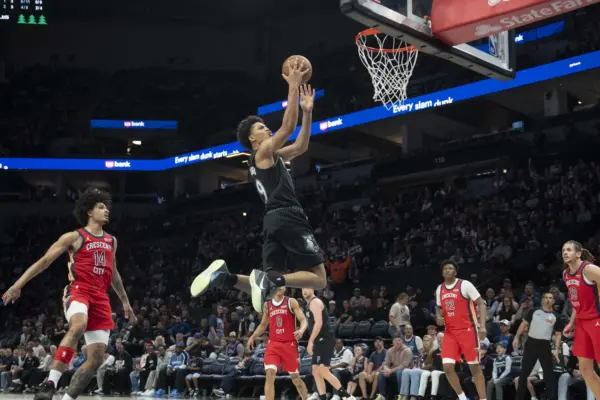

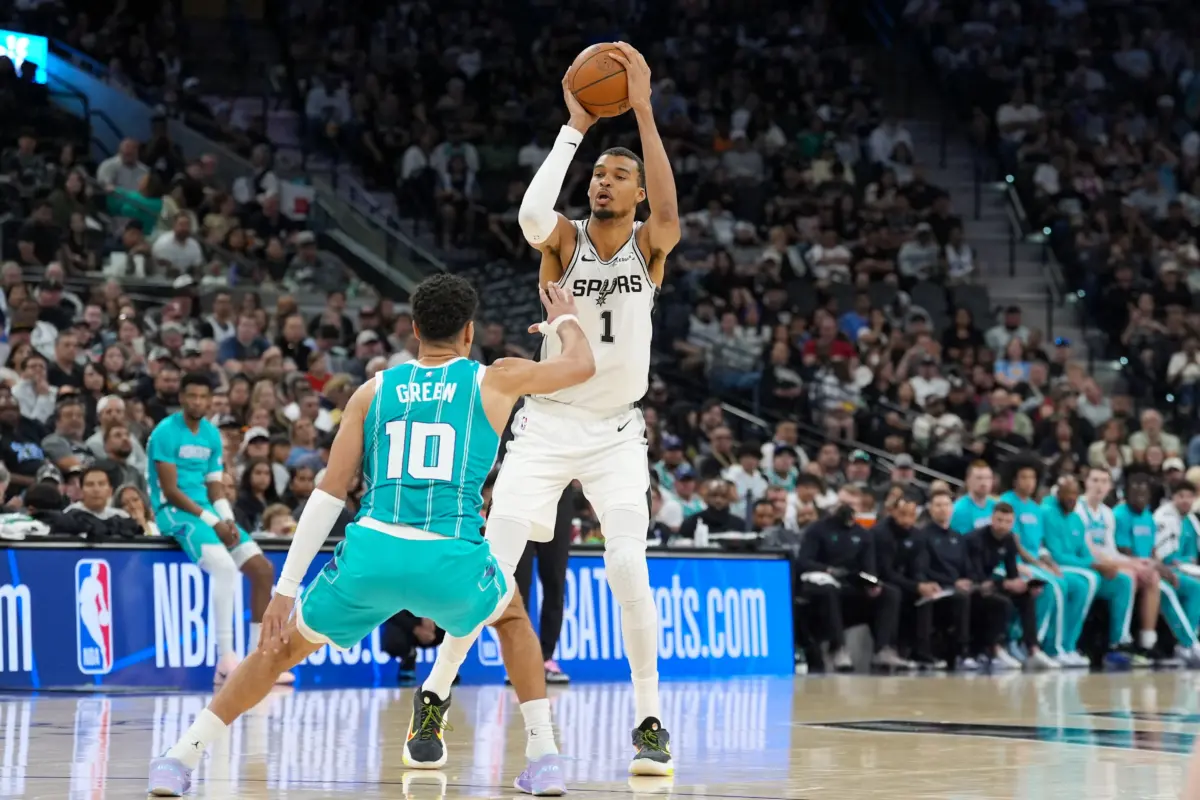

The Minnesota Timberwolves did not acquire Josh Green to become another high-volume scorer. They already have Anthony Edwards and LaMelo Ball to carry that responsibility. Green arrived with a different skill set that could quietly become one of the most valuable parts of Minnesota’s rotation.
While Jaylen Clark remains one of the team’s best perimeter defenders, Green offers the dependable outside shooting that can create more space for the Timberwolves’ stars. That need for offensive balance naturally follows Minnesota’s roster construction.
Josh Green Gives Minnesota Something Jaylen Clark Can’t
Josh Green Brings Proven Floor Spacing
The Timberwolves know exactly what Ball can do with the ball in his hands. The bigger question is whether the players around him can punish defenses for collapsing into the paint. That is where Green enters the picture.
Green shot a career-best 42.0 percent from three-point range in 2025-26, making 58 of his 138 attempts despite playing just 15.7 minutes per game. More than three-quarters of his shot attempts came from beyond the arc, showing that his offensive role was built around spacing the floor rather than creating his own offense.
That role fits naturally next to Ball and Edwards. Both guards thrive when defenders hesitate to leave shooters alone. Green does not need a high usage rate to make an impact, but he could help solve Minnesota’s spacing problem around Edwards.
His willingness to stay ready on the perimeter forces defenses to make a choice they may not have faced against Minnesota’s second unit in previous seasons.
Jaylen Clark Still Has One Offensive Question
None of this takes away from what Clark already brings. Clark has developed into one of Minnesota’s toughest perimeter defenders. His energy, ball pressure and willingness to guard the opponent’s best scorer have earned Chris Finch’s trust during the regular season.
The concern has never been on the defensive end. It is whether opponents respect his jumper enough to stay attached.
Clark shot 32.7 percent from three last season, a number that also resembles his outside shooting during three seasons at UCLA. If defenders continue helping off him, driving lanes become smaller for Edwards and passing windows become tighter for Ball. Those shrinking lanes reflect the bigger problem Minnesota has tried to solve around its franchise star.
That matters even more in the playoffs. For the second straight postseason, Clark struggled to earn meaningful rotation minutes. His defense remained valuable, but Minnesota often needed more offensive spacing against playoff defenses that were willing to ignore inconsistent shooters.
Chris Finch Has Different Options
This competition should not be viewed as Green versus Clark. There will be nights when Minnesota needs Clark’s defensive pressure against elite scoring guards.
There will also be games when Green’s shooting becomes a more valuable skill. That flexibility is something the Timberwolves lacked at times in recent years.
Green is more than just a shooter, too. During his time with the Charlotte Hornets, the team posted stronger offensive and defensive numbers with him on the floor despite his reduced role. His ability to defend multiple positions while consistently making open shots gives Finch another lineup combination to consider.
Minnesota’s coaching staff no longer has to choose between offense and defense every time it turns to the bench.
Timberwolves Need Balance More Than Redundancy
The Timberwolves already have several players capable of making life difficult for opposing scorers. Rudy Gobert, Jaden McDaniels, Ayo Dosunmu and Clark all give Minnesota strong defensive options on the perimeter and at the rim.
Adding another defense-first wing does not necessarily solve the team’s biggest need. Adding one who stretches the floor does.
Green’s career has never been about scoring 20 points every night. It has been about making the right play, defending his position and knocking down the open shot when defenses lose track of him.
That combination could become especially important alongside Ball, whose passing becomes far more dangerous when teammates consistently convert catch-and-shoot opportunities.
The Timberwolves are unlikely to build their rotation around one preseason battle. They are more likely to build it around fit.
That is why Green may have the early advantage. Clark remains one of Minnesota’s most important defensive pieces, but Green provides the reliable floor spacing that this roster needs more often. On a team built around Edwards and Ball, that difference could determine who closes games when every possession matters.
Daniel Dunn, Imagn Images via Reuters Connect