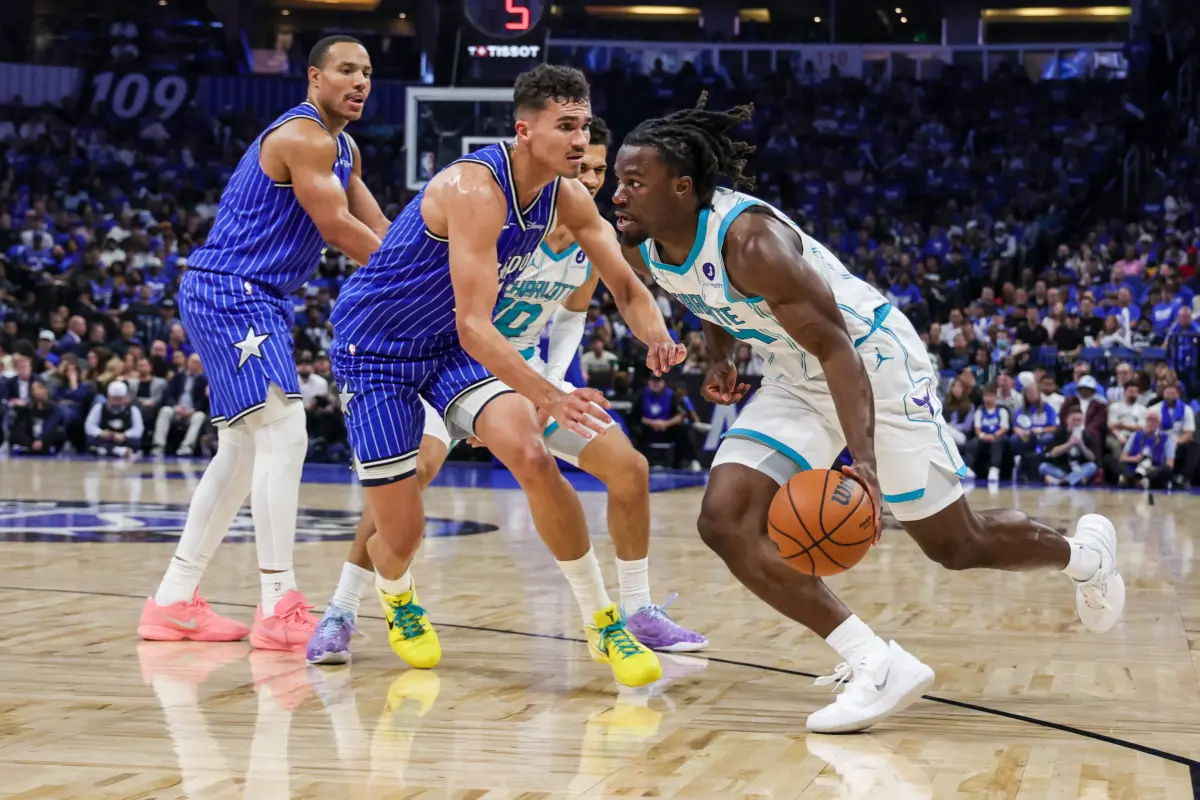

The Hornets’ point guard problem did not wait for October to announce itself. Charlotte blew an 18-point lead and lost 95-91 to New Orleans on Saturday — and the collapse told a story the final scoreline does not fully capture. New Orleans closed the game on a 15-2 run, while Charlotte managed just 15 fourth-quarter points and committed 22 turnovers compared to the Pelicans’ seven. Every number from the fourth quarter points to the same root cause: the moment the game required a composed, decisive ball-handler to take control, Charlotte had nobody who could fill that role.
Hunter Dickinson led New Orleans with 21 points and three threes. Kobe Bufkin added 19 points and 5 assists, driving the comeback with relentless pressure on the Hornets’ ball-handlers in the fourth quarter. Every time New Orleans needed a bucket or a stop in the final six minutes, it got one. Every time the Hornets needed someone to take control of the game and settle the offense, nobody stepped up.
Charlotte Blew an 18-Point Lead — and the Point Guard Problem Did It Again
How Charlotte Blew an 18-Point Lead
Charlotte looked comfortable through three quarters. Liam McNeeley led with 17 points and the offense generated enough movement to build a cushion that should have been safe. Then the fourth quarter arrived — and everything fell apart. The 22 turnovers Charlotte committed were not evenly distributed throughout the game. The majority came in crunch moments, when New Orleans pressed, and Hornets’ ball-handlers had no answers.
Charlotte shot just 57% from the free-throw line 13-of-23, while New Orleans converted 11-of-14. Poor execution compounded the turnover problem, but the larger issue remained the same: the Hornets never found anyone capable of settling the offense once the game tightened.
James and Anderson — Two Games of Evidence
Across both Summer League games, Sion James and Christian Anderson have shared ball-handling duties as the Hornets’ primary alternatives behind whoever starts at point guard in the regular season. James finished with 5 assists against New Orleans — a number that looks passable until you examine the context. Those assists came in the first three quarters, when New Orleans was scrambling. In the fourth, when the game mattered, the turnovers arrived, and the offense stalled.
Anderson, the 18th overall pick from Texas Tech, showed flashes of his elite passing IQ across both games — but he is 20 years old, still adjusting to professional speed and making the kinds of decisions that first-year players make when the game moves faster than they expect. He set Texas Tech’s single-season assist record with 244 last season. That will translate eventually. It does not translate immediately — and Charlotte’s window does not allow for extended patience.
James is a genuine NBA contributor — a defensive stopper and corner shooter who plays with energy and intelligence. But asking him to orchestrate a half-court offense in pressure moments is asking him to do something that is not his game. He proved it against Orlando in game one with four turnovers. Saturday reinforced it: two games, same conclusion.
What This Means for Charlotte
Summer League is not the regular season. Results do not transfer directly. Players improve, systems develop, op and coaching staffs adjust. All of that is true. But Summer League does provide an honest look at roster construction — and across two games, the Hornets’ construction has shown the same gap in the same moments: when the offense needs a true point guard to take control, nobody steps in to do it.
Coby White will begin the season as the Hornets’ starting point guard and answers many of the team’s offensive questions. He averaged 15.6 points last season and brings real playmaking ability to the starting unit. But White is primarily a scorer — creative, dangerous and efficient — but not a traditional floor general who controls tempo and organizes the half-court offense the way LaMelo Ball did throughout his time with the Hornets. The moment White sits out with rest, injury or foul trouble, Charlotte has no one who is NBA-ready to run the offense. James and Anderson are the only realistic options — and two Summer League games have confirmed neither is ready for that responsibility right now.
The Last Word
The Summer League roster and the NBA roster are different things. The depth picture looks different once training camp opens. All of that is fair context. But the point guard gap is not a Summer League problem — it is a roster construction problem that will show up once the NBA season begins, just as clearly as it has been showing up in Las Vegas across the two games
Portland still carries four starting-caliber guards on its roster simultaneously. A veteran organizer with playoff experience and a genuine point guard profile — someone who controls tempo, creates for teammates and steadies an offense when everything breaks down — is available in the right deal. Saturday’s fourth quarter showed exactly why the Hornets need to make that call before the real games begin.
Photo Credit: Mike Watters, Imagn Images via Reuters Connect