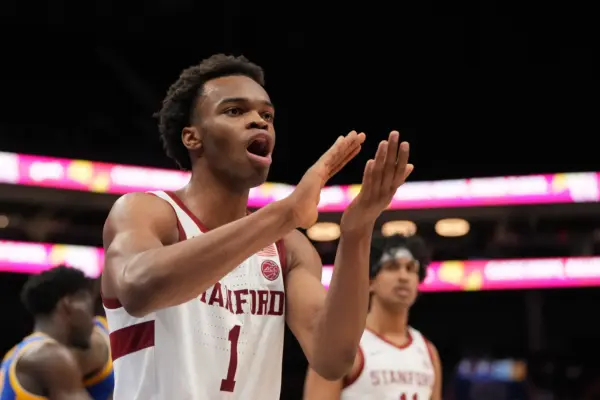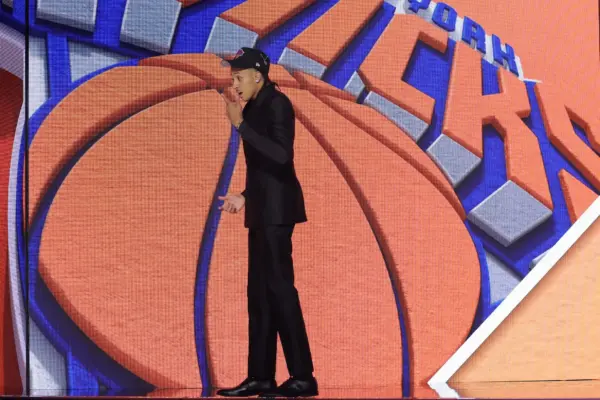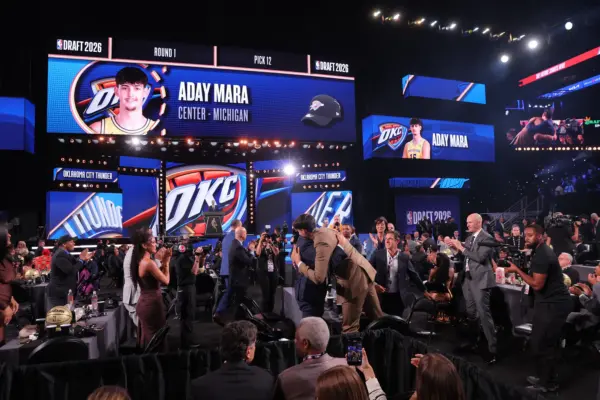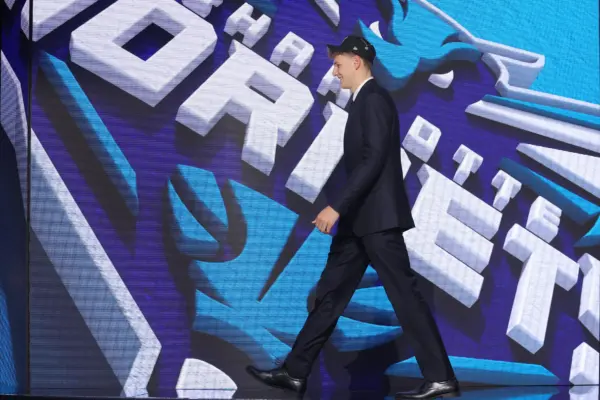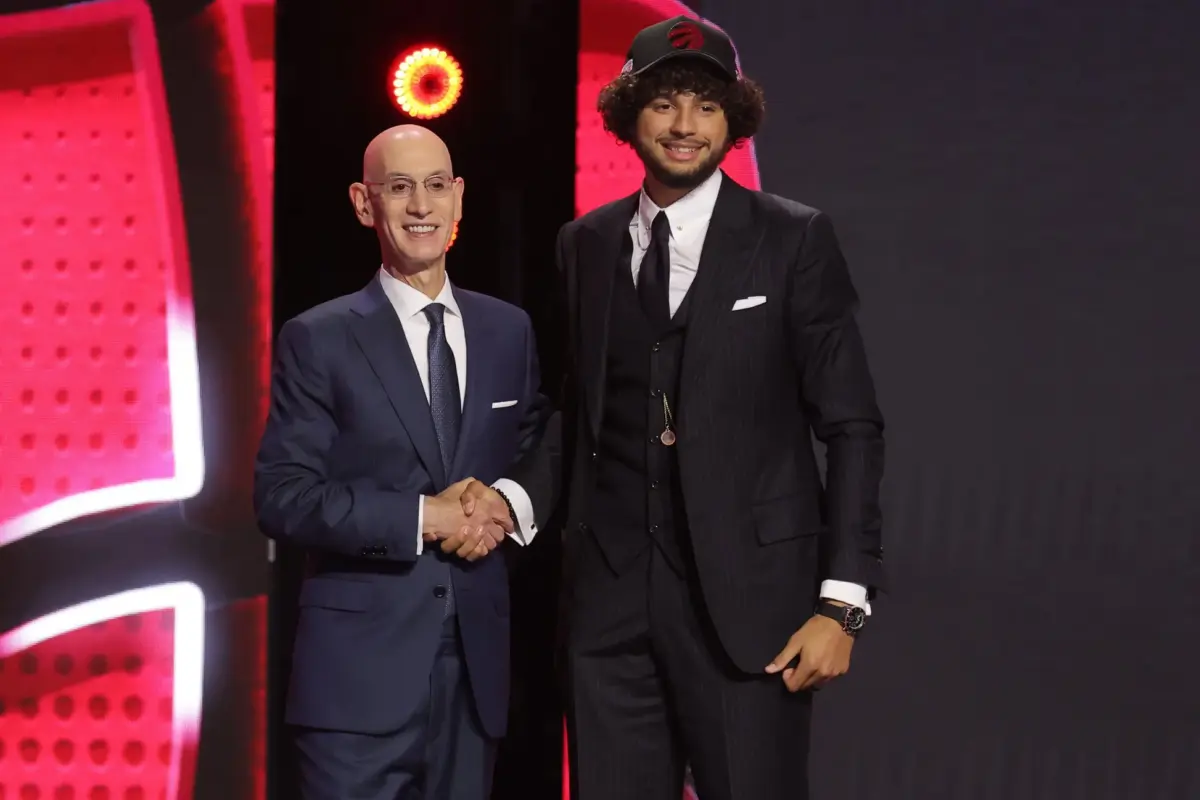

The Toronto Raptors surprised some fans by selecting Allen Graves with the 19th overall pick in the 2026 NBA Draft. At first glance, the reaction was understandable. Toronto already has a young core built around Scottie Barnes, Brandon Ingram, RJ Barrett, Collin Murray-Boyles, and Ja’Kobe Walter. Many expected the Raptors to target a guard or a center instead.
However, once you look deeper into Graves’ profile, the selection starts to make much more sense. In many ways, Graves represents exactly the type of player the Raptors have prioritized throughout their rebuild: a versatile defender, a high-IQ connector, and a player whose impact extends far beyond traditional box-score numbers.
How Allen Graves Can Help The Toronto Raptors Immediately
Allen Graves Fits Toronto’s Identity
One thing became clear throughout Toronto’s 46-win season. The Raptors want length, versatility, and defensive flexibility at every position. Graves fits that blueprint perfectly.
The former Santa Clara forward measured nearly six-foot-nine with a seven-foot wingspan and developed a reputation as one of the most disruptive defenders in college basketball. He averaged 1.9 steals and 0.9 blocks in just 22.6 minutes per game while consistently guarding multiple positions.
What makes him especially intriguing is that he generates defensive plays without relying on elite athleticism. Instead, he wins through anticipation, positioning, and basketball IQ. Those traits often translate well to the NBA.
For a Raptors team that ranked among the league’s most aggressive defenses, Graves appears to be a natural fit.
The Shooting Could Earn Him Minutes Quickly
Defense may get him on the floor, but shooting could keep him there. One of Toronto’s biggest weaknesses this season was consistent floor spacing. While the offense improved significantly compared to previous years, there were still stretches where defenses crowded Barnes and Ingram because they were comfortable helping off role players. The Raptors saw significant progress in that area late in the season, thanks in part to Walter’s shooting improvement, which helped him secure a larger role in the rotation.
Graves has the potential to help solve part of that problem. He shot 41.3 percent from three-point range during his lone season at Santa Clara while posting elite efficiency numbers across the board. He also finished the year shooting 51.2 percent from the field and rarely turned the ball over.
The Raptors do not need him to become a high-volume scorer immediately. If he can consistently defend and knock down open threes, he could carve out rotation minutes much sooner than many rookies.
His Game Complements Scottie Barnes
Perhaps the biggest reason to like this selection is how naturally Graves fits next to Barnes.
The Raptors have spent years searching for players who can contribute without needing the ball in their hands. Barnes is at his best when surrounded by intelligent cutters, floor spacers, and defenders who understand how to move within the flow of the offense. Graves checks all three boxes.
He thrives as a connector offensively, making quick decisions and keeping the ball moving. His offensive rebounding was among the best in college basketball, and he consistently found ways to impact games without dominating possessions. That type of player tends to fit seamlessly alongside stars.
That approach becomes even more important if another Barnes leap arrives in his year-six season, as Toronto continues building around its franchise cornerstone.
Why the Pick Feels Familiar
Some Raptors fans immediately compared Graves to previous Toronto draft selections. The comparison is understandable.
Like Murray-Boyles a year ago, Graves entered the draft with questions about positional fit but overwhelming support from analytics models. Like OG Anunoby before him, he projects as a defense-first player with legitimate shooting upside. Several draft analysts even described him as one of the safest role-player projections in the entire class.
Toronto’s front office has consistently prioritized players who contribute to winning basketball, even if they are not the flashiest prospects available. Graves appears to be the latest example.
What Should Expectations Be For Year One?
The good news for Toronto is that Graves may not need much development time compared to a typical 19-year-old prospect.
His frame is already NBA-ready. He rebounds, defends, shoots, and understands team concepts at a high level. Those are usually the skills that allow rookies to earn trust from coaches quickly. That does not mean he will immediately become a starter.
More realistically, Graves could compete for minutes in Toronto’s second unit while providing lineup flexibility at both forward spots. If his shooting translates quickly, his role could expand as the season progresses.
Given how much Toronto values versatility, it would not be surprising to see Darko Rajaković find opportunities for Graves early.
The Last Word
Graves may not have been the most popular name available when the Raptors were on the clock, but the fit is difficult to ignore.
He brings defense, shooting, rebounding, and basketball IQ to a roster that already has established offensive creators. More importantly, he fits the style of basketball Toronto has spent the last several years trying to build. Players with Graves’ skill set become especially valuable if Barnes and Ingram take another step together next season.
The Raptors did not draft Graves because they needed another star. They drafted him because championship teams need players who know how to complement stars.
If his college production translates to the NBA, Graves could end up helping Toronto much sooner than many expect.
Featured Image: Brad Penner-Imagn Images