
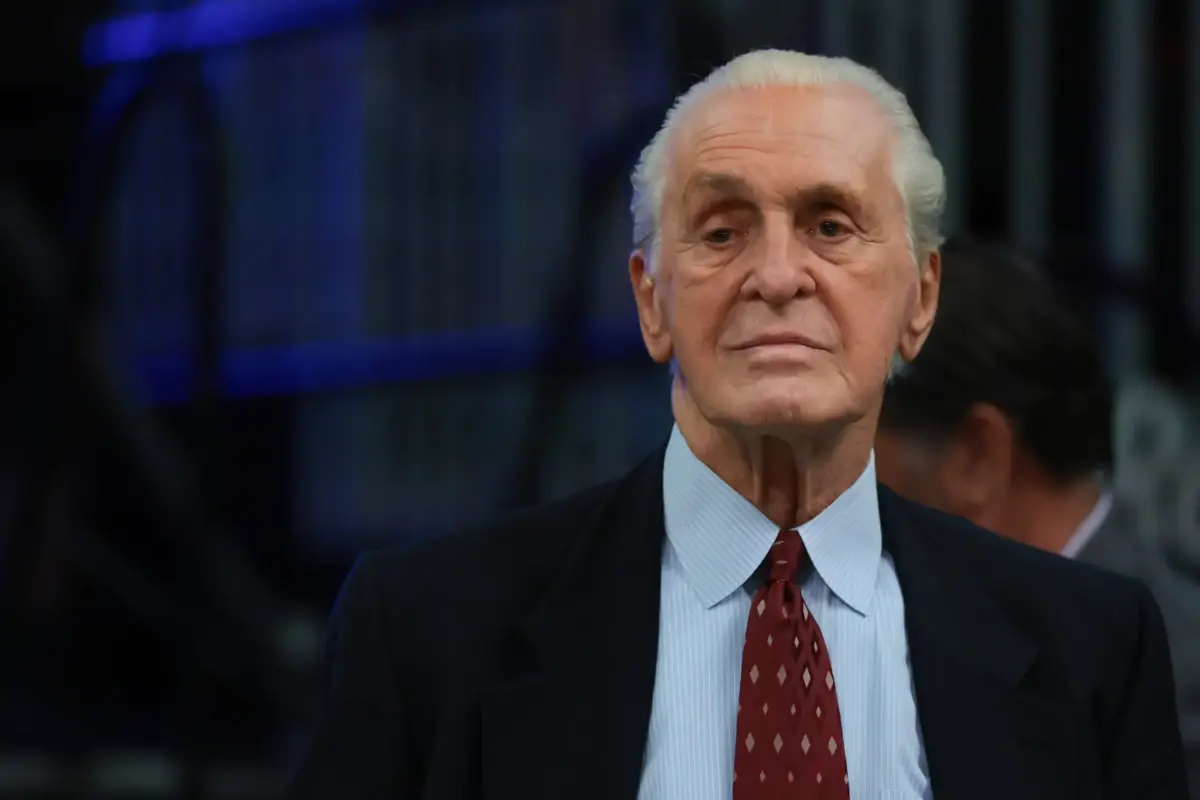

Pat Riley’s end-of-season press conference took place in Miami on Monday, Apr. 27. It once again carried its usual weight, serving as a defining moment for the franchise’s direction. The always anticipated interview with the Miami Heat president typically functions as both an evaluation of the season and a statement of intent for what comes next.
This year’s media availability followed that familiar pattern, though the tone felt more pointed as the Heat closed another tough season short of playoff expectations. Riley’s assessment carried trademark candor and long-term vision, while maintaining firm control over the organization’s direction. Instead of reacting to disappointment, he emphasized accountability, roster evaluation, and the urgency of keeping Miami competitive in an increasingly demanding Eastern Conference.
Pat Riley Press Conference: Heat President Vows Aggressive Offseason Changes
President Riley’s end-of-season address focused on the direction of Miami’s roster heading into the offseason, with those changes expected to play a central role in how the team moves forward. He pointed to injuries and inconsistent availability as major issues throughout the season, stressing the importance of evaluating the core based on both availability and consistency.
He noted the NBA’s evolving style and rising talent level, which continues to push Miami to adapt in order to stay competitive. Compared to last year’s end-of-season outlook, the message carried a more urgent tone. The league has continued to evolve quickly, and the margin for error has tightened significantly.
As a result, this offseason is expected to include adjustments designed to better align the roster with modern league demands, while still building around the team’s established core and long-term foundation.
Riley Dismisses Retirement, Reaffirms His Role
One of the most direct moments came when Riley addressed speculation about his future. He made his stance clear. Even at 81 years old, the longtime Heat president emphasized that he is not retiring. He shut down any talk of stepping away amid ongoing speculation and reaffirmed his commitment to the organization.
“I’m not going to retire. I’m not going to resign. I’m not going to step aside,” Riley said with certainty. “I love what I am doing. I love the people I am working with. I love competition. I love this franchise.”
The response reinforced continuity at the top. Riley remains fully engaged, and his presence continues to shape both the Heat’s identity and long-term direction.
Stability Over Reaction
Emotional or short-term decisions based on one season’s outcome will not define Miami’s approach. The organization remains committed to a disciplined approach, evaluating what worked, what didn’t, and what needs adjustment without overcorrecting. That mindset has long defined the Heat’s front office. Even in disappointment, the focus remains on sustainable success over quick fixes.
Evaluating Miami’s Roster in a Changing NBA
A significant portion of Riley’s press conference focused on how the Heat’s roster fits within the modern NBA. The league is evolving toward a faster pace and higher skill level. More polished young players are entering the league. Miami, he said, must adapt accordingly.
Tanking is not part of the organization’s plan. Instead, the focus remains on staying competitive and building around the core, with All-Star center and team captain Bam Adebayo highlighted as a key piece of the future.
“We have to look at everything, how we performed, how we finished, and how we match up in today’s game,” Riley said, framing the discussion around consistency and the need to evaluate whether the current group can meet championship expectations or requires additional support.
The message was not about tearing the roster down, but about identifying how to strengthen it for title contention. Even after a disappointing season, Riley reiterated that “Heat Culture” remains the foundation, built on professionalism, preparation, and accountability.
Offseason Approach: Measured But Aggressive
Riley made it clear Miami will not “run it back” after another disappointing postseason. The team is expected to pursue upgrades this summer. He also acknowledged that at the trade deadline, the group was not a true title contender, though he still believed it remained highly competitive.
Riley said that any decisions will be calculated rather than reckless. The focus is on improving the team while maintaining structure. He pointed to the importance of future flexibility, aiming to preserve next summer’s cap space to keep long-term options open.
Balancing Urgency and Patience
In a competitive Eastern Conference, urgency is unavoidable. Still, action must be paired with patience. The Heat will take a deliberate approach to ensure moves align with both present competitiveness and long-term goals, avoiding rushed decisions.
“We’re not good enough. We have an opportunity to do something with our flexibility,” Riley said, stressing both the urgency to improve and the importance of staying disciplined in the decision-making process.
In his view, the season was not so much a failure of identity. Instead, it was a reminder of how difficult sustained excellence is in today’s NBA. Miami aims to strike a careful balance. Patience and urgency must coexist.
The team will stay measured. It will still be bold when the right opportunity presents itself. Riley didn’t mention specific targets or potential moves. He said the Heat will explore every avenue, from internal development to external acquisitions.
A Familiar Message, A Demanding Standard
In the end, Riley’s message remained consistent with the culture he helped build. The Heat are not rebuilding, and expectations have not changed. He is not retiring, and the standard remains the same. The focus now shifts to turning evaluation and strategy into action in an offseason that could shape the franchise’s next chapter.
While stressing patience in decision-making, Riley acknowledged the need for change, adding, “If you don’t win, you have to go about making changes to make sure you can win.”
At its core, the goal hasn’t changed.
“I love competition,” he said, “and I want another parade down Biscayne Boulevard.”
© Sam Navarro-Imagn Images