
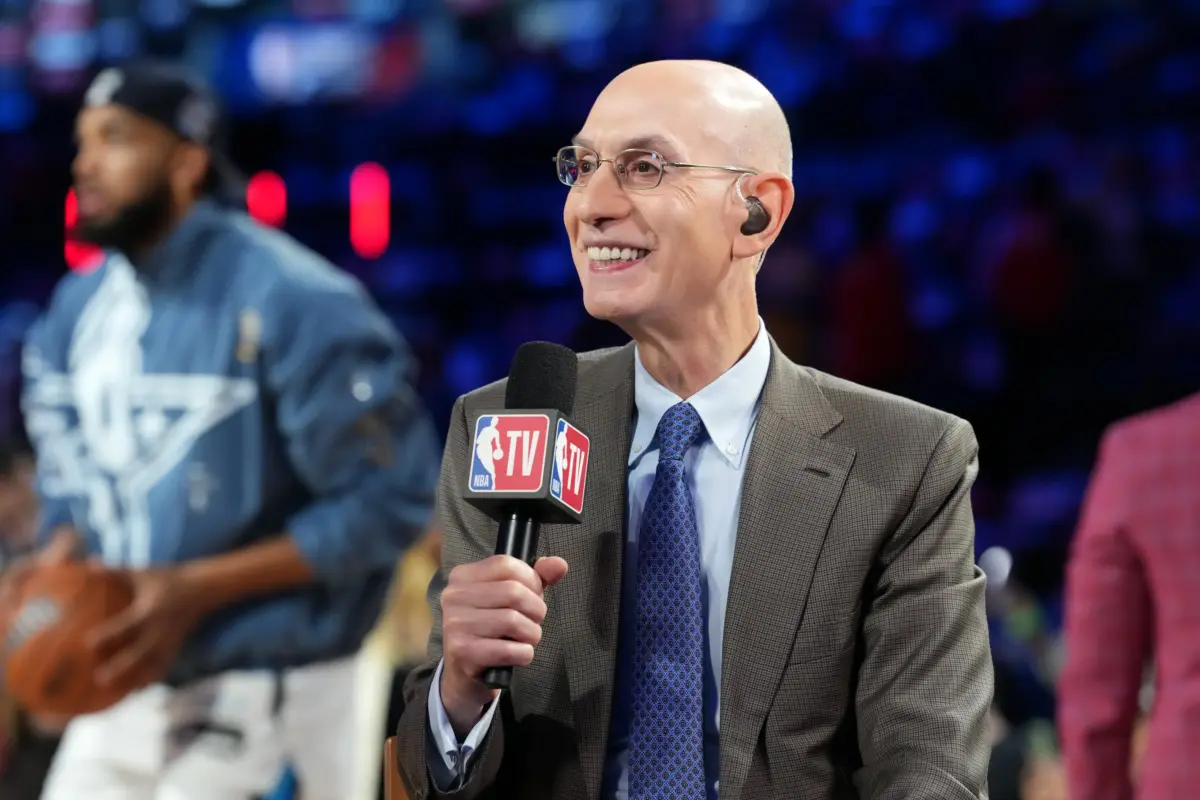
The NBA draft lottery changes discussion has taken on new urgency following recent comments from Adam Silver. As the league continues to address concerns around tanking, Silver made it clear that reform is not just being considered: it is coming.
A special board of governors meeting is expected in May to vote on potential lottery adjustments. Notably, Silver indicated that these changes could go into effect for the 2026-27 season and even before the upcoming 2026 NBA Draft and free agency. His message was direct: “We are going to fix it…full stop.”
For teams like the Atlanta Hawks, those words carry significant implications.
NBA Draft Lottery Changes: How They Impact Hawks’ Draft Odds
The NBA draft lottery changes proposal centers on discouraging tanking while preserving competitive balance. Although full details have not been finalized, the intent is clear. The league wants to reduce incentives for teams to intentionally lose games in pursuit of higher draft positioning.
For the Hawks, this introduces a layer of uncertainty.
Atlanta has positioned itself with valuable draft assets, including picks tied to other teams’ performances. Under the current system, lottery odds are weighted based on record, which creates a predictable range of outcomes. However, if reforms alter those odds or flatten the lottery structure further, the calculus changes in a potentially negative way.
That shift could directly impact how the Hawks approach roster construction and asset management heading into the 2026 NBA Draft.
What Adam Silver’s Plan Means for Atlanta
The lottery reform impact becomes especially relevant when considering Atlanta’s current position. The Hawks are not a traditional bottom-tier team, but they have maintained flexibility through incoming picks and strategic planning, including holding the most favorable pick between New Orleans and Milwaukee.
If the NBA draft lottery changes reduce the advantage of finishing with one of the worst records, it could benefit teams like Atlanta. Instead of relying on extreme outcomes, the Hawks may find themselves in a more balanced system where positioning matters less than preparation.
On the other hand, uncertainty introduces risk.
If Atlanta is counting on a certain range for a pick tied to another franchise, any adjustment to the odds could shift expectations. A flatter lottery system may increase volatility, making it harder to project where that Pelicans or Bucks pick will ultimately land.
Additionally, timing plays a crucial role.
Silver’s indication that reforms could arrive before the upcoming draft and free agency means teams may need to adjust quickly. The Hawks’ front office will need to stay agile, monitoring developments and preparing for multiple scenarios.
Multiple sources with knowledge of Thursday's GM meeting as well as a late January Competition Committee meeting told ESPN that the following concepts have been discussed to curb tanking:
•First-round picks can be protected only top-4 or top-14+
•Lottery odds freeze at the… https://t.co/Vk2n1cSzde— Shams Charania (@ShamsCharania) February 19, 2026
How Lottery Reform Could Reshape Strategy
Beyond immediate odds, the NBA draft lottery changes could influence broader league behavior. If tanking becomes less effective, teams may prioritize development and competitiveness over positioning. That shift would create a more stable environment, but it could also reduce opportunities for teams hoping to capitalize on struggling opponents.
For the Hawks, this reinforces the importance of internal growth.
Rather than relying heavily on lottery luck, Atlanta’s long-term success may depend on player development, scouting, and smart asset usage. The organization has already shown a willingness to build through multiple avenues, and lottery reform could push that approach even further.
At the same time, the Hawks must remain opportunistic.
Even with changes, the draft will continue to offer pathways to acquiring high-level talent. The key will be identifying value regardless of where selections fall. Ultimately, the NBA draft lottery changes signal a shift in how teams must think about team building.
For Atlanta, the challenge is not just adapting to new rules. It is staying ahead of them. If the Hawks can anticipate how reforms reshape the landscape, they can position themselves to benefit rather than react.
And as Silver’s comments suggest, that new landscape may arrive sooner than expected.
Featured Image: Kirby Lee-Imagn Images