
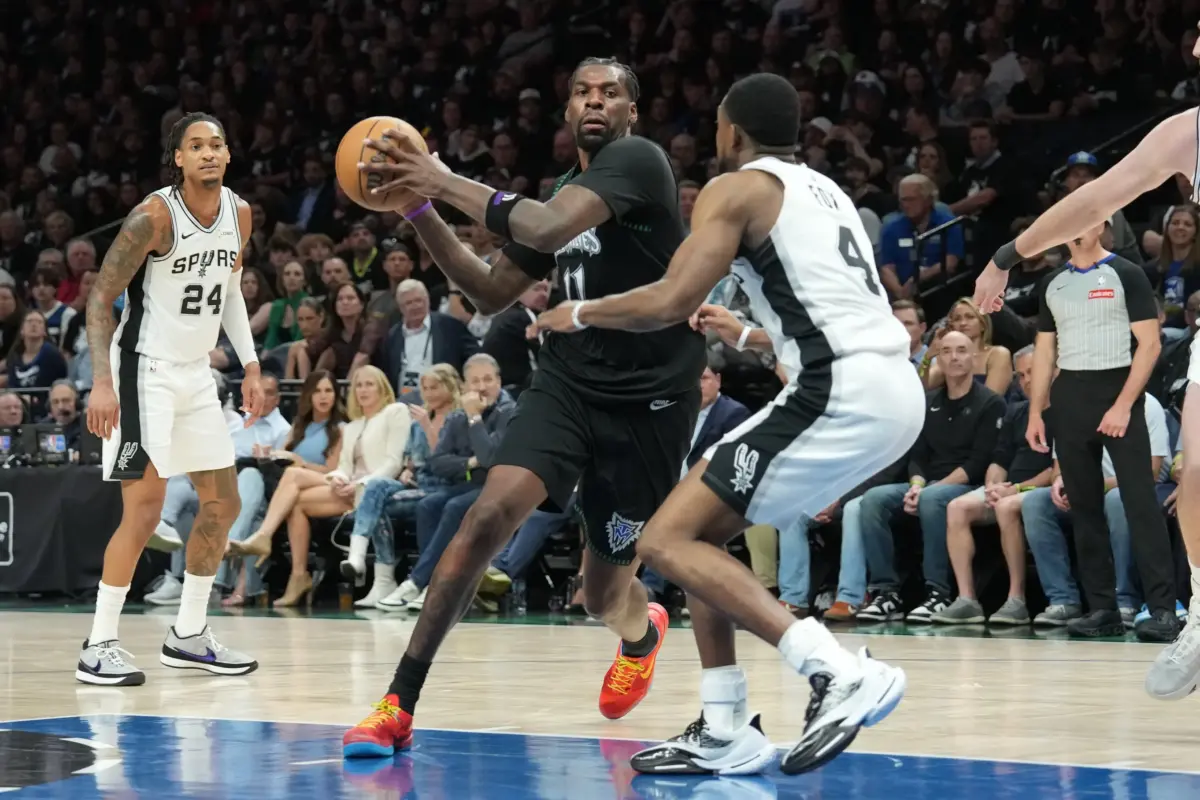

The Minnesota Timberwolves were not eliminated because they lacked talent. Their playoff exit against the San Antonio Spurs revealed something more concerning. Minnesota’s own players spent the days after the loss talking less about talent and more about chemistry, consistency, and connectivity.
Spurs Exposed Timberwolves’ Biggest Problem—It Was Never About Talent
Naz Reid did not blame the roster when the season ended. The Timberwolves forward pointed directly at the team’s behavior instead. Reid said Minnesota needed to be less moody, more consistent and more selfless. He specifically referenced the Spurs and Thunder as the standard.
Reid identified “probably just moodiness” as the core issue separating Minnesota from elite teams. “You look at both of those teams, and they’re playing for one another,” Reid said. Those comments carried weight because Reid acknowledged the talent was sufficient. He argued the problem was internal rather than structural.
San Antonio Showed the Identity Minnesota Lacks
The Spurs eliminated Minnesota in six games during the Western Conference semifinals. San Antonio closed the series with a 139-109 blowout in Game 6. The Spurs operated with a clear offensive structure throughout the series. The Timberwolves showed prolonged stretches of offensive inconsistency instead.
Julius Randle shot 1 for 8 with three points in the elimination game. The Wolves rarely looked like a team with a settled identity during the series. The Spurs consistently looked like a team with a clear identity instead. That difference matched exactly what Reid described in his season-ending comments.
San Antonio played connected basketball throughout the second-round matchup. Minnesota searched for that same connection and could not find it. The Spurs moved the ball with purpose and trust on most possessions. The Wolves too often relied on individual shot-making to generate offense.
Point Guard Concerns Highlight Timberwolves’ Roster Flaws
Minnesota’s offense frequently leaned on Anthony Edwards to solve problems individually this season. That reality has fueled offseason discussion about whether the Wolves need more creation at the point guard position. Mike Conley intends to play a 20th NBA season but will turn 39 before opening night. He becomes an unrestricted free agent this summer.
The Timberwolves will likely prioritize retaining Ayo Dosunmu in free agency this summer. That shows Minnesota recognizes the backcourt requires an upgrade. Edwards remains one of the league’s elite scorers. Finding a ball-handler who can create easier opportunities for him stands as a clear offseason objective.
Tim Connelly Faces Competing Roster Timeline Decisions
Timberwolves president Tim Connelly recently highlighted Minnesota’s “sub-26” core as the foundation moving forward. That group includes Edwards, Jaden McDaniels, Reid, Joan Beringer, and Terrence Shannon Jr.. The comment immediately excluded veterans like Rudy Gobert, Randle and Conley from the long-term vision.
“Everything’s on the table,” Connelly said at his end-of-season press conference.
The Spurs exposed more than a basketball weakness in the series. They exposed the Wolves’ uncertainty about which timeline they want to follow. Gobert and Randle carry combined salaries near $69 million next season. Both could become trade candidates this summer as the Wolves weigh their direction.
Connelly emphasized the need for positional versatility and size on the perimeter this offseason. He referenced the Spurs and Thunder directly when discussing roster construction priorities. The Wolves must decide whether to build around their young core or continue investing in veteran talent. That decision will define the franchise’s next chapter.
Talent Alone Will Not Solve Timberwolves’ Problems
The Timberwolves already know they have enough talent to compete at a high level. What the Spurs exposed is that talent alone may not be enough. Minnesota must now determine whether it can find the clarity that San Antonio already possesses. The answer to that question will shape the franchise’s future.
© Jesse Johnson-Imagn Images