
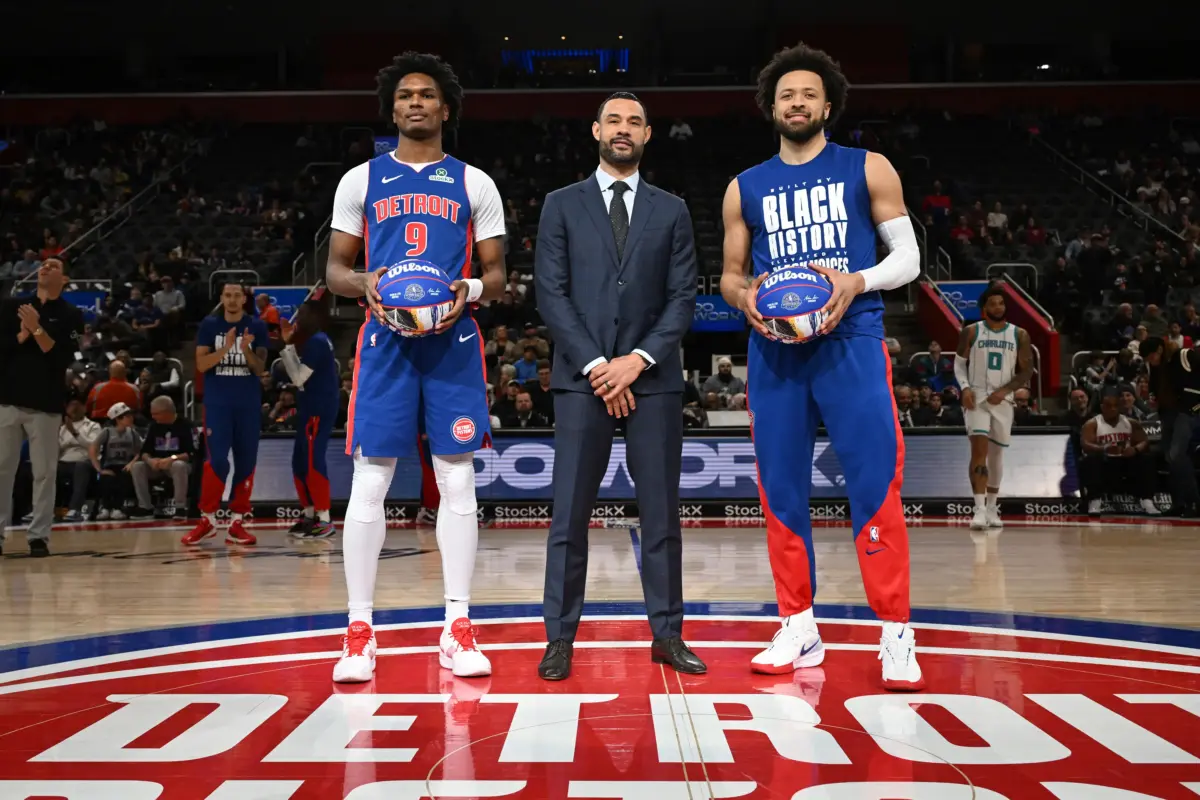

When Trajan Langdon was hired to lead the Detroit Pistons front office, he inherited one of the NBA’s most difficult rebuilding projects. The franchise was coming off a 14-win season that included a 28-game losing streak and a franchise-record 68 losses. Despite the disappointing results, the Pistons still possessed a talented young core featuring Cade Cunningham, Jalen Duren, and Ausar Thompson, giving Langdon a foundation to build upon.
In his first offseason, Langdon immediately went to work. He hired J.B. Bickerstaff as head coach, selected Ron Holland in the NBA Draft, and added veteran leadership by signing Tobias Harris, Tim Hardaway Jr. and Malik Beasley. He later acquired Dennis Schröder during the season, further strengthening the roster. Those moves, combined with the continued development of Detroit’s young players, helped fuel a remarkable turnaround from 14 wins to 44, giving the franchise its first playoff appearance since 2019.
With expectations rising, Langdon entered his second season facing a new challenge: transforming the Pistons from a feel-good story into a legitimate contender. The front office made several moves that generated mixed reactions from fans and analysts alike. Some paid off immediately, while others remain open for debate. Now that the season has concluded, it’s time to evaluate those decisions and determine how the Pistons front office performed overall.
Trajan Langdon’s Recipe: Grading the Pistons Front Office’s Winning Season
A Shot Worth Taking
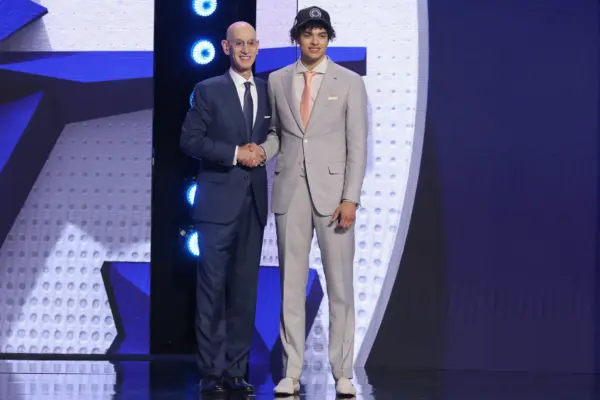
With shooting being one of Detroit’s biggest needs, Langdon selected Chaz Lanier with the 37th overall pick. While his opportunities with the Pistons were limited, he showed promise in the G League, averaging 16.9 points and shooting 37.2% from 3-point range on 8.2 attempts per game.
At 24 years old, Lanier may not have the highest ceiling, but his shooting gives him a realistic path to becoming a rotational contributor. For a second-round pick, the selection looks like solid value.
Grade: B
The Trajan Langdon Effect On The Pistons Front Office
Knowing the Pistons needed additional depth and shooting, Langdon was aggressive in free agency. He signed Caris LeVert and re-signed Paul Reed on the opening day of free agency. While LeVert’s production has been inconsistent, Reed has proven to be one of the better value signings of the offseason.
With Beasley’s federal investigation effectively ending any chance of a reunion, Langdon pivoted by acquiring Duncan Robinson in a sign-and-trade with the Miami Heat. Despite initial skepticism surrounding the three-year, $48 million deal, the limited guaranteed money makes it a team-friendly contract and a strong piece of business.
Perhaps Langdon’s most underrated move was signing Javonte Green. Green appeared in all 82 games and provided energy, toughness and defensive intensity every night. Between Robinson, Reed and Green, Langdon turned a difficult situation into a productive offseason for the Pistons.
Grade: A
The Smartest Move Wasn’t the Biggest One
Ask 100 Pistons fans what Langdon should have done at the trade deadline, and you’ll likely get 100 different answers. Some wanted Detroit to make a splash for a star, while others believed the team’s strong play warranted a more patient approach.
In the end, Langdon made just one move, trading Jaden Ivey in a three-team deal that brought back Kevin Huerter and a draft-pick swap with the Minnesota Timberwolves, moving Detroit from No. 28 to No. 21.
At the time, the trade received mixed reactions. However, it has aged well. Huerter played out his expiring $17.9 million contract, the Pistons added valuable draft capital, and Ivey never returned to the form he showed before his injury. Looking back, Langdon improved the team’s long-term flexibility without sacrificing its immediate success.
Grade: A-
The Last Word
When Trajan Langdon arrived in Detroit, his job was simple in theory but difficult in practice: transform a franchise coming off a 14-win season into a sustainable winner. Two years later, the Pistons have done far more than simply become respectable. They have become one of the Eastern Conference’s rising powers.
Whether it was identifying value in free agency, exercising patience at the trade deadline, or continuing to build around Cade Cunningham and the team’s young core, Langdon consistently made decisions with both the present and future in mind. Not every move was perfect, but the overall vision has been clear, disciplined, and effective.
The true measure of a front office is whether it leaves a franchise in a better position than it found it. By that standard, Langdon has exceeded expectations. The Pistons are deeper, more talented, and better positioned for long-term success than they were when he arrived.
Final Grade: A
Lon Horwedel-Imagn Images