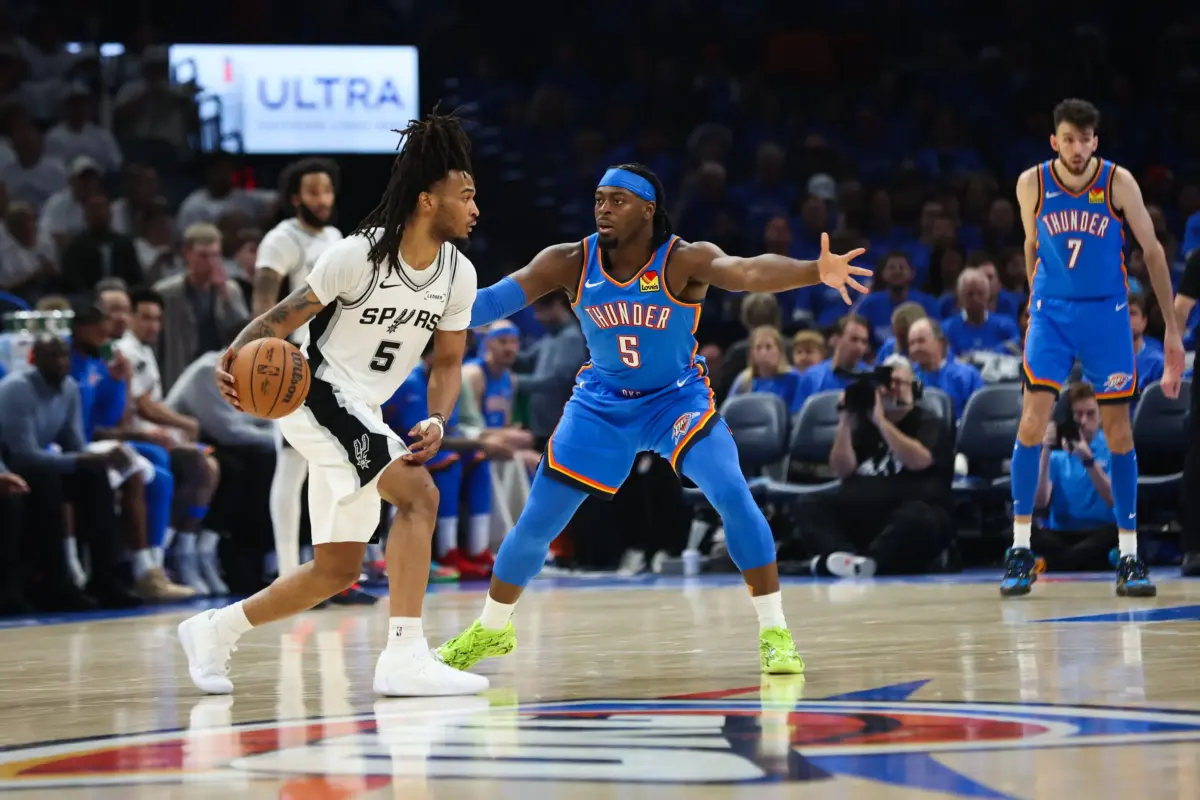

SAN ANTONIO — The San Antonio Spurs‘ guard crisis officially reached code-red status during Game 2, and the fallout has completely transformed the trajectory of the Western Conference Finals. After stealing an absolute thriller in the series opener on Oklahoma City Thunder’s home floor, San Antonio ran headfirst into a wall of reality in a 122-113 loss.
Watching this roster try to handle OKC’s unrelenting perimeter pressure without their primary backcourt components was a jarring exercise in survival. While Victor Wembanyama continues to pull off logic-defying stunts on a nightly basis, the structure around him is fracturing. The front office engineered a beautifully balanced rotation for the spring, but that blueprint is officially out the window as the series shifts back to South Texas.
The Spurs’ Guard Crisis Just Turned The Western Conference Finals Into A Tactical Nightmare
The Training Room Reality
Let’s be entirely blunt about the medical sheet: this isn’t standard postseason wear-and-tear. When head coach Mitch Johnson spoke to the media about De’Aaron Fox’s severe right ankle sprain, he didn’t sugarcoat the situation, noting it’s a tough injury that Fox wouldn’t even be trying to play through during the regular season. For a guy whose entire offensive package dictates playing with elite, twitchy speed, a compromised wheel completely neutralizes his utility.
Then came the real gut-punch in the third quarter of Game 2. Dylan Harper, who had just been named First-Team All-Rookie and looked like a seasoned playoff savior during his 24-point masterclass in Game 1, took an awkward spill and left the floor with a right hamstring injury. Just like that, the replacement’s replacement went down. The Spurs are now staring down a catastrophic depth chart vacuum at the worst possible moment of their entire season.
Shifting the Burden to Castle
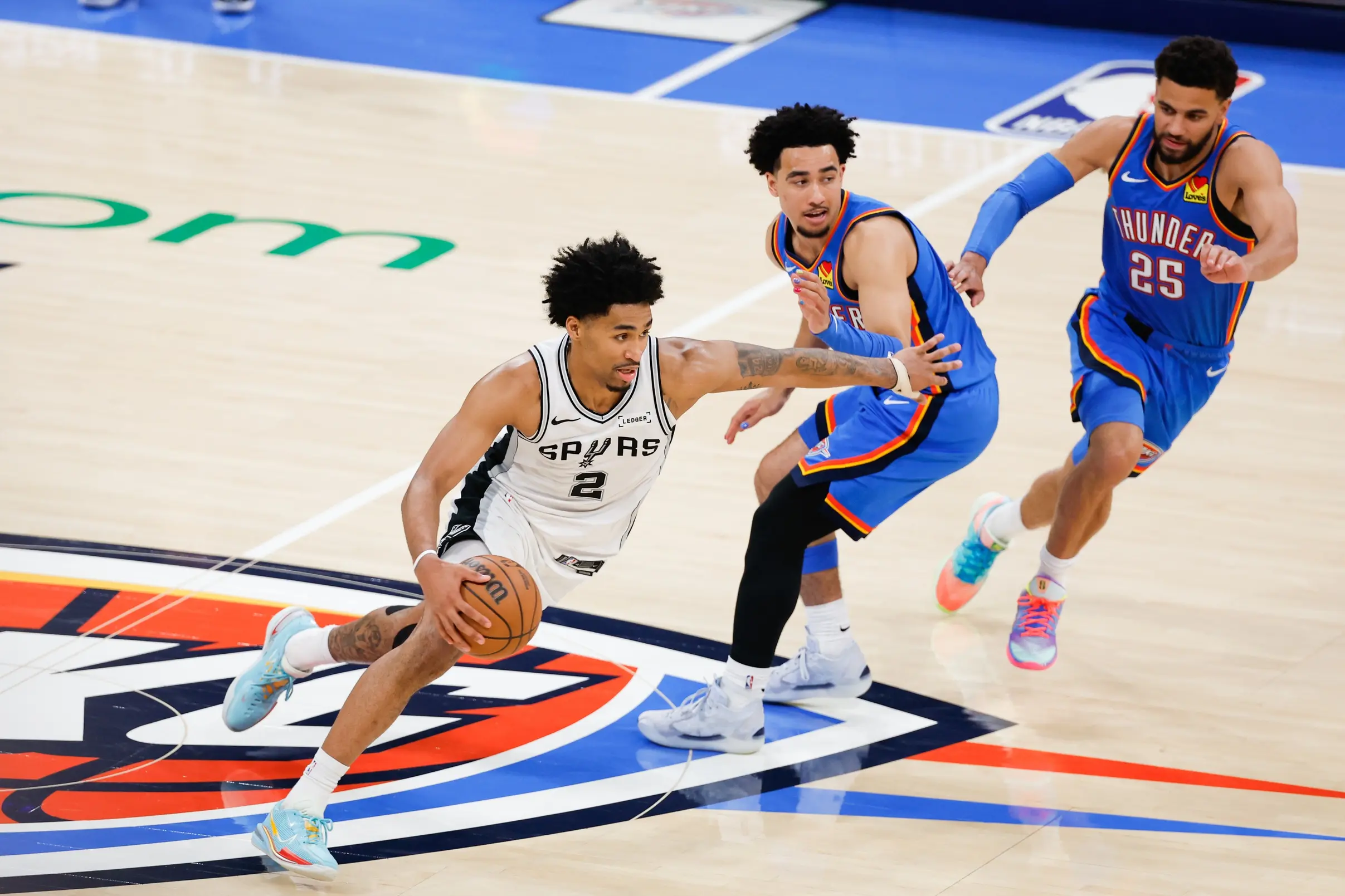
With Fox out and Harper in the locker room, the offense devolved into absolute chaos, forcing Stephon Castle to absorb a wildly unfair creation burden. Castle is a future star and an elite perimeter defender, but asking a player in his second year to act as a lone-wolf floor general against Oklahoma City’s hyper-aggressive defense is basketball cruelty. The result was an ugly, frantic display that yielded a staggering 17 turnovers for San Antonio—with Castle coughing up 9 of them on his own.
The structural breakdown was so acute that we even witnessed Jordan McLaughlin minutes in a pivotal Western Conference Finals game. When you’re digging that deep into the bench during the third round of the playoffs, you aren’t running a system anymore; you’re just trying to keep your head above water. The Thunder smelled blood in the water, aggressively crowding passing lanes and trapping every high screen, fully aware that San Antonio simply lacked the ball-handling personnel to make them pay for overcommitting.
The Shadow of the Full Court Press
There is no easy magic-bullet solution waiting on the bench for Mitch Johnson. The absolute best-case scenario for San Antonio is that Dylan Harper’s hamstring strain isn’t severe, but even if he suits up for Game 3, he will be a shell of himself. And honestly, what could be worse than facing a relentless, 94-foot full-court press from Alex Caruso and Cason Wallace while being a mere shadow of your physical self? It’s a recipe for a live-ball turnover festival that feeds the Thunder’s transition track meet.
To survive, the coaching staff has to completely democratize the boundary lines. The solution cannot be letting Castle pound the rock into the hardwood for 18 seconds. San Antonio must mix up who brings the ball up the floor entirely, utilizing Devin Vassell or even letting Wembanyama operate as a point-center from the mid-post to bypass the initial wave of backcourt traps. If they don’t adapt, the Spurs’ guard crisis will officially punch Oklahoma City’s ticket to the Finals.
Credit:© Brett Rojo-Imagn Images