

For much of the season, the Houston Rockets managed to mask a structural flaw through discipline, rebounding and defensive consistency. Even without a traditional point guard available, the team survived late-game moments by slowing the pace and leaning on physical advantages.
However, recent losses have made it increasingly difficult to ignore a growing concern. The Houston Rockets’ point guard issue is no longer theoretical. It is beginning to cause tangible damage in games that should be controlled and closed.
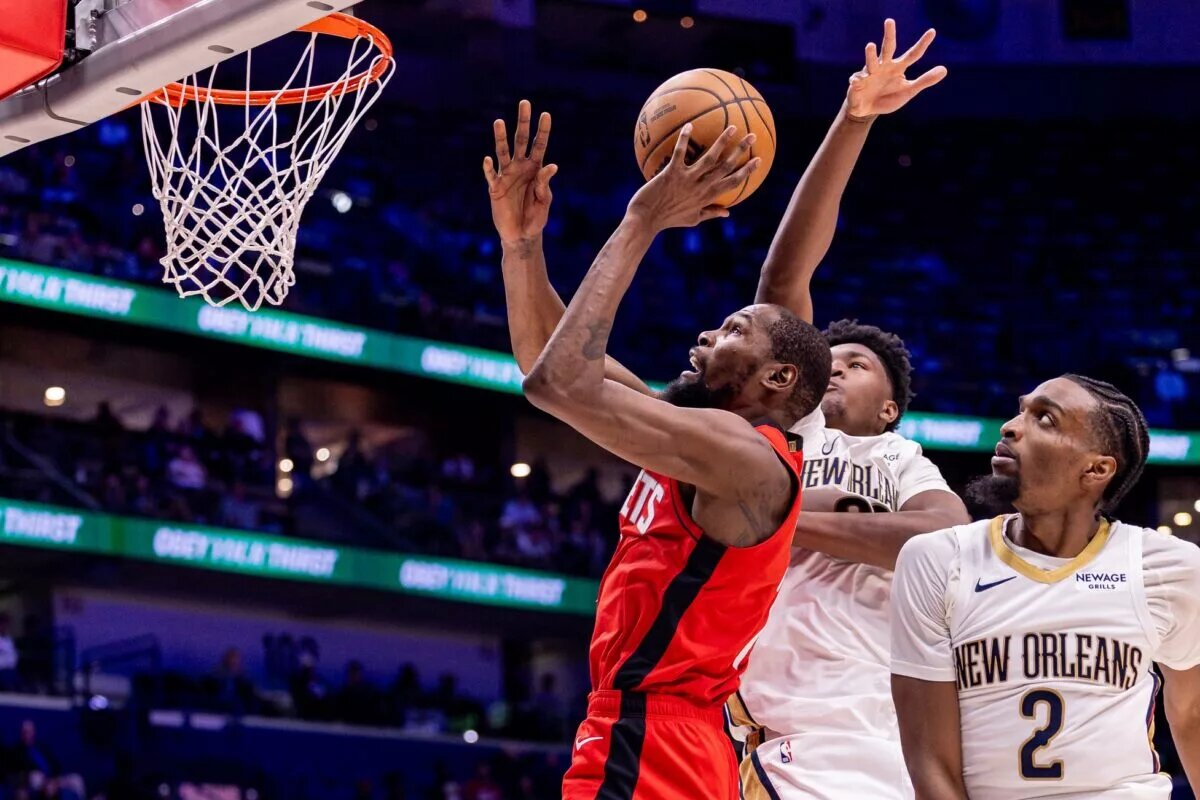
That reality became impossible to overlook in New Orleans, where Houston squandered a 25-point lead and suffered a 133-128 overtime loss to the New Orleans Pelicans. While the collapse featured missed shots and defensive lapses, the deeper issue surfaced once the game shifted from structure to improvisation.
When possessions tightened and decisions needed to be made quickly, Houston lacked a stabilizing presence to organize the offense and absorb pressure.
Lack of a True Point Guard Is Starting to Hurt the Rockets
For three quarters, the Rockets dictated the terms of the game. They controlled tempo, dominated the glass and executed through their stars. Kevin Durant scored efficiently, Alperen Sengun operated comfortably in the half court and the Pelicans struggled to generate clean looks. Once New Orleans increased defensive pressure in the fourth quarter, however, the Rockets’ offense unraveled.
Without a true point guard, Houston struggled to read double teams and counter defensive adjustments. The ball stuck on the perimeter, possessions extended unnecessarily and turnovers piled up. The Pelicans forced decisions instead of reads, and the Rockets repeatedly failed to respond.
This is where the Rockets’ point guard issue becomes most damaging. Late-game basketball demands clarity. It requires someone who can slow the game down, identify mismatches and deliver the ball to scorers in rhythm. Houston does not currently have that player on the floor.
Durant remains one of the league’s elite scorers, yet asking him to function as a primary organizer invites problems. He committed six turnovers against New Orleans, several of them coming after aggressive traps. Sengun can facilitate from the elbow, but when he receives the ball far from the basket, his impact diminishes.
Neither player is designed to consistently manage defensive pressure at the top of the floor.
VanVleet’s Absence Leaves a Leadership Void
The Rockets built their roster expecting Fred VanVleet to serve as the connective tissue between talent and execution. His season-ending injury removed the only proven ball handler capable of orchestrating the offense late in games. Since then, Houston has attempted to distribute those responsibilities among multiple players, with mixed results.
Amen Thompson offers defensive versatility and athleticism, but his limitations as a shooter allow defenses to sag and disrupt spacing. Jabari Smith Jr. and Durant have both handled increased on-ball duties, yet neither provides the security required in clutch moments. Reed Sheppard flashes lead-guard instincts and ball security, but his role has diminished instead of expanding as the season progresses.
This absence shows most clearly when Houston attempts to protect leads. The Rockets often shift from possession-based basketball to score-watching. Instead of initiating sets early in the shot clock, they hesitate. Instead of attacking defensive rotations, they retreat into isolation.
These tendencies expose the lack of a central decision-maker. The team’s point guard problem is not about talent, but about structure.
Closing Games Requires Organization, Not Just Talent
Head coach Ime Udoka acknowledged after the loss that Houston failed to stop the ball and committed far too many turnovers. The Rockets finished with 20 giveaways, nine of them in the second half.
New Orleans converted those mistakes into points, flipping momentum with alarming ease. Sengun spoke about those sentiments, admitting the team lost focus and allowed aggression to dictate the game.
This pattern has appeared in multiple recent losses. Houston can dominate when games follow a predictable rhythm. However, once opponents disrupt that rhythm, the Rockets struggle to reassert control. That is the difference between young teams and contenders. Closing games is about behavior, spacing and decision-making under stress.
Until Houston addresses its point guard issue, these collapses will continue to surface. Whether the solution involves expanding Sheppard’s role, adjusting late-game lineups or exploring the trade market for an experienced guard, the team must act decisively. The Western Conference does not reward indecision.
The Rockets remain a talented and disciplined group, but recent performances suggest that talent alone is no longer enough. If Houston wants to solidify itself as a legitimate contender, it must resolve the absence at the most important position on the floor.
© Stephen Lew-Imagn Images