


For the first time in recent memory, nobody knows who will win the French Open. There is no clear favorite for the 2026 title, and this isn’t a complaint; it is an invitation.
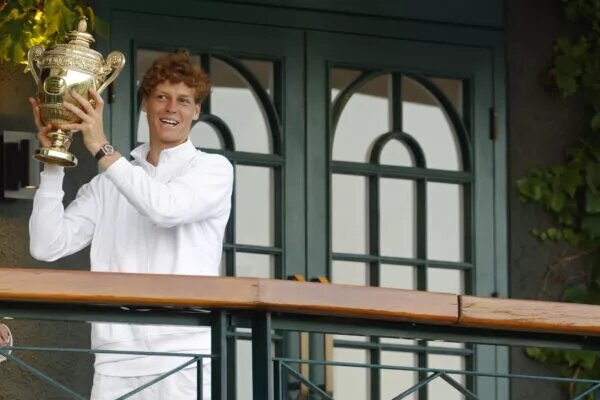
By the time Thursday’s last match concluded on Court Philippe-Chatrier, the scoreboard had done something extraordinary. World #1 Jannik Sinner, winner of 30 consecutive matches entering Paris, favorite for this title by a distance wide enough to make the draw feel almost academic, was gone. Not gone in the fifth set of a quarterfinal, not gone in a grinding four-hour semifinal war, gone in the second round after leading 6-3, 6-2, 5-1. Gone to a man ranked 56th in the world who admitted afterwards that he felt “a little bit lucky.”
World #2 and defending champion, Carlos Alcaraz, was already absent. A wrist injury had ruled him out before the tournament began, ending any chance of a rematch of the 2025 final–that five-hour, 29-minute epic that became the longest Roland Garros final in history. Sinner and Alcaraz had won nine of the last nine Major titles between them. They were the duopoly that had made the rest of the draw feel like supporting cast. Now one was injured, and the other had cramped into a Parisian afternoon and could not find his way back.
The result is something tennis has not seen at Roland Garros in years: a men’s draw without its two architects, wide open from the quarterfinals onwards, begging someone to step into the vacuum and own it.
The last time the men’s draw saw both the World no. 1 and no. 2 fail to reach the third round in Paris was never. 2026 is the first year it has happened. For further historical color: Sinner’s second-round exit made him the first top-seeded man to lose in the round of 64 at Roland Garros since Andre Agassi in 2000. Cerundolo, his conqueror, became the lowest-ranked player to defeat a World no. 1 at Roland Garros since 1998, and the lowest-ranked player ever to defeat a no. 1 from two sets down at a Grand Slam. Records that were built over decades collapsed in an afternoon of Paris heat.
The question now is simple and enormous: who picks up what Sinner and Alcaraz left behind?
Who can take the French Open title
The names that remain are credible without being inevitable. Alexander Zverev, the second seed, is still in the draw and moves through the night session on Friday against France’s Quentin Halys. Zverev has been to Grand Slam finals. He knows the weight of the second week; he also knows, and the tennis world knows, that he has never won a Major, and that every time the opportunity presents itself, the conversation returns to that fact. Paris 2026 is perhaps his clearest path yet.
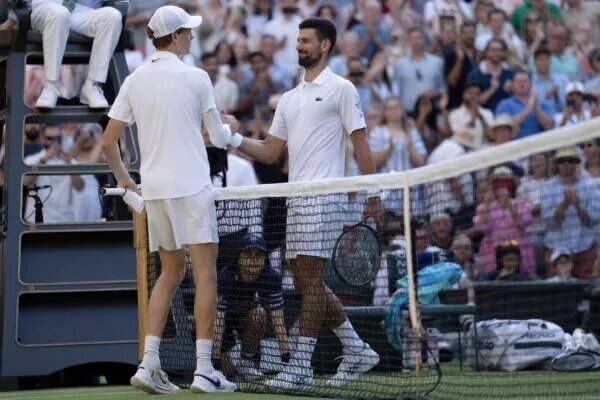
Novak Djokovic, seeded third, plays João Fonseca on Chatrier on Friday. The 39-year-old Serb is the only man left in the draw with a previous Major title–24 of them–and would become the sole holder of the all-time record with a 25th. His route was not supposed to look like this, with the top two already gone. For Djokovic, who has seen everything tennis can produce in three-and-a-half decades of competition, this draw is an opportunity, and he knows exactly what to do with one of those.
Casper Ruud, a two-time Roland Garros finalist, meets Tommy Paul on Lenglen. Ruud is the kind of player who looks unremarkable until the clay swing starts, and he quietly dismantles everyone in his path. He has been to the final before, twice, and lost to Rafael Nadal and Novak Djokovic, respectively. A third final would demand a different ending.
What about the Women?
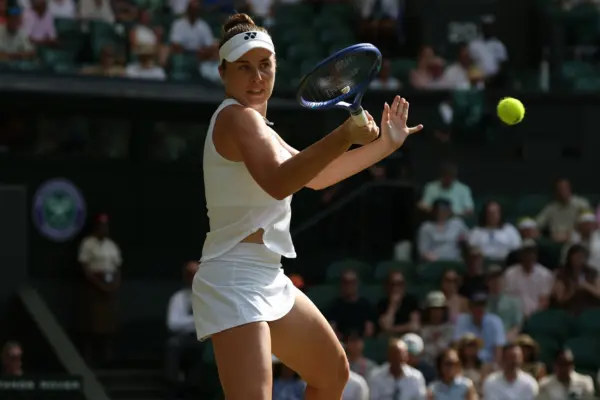
On the women’s side, the draw is equally unsettled, though with different texture. Defending champion Coco Gauff is through. World #1 Aryna Sabalenka, who completed a majestic Sunshine Double earlier this year, is intact and moving through the draw with the serene efficiency of a player who believes this title is hers to take. Elena Rybakina, the Australian Open champion, is out, beaten by Yuliia Starodubtseva in a result that sent shockwaves through the women’s half. Iga Swiatek, four-time champion here, remains the most complete clay-court player in the women’s game when her ball-striking is dialled in.
But the chaos in the men’s draw is the story that will define this fortnight. The Sinner-Alcaraz era gave tennis something it badly needed after the retirement of Roger Federer and the fading of the Djokovic-Nadal era: two rivals who made each other better, who created matches worth staying awake for, who gave Roland Garros a plot. Without them, the plot has to be written by someone new.
That someone may be Zverev, finally hauling himself over the Grand Slam line. It may be Djokovic, defying age with the specific contempt only he seems capable of. It may be a player not yet discussed seriously, a Cerundolo riding the momentum of the biggest upset of his career, or a Ruud deciding that a twice-finalist is not a legacy he can accept.
What it will not be is boring. The draw has been blown apart, the court is open, and somewhere in the remaining field, someone is beginning to understand that the title they had no right to expect is sitting there, waiting, for whoever wants it badly enough.
In Paris, in the second week of a Roland Garros without its two best players, that is the only question left. Not who is the favourite, who is brave enough to act like one.
Main Photo Credit: Susan Mullane-Imagn Images