

Most draft coverage tells you who was picked and assigns a grade. That’s the easy part.
The harder and more useful question is this: what does success actually look like for each player, and when should fans expect to see it? Because in the NFL, development happens in stages. If you don’t understand those stages, it’s easy to label a player a bust or a steal far too early.
A Smarter Way to Evaluate the Panthers 2026 Draft Class
This breakdown connects traits, production, and real NFL translation so Panthers fans know exactly what to watch for on Sundays.
How to Evaluate Draft Picks the Right Way
Every player is evaluated through three phases of development:
Early Signs
This shows up in training camp, preseason, and early rotation reps. You are looking for involvement, not dominance.
Functional Value
This is the most important stage. Can the player step in without hurting the team? Does the system still work when they are in the field?
Real Impact
This is where true success happens. The player becomes a reliable starter or key contributor.
How Success Probability Is Determined
Each percentage reflects the likelihood that a player reaches long-term starting value based on:
Physical traits and athletic profile
College production and efficiency
Positional development curve
Clear opportunity within the Panthers roster
This is not hype. It is a projection based on role, development, and how players historically transition to the NFL.
Round 1 Monroe Freeling-Offensive Tackle
Grade B-
Carolina prioritized protecting Bryce Young and stabilizing the offensive line.
With Ikem Ekwonu dealing with injury concerns and entering a key contract window, this pick carries both immediate and long-term importance.
What Has to Go Right
Freeling’s pass protection must translate from college to the NFL. In Georgia, he allowed just 3 sacks and only 9 total pressures across 13 starts, earning an 85.1 pass-blocking grade. That shows a strong foundation.
The question is whether that success came from technique or athletic recovery. In the NFL, recovery is harder. He has to win earlier in reps.
His anchor must improve so that power rushers do not collapse the pocket
His hand placement must become consistent instead of reactive
He must control reps instead of recovering late
If it works, he can handle pass rushers one-on-one. If not, pressure will consistently come from his side and force adjustments.
Success Timeline
Early Signs
Competing for reps and potentially rotating in due to injuries
Functional Value
Steps in at tackle, and the offense does not change protections or play-calling
Real Impact
Becomes a reliable starting tackle and possible long-term replacement
What It Looks Like on Sundays
Bryce Young is not taking pressure off the edge, regardless of who is playing tackle. The offense operates the same.
Watch For This
If Freeling plays and you do not hear his name, that is a positive sign.
Success Probability 70 Percent
Freeling’s traits, production, and opportunity give him a strong path to becoming a reliable starter.
Simple Translation
If you trust him to protect your quarterback within two seasons, the pick worked.
Round 2 Lee Hunter-Defensive Tackle
Grade B-
This pick reinforces Carolina’s defensive identity by strengthening the interior.
What Has to Go Right
Hunter already proved he can dominate against the run.
He posted an 84.5 run defense grade, ranked in the 96th percentile in run-stop rate, and finished with an 80.9 overall grade.
The NFL test is about consistency against stronger competition.
He must hold ground against double teams
Maintain leverage and pad level every snap
Turn power into a consistent pocket push
If it works, the defense controls early downs. If not, he becomes just another rotation player.
Success Timeline
Early Signs
Rotational player in run situations
Functional Value
Controls gaps and keeps linebackers clean
Real Impact
Becomes a dependable interior anchor
What It Looks Like on Sundays
Running the ball inside becomes difficult. Offenses face more second and long situations.
Watch For This
If runs up the middle are consistently stopped early, he is doing his job.
Success Probability 72 Percent
Players with his size and role clarity tend to translate well in structured systems.
Simple Translation
If the run defense improves, he is part of the reason.
Round 3 Chris Brazzell II-Wide Receiver
Grade B+
Carolina added a vertical threat to improve spacing in the offense.
What Has to Go Right
Brazzell’s production shows clear value as a serious threat.
He recorded 1,006 yards and 9 touchdowns, averaged 16.4 yards per catch, and produced a 136.3 passer rating on deep targets.
The challenge is consistency.
He must win at the catch point
Expand beyond a limited route tree
Add strength to handle physical coverage
If it works, he changes how defenses align. If not, he remains inconsistent.
Success Timeline
Early Signs
Flashes as a deep threat in camp and early games
Functional Value
Forces defenses to respect the deep ball
Real Impact
Develops into a reliable second option at receiver
What It Looks Like on Sundays
Safeties stay deeper, and the short passing game becomes easier.
Watch For This
If defensive backs are turning and running with him consistently, he is impacting the game.
Success Probability 62 Percent
His role is clear, but receivers with this profile carry natural variance.
Simple Translation
If defenses back up, the offense opens up.
Round 4 Will Lee III-Cornerback
Grade C+
This is a developmental pick built on physical traits.
What Has to Go Right
Lee has shown flashes of coverage ability but lacks consistency.
He recorded 10 pass breakups but also had a 16.1 percent missed tackle rate and limited turnover production.
He must become more reliable in tackling
Turn pass breakups into interceptions
Improve discipline when beaten
If it works, he becomes a dependable outside corner. If not, offenses will target him.
Success Timeline
Early Signs
Special teams contributor
Functional Value
Can step in without being targeted
Real Impact
Develops into a starting corner
What It Looks Like on Sundays
He is not giving up big plays and is not being attacked by quarterbacks.
Watch For This
If quarterbacks stop throwing his direction, that is progress.
Success Probability 48 Percent
Traits are present, but development will determine the outcome.
Simple Translation
If he is not the weak link, the pick worked.
Round 5 Sam Hecht-Center
Grade B
This is a stability pick for the offensive line.
What Has to Go Right
Hecht’s production in college was elite.
He allowed zero sacks and zero quarterback hits across two seasons and gave up only 7 pressures on 759 snaps.
The adjustment will be physical.
He must handle NFL strength
Maintain strong communication and processing
Avoid being overwhelmed inside
If it works, the interior line becomes stable. If not, pressure comes quickly up the middle.
Success Timeline
Early Signs
Competes for playing time
Functional Value
Keeps the offense organized when on the field
Real Impact
Becomes the starting center
What It Looks Like on Sundays
Clean snaps, strong protections, and a stable pocket inside.
Watch For This
If the interior line looks calm and controlled, he is doing his job.
Success Probability 68 Percent
Centers with his consistency and intelligence often transition successfully.
Simple Translation
If the middle of the line feels stable, the pick paid off.
Round 5 Zakee Wheatley-Safety
Grade B+
This pick adds versatility and upside to the secondary.
What Has to Go Right
Wheatley showed strong production and improvement.
He posted an 85.9 grade and reduced his missed tackle rate significantly.
He must continue improving his tackling
Turn instincts into takeaways
Stay disciplined in coverage
If it works, he becomes a playmaker. If not, he remains a depth option.
Success Timeline
Early Signs
Special teams contributor
Functional Value
Reliable depth safety across multiple roles
Real Impact
Becomes a starting-level contributor
What It Looks Like on Sundays
He is around the ball and used in different defensive packages.
Watch For This
If he is playing multiple roles, that shows growing trust.
Success Probability 60 Percent
Versatility increases his chances of finding a role.
Simple Translation
If he keeps showing up in different ways, he is developing.
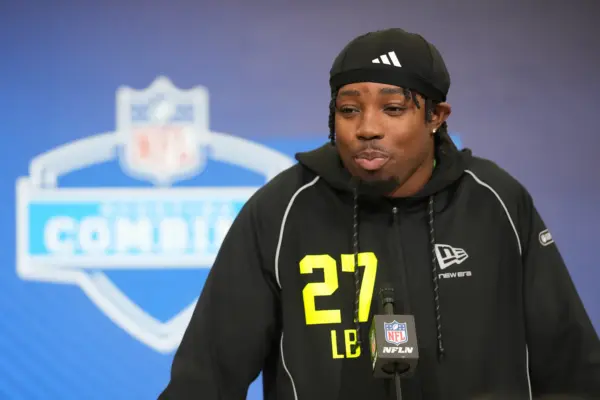
Round 7 Jackson Kuwatch-Linebacker
Grade D
This is a late-round projection with a narrow path.
What Has to Go Right
Kuwatch produced in his final season with 109 tackles, 10 tackles for loss, and 5 sacks.
He must prove that production translates.
He must earn a role on special teams
Show consistency at NFL speed
Prove he belongs on defense
If it works, he becomes a contributor. If not, he does not stick.
Success Timeline
Early Signs
Makes the roster through special teams
Functional Value
Provides reliable depth
Real Impact
Becomes a rotational linebacker
What It Looks Like on Sundays
He is active and contributing on special teams units.
Watch For This
If he consistently appears on special teams, he is earning a role.
Success Probability 25 Percent
Late-round picks without a clear standout trait face a difficult path.
Simple Translation
If he makes the roster, he earned it.
Final Thoughts: What Panthers Fans Should Watch
This draft is not about immediate stars. It is about building a team that stays functional when adversity hits.
When you watch the Panthers this season, focus on:
Players stepping in without disruption
The system is holding up despite injuries
Fewer weaknesses are being exposed
If those things start to happen, this draft class is doing its job. That is what real success looks like.