
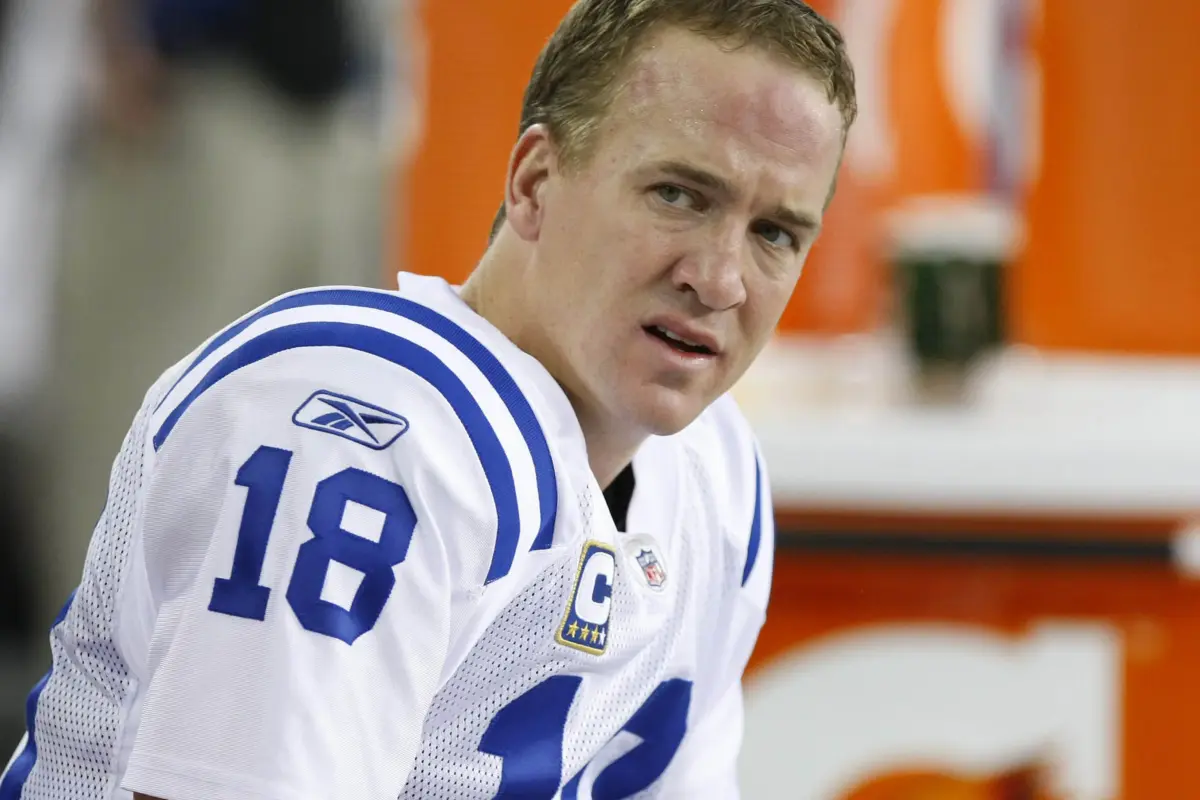

What if Daniel Jones had stayed healthy after leading the Indianapolis Colts to an 8-2 start last season? It’s one of the Colts’ biggest ‘what-ifs’ currently looming over the team — but it barely cracks the list of the biggest alternate realities in franchise history. The Colts have had a lot of weighty ‘what-ifs’ over the years.
What if they had provided Andrew Luck with a better offensive line? What if they had never cut Peyton Manning following his neck surgeries? Or — let’s go way back for this one — what if John Elway had agreed to play for Frank Kush in Baltimore?
There’s no clear answer to any of those, of course, but things certainly would’ve been different — in some cases, enormously so. With training camp set to begin, here’s a look at the Colts’ five biggest ‘what-if’ moments, plus a few honorable mentions.
Colts’ Biggest ‘What-Ifs’ in Franchise History
1. What If the Colts Had Lost the Race for Peyton Manning?
Let’s get things started with one wild ‘what-if’ story.
One of the most fortunate things to ever happen to the Colts franchise was owning the No. 1 overall pick the year Manning was available, and it might not have happened if Jim Harbaugh hadn’t gotten into a bizarre altercation with Jim Kelly the previous October.
Harbaugh, the Colts’ starting quarterback at the time, confronted Kelly — the former Bills star working as an NBC analyst — after Kelly questioned his toughness on television. Harbaugh broke his hand in the tussle, so his backup, Paul Justin, started the next four games.
Justin went 1-3, including a loss to the Chargers. The Colts finished that 1997 season 3-13, one game ahead of the 4-12 Chargers (along with three other teams at 4-12). Had Harbaugh started against those Chargers and led Indianapolis to victory, it would’ve been the Chargers at 3-13, with the Colts in a four-way tie for second.
That’s a big ‘what-if,’ of course, especially considering Harbaugh only won two of the 12 games he did start. Still, he had led the Colts to the AFC title game two years earlier, and the Chargers were a bad team.
Would the Chargers have taken Ryan Leaf No. 1 anyway? (After all, they traded a huge haul to move up one spot and draft Leaf, sending their No. 3 pick, a 1998 second-rounder, a 1999 first-rounder, and linebacker Patrick Sapp to the Falcons for the No. 2 overall pick.) Or would they have taken Manning and left the Colts with Leaf?
Impossible to know. But if Kelly had kept his opinion of Harbaugh’s toughness to himself, it may have massively changed the course of NFL history.
2. What If Andrew Luck Had Better Protection Early in His Career?
No moment has had a greater impact on the modern Colts than Luck’s shocking retirement in August 2019.
At just 29 years old, he had already made four Pro Bowls and quarterbacked Indianapolis to eight playoff games in just six active seasons.
Unfortunately, mixed in with that was the astonishing amount of punishment Luck absorbed early in his career. He was sacked 156 times in his first five seasons, which ranks as the 10th-most of all time for a quarterback’s first five years, via StatMuse.
The constant collisions led to a long list of significant injuries, including a torn shoulder labrum that cost Luck the entire 2017 season, as well as a lacerated kidney, torn abdominal muscles, rib cartilage damage, concussions, and persistent calf and ankle problems.
During his retirement announcement, Luck said he had been trapped in a constant cycle of injury, pain, and rehabilitation.
The question is: had the Colts invested sooner in building an elite offensive line, would Luck still be playing today?
There’s no way to know. Some would say much of the blame actually falls on Luck himself, given his tendency to hold onto the ball and his aggressive playing style.
Either way, it’s logical to believe a healthier Luck wouldn’t have retired when he did, and a bigger investment in the offensive line could’ve kept him on the field even if he shared some of the blame.
The Colts could’ve been regular Super Bowl contenders through the 2020s. At the very least, they might have avoided what’s plagued them ever since — cycling through veteran quarterbacks between rebuilds.
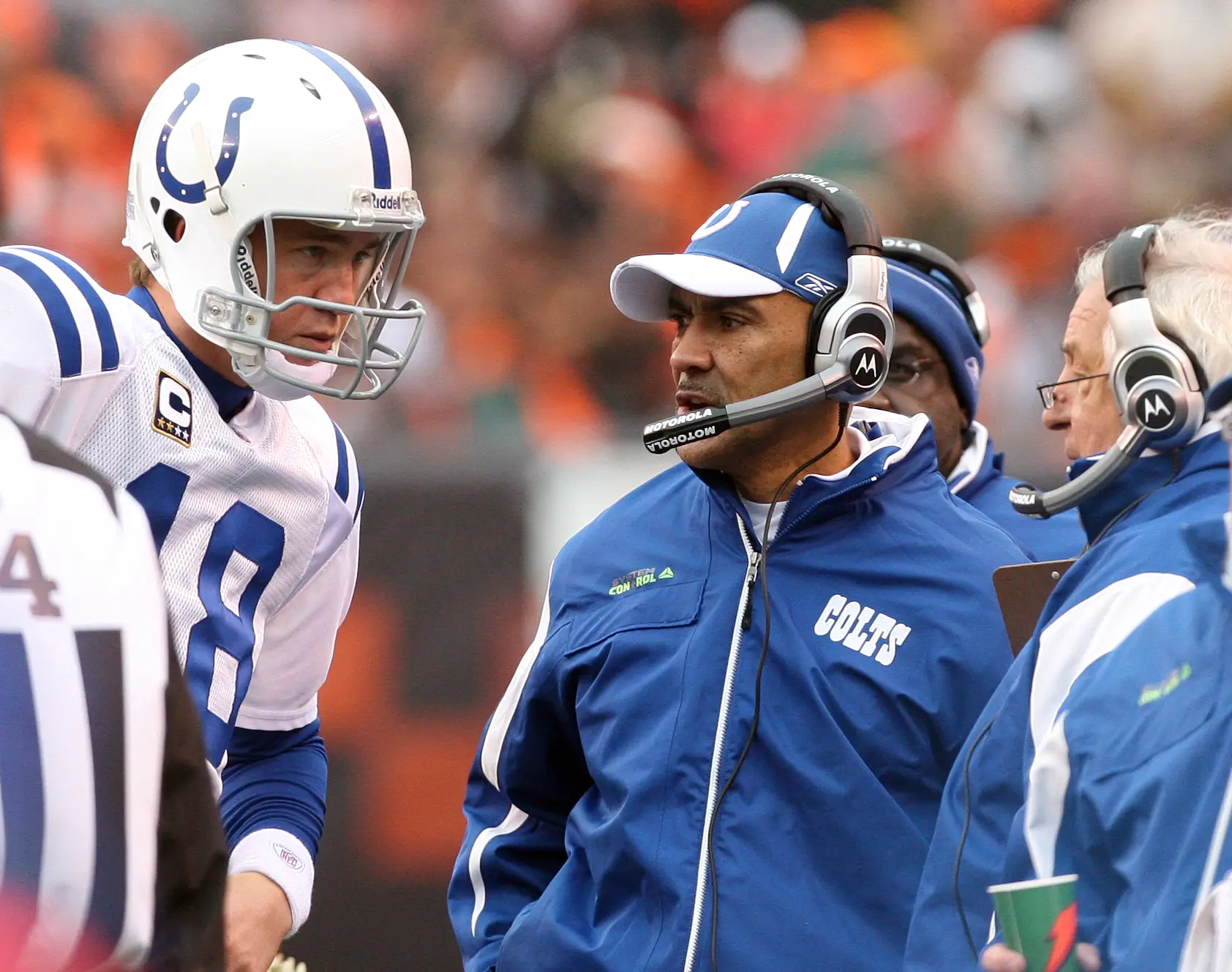
3. What If the Colts Hadn’t Cut Their Greatest Player of All-Time?
In March 2012, the Colts cut their starting quarterback — a 35-year-old who had been named league MVP four times, gone 141-67 as a starter, and was arguably the greatest player in NFL history.
Why would they do this? Manning was recovering from major neck surgery, and the franchise had to decide whether to commit huge money — Manning’s contract included a $28 million bonus if he remained on the roster that month — to a player whose medical outlook was simply unknown. It was unclear if he’d ever play at an elite level again.
Meanwhile, because Manning had missed the 2011 season, the Colts owned the No. 1 draft pick, and a generational player named Andrew Luck was available.
So, on March 7, the Colts made the face of the NFL for the previous 13 seasons a free agent.
Incredibly, Manning didn’t just recover from his neck surgeries — he thrived. After signing with the Broncos, he won another league MVP, reached two more Super Bowls, and posted a higher passer rating (101.2) than he had with the Colts (94.9), along with a better completion percentage (66.5% to 64.9%). He went 45-12 as Denver’s starter and threw for 55 touchdowns in 2013, still the single-season record.
The Colts’ decision was understandable at the time. But what if they had gambled on Manning’s recovery, traded the No. 1 pick for assets like offensive line help, and continued to build around the greatest player in franchise history?
4. What If John Elway Had Agreed to Play in Baltimore?
The Colts didn’t move from Baltimore to Indianapolis because of Elway. The primary reasons were stadium issues, Indianapolis’s attractive financial offer, and, ultimately, the threat from Maryland lawmakers to use eminent domain to keep the franchise in Baltimore.
Still, it’s worth revisiting what happened between Elway and the Colts less than a year before the move.
On draft day in 1983, Elway’s father said his son “will never play for [owner Robert] Irsay or [coach Frank] Kush,” underlining his concerns about Kush’s harsh coaching style and Irsay’s volatility. The Colts had just gone 0-8-1 in a strike-shortened season and were widely viewed as dysfunctional.
In April 1983, the Colts drafted Elway anyway. Six days later, they traded him to the Broncos. In March 1984, the team moved to Indianapolis.
The Elway saga embarrassed the franchise nationally, reinforced its dysfunctional reputation, and deprived the team of one of the greatest quarterbacks of all time.
But what if Kush had been fired after that 0-8-1 season and the Colts had brought in a coach the Elways respected? What if they had convinced the family that Elway would thrive there?
Would Elway have transformed the Colts into a contender, shifting the political atmosphere around a stadium deal in the process? A winning team with a franchise quarterback could have generated the public pressure and goodwill needed to keep the Colts in Baltimore.
Whether that would have been enough is impossible to know, but if it had, the entire NFL landscape might look different today.
5. What If the Colts Had Won Super Bowl XLIV?
The Colts entered Super Bowl XLIV with a 14-2 record and one of the league’s best offenses, riding a wave of momentum behind Manning and coach Tony Dungy.
Then came Tracy Porter’s unforgettable pick-six after Manning’s pass intended for Reggie Wayne was intercepted, sealing a Saints win and one of the most gut-wrenching losses in franchise history.
Had Indianapolis completed the comeback, Manning would have earned a second Super Bowl title with the Colts, reshaping countless debates about his legacy. Instead of a single championship together, Manning and Dungy might be remembered today as the architects of a dynasty.
Colts’ Biggest ‘What-Ifs’: Honorable Mentions
What if the Colts had gone undefeated in 2009?
The Colts were a perfect 14-0 to start the season, and in Week 16, they led the Jets 15-10 with 5:36 remaining in the third quarter. That’s when coach Jim Caldwell pulled Manning and other starters as boos filled Lucas Oil Stadium. Backup Curtis Painter was overmatched, and the Jets rallied to win, 29-15. The following week, with the division already locked up, Indianapolis rested its starters again and finished 14-2 instead of a potential 16-0. Only two teams have ever finished a Super Bowl-era regular season perfect — the 2007 Patriots and 1972 Dolphins — and an undefeated record hasn’t exactly been a championship guarantee (the ’07 Patriots lost the Super Bowl). Still, resting healthy starters for the equivalent of about five quarters of football, rather than chasing history, remains one of the more debated coaching decisions in team history.
What if Nick Harper had avoided Ben Roethlisberger’s touchdown-saving tackle?
Many Colts fans still consider the 2005 team the best in franchise history. After finishing 14-2, Indianapolis appeared destined for a Super Bowl run before a heartbreaking playoff loss to the Steelers — a game defined by wild swings, including Jerome Bettis’ late fumble and Roethlisberger’s shoestring tackle of Harper after he’d recovered the ball. A few feet in another direction, and the Colts may have advanced toward a championship a year earlier than they eventually did.
What if Eric Dickerson had stayed longer?
Dickerson rushed for more than 5,000 yards in fewer than five seasons with Indianapolis. Already an established superstar when he arrived, a longer Colts tenure could have rewritten the franchise’s rushing record book. Instead, mounting contract disputes and clashes with management led to a trade to the Raiders for just a pair of late-round picks.
What if the Colts had kept Marshall Faulk?
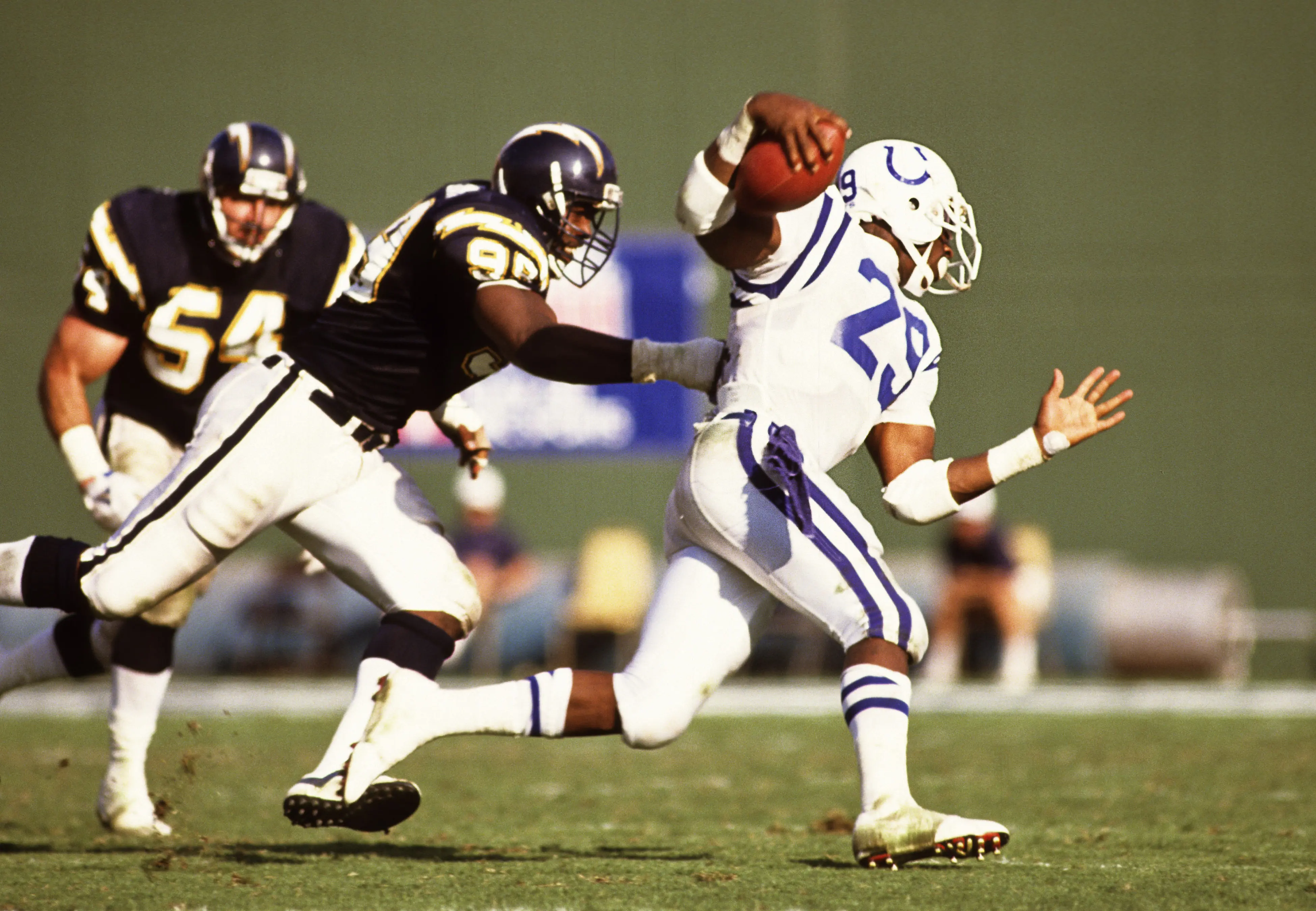
Faulk is one of the greatest running backs in NFL history, but much of his legendary career came with the Rams after Indianapolis traded him following the 1998 season — a year in which he’d led the league in yards from scrimmage — for second- and fourth-round picks amid a contract dispute. The Colts added Edgerrin James in the 1999 draft, but it’s fascinating to imagine an alternate reality where they’d kept Faulk and used that draft capital elsewhere.