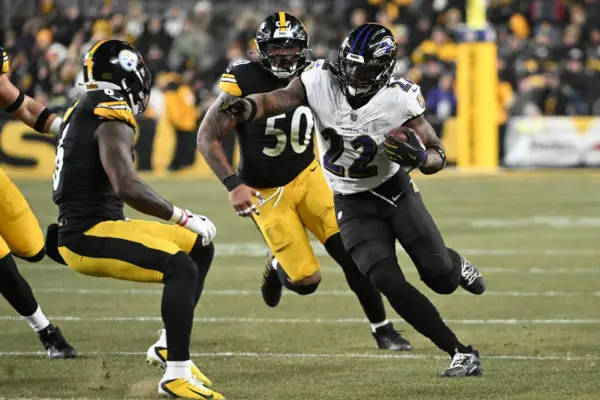



The Chiefs’ explosive run game is not being talked about enough, and it’s going to define this team in 2026.
Not just because they want to. Because they have to.
With Patrick Mahomes coming back from injury, you can’t ask him to carry the entire offense early on. That means the run game has to be more than just “there.” It has to stay on schedule, and more importantly, it has to create explosive plays. A piece of the offense that has been missing for years.
Pound the Rock: Why the Chiefs’ Explosive Run Game Has to Change
The Real Problem: No Explosive Runs
When you go back and watch this offense the last two seasons, the issue isn’t just efficiency, it’s explosiveness.
Over 2024 and 2025, this was one of the least explosive rushing attacks in football. With around 20 explosive runs across that span, and barely any runs over 20 yards last season.
When you are not explosive, it changes how defenses play you.
Linebackers don’t hesitate, and safeties stay deep. Everything tightens up, and every drive has to be perfect. That’s not how you want to operate, even with a quarterback like Mahomes.
This is exactly why the Chiefs’ explosive run game has to improve.
Kenneth Walker Isn’t a Workhorse, and That’s a Good Thing
Now here’s where fans might get it wrong with Kenneth Walker III.
If you’re expecting 25–30 carries a game, that’s not happening. He’s only rushed for over 1,000 yards twice in his career, and he’s consistently been part of a two-back system. But that’s not a weakness. That’s part of why this works.
That two-back system has helped manage Walker’s wear and tear throughout his career. He’s taken fewer unnecessary hits. He’s stayed fresh deeper into games and later into the season. And because of that, when he gets his chances, the burst is still there.
That’s what you’re buying into, the impact, not the volume.
Once he gets rolling, you get into what he does best.
Being a big playmaker. A running back who doesn’t need 25 touches to change a game. Only some space and the right look up front.
During this past season, he had 10 runs over 20 yards, and over his career, he’s produced over 30+ runs of 20-plus yards. Plus, with his two fumbles. He became a rare playmaker. A tone-setter.
And if this offense can get just one of those explosive runs per game, the Chiefs’ explosive run game becomes a real problem for defenses.
Where Eric Bieniemy Changes Everything
This is where Eric Bieniemy’s coming back is so important. It isn’t just about calling more runs. It’s about designing them the right way and holding the standard.
Because let’s be clear, Andy Reid is still going to call plays. That’s not changing. But Bieniemy’s role is in the details. The install. The emphasis. Making sure what’s called actually gets executed the way it’s supposed to.
And that matters more than people think.
One of the biggest issues with this offense last year wasn’t just scheme but consistency. Things slipped. Details weren’t always there. Whether that was drops, timing, or execution, it showed up on tape. Bieniemy is going to be different.
He’s not just bringing ideas, but accountability. Making sure guys aren’t just lining up, but doing their job the right way every time. That’s how you turn a good play call into an explosive one. And he’s seen what that looks like when it works.
Look at what the Chicago Bears did in 2025. They jumped to 67 runs of 10+ yards and became one of the more explosive rushing teams in the league.
That didn’t just come from calling runs. That came from commitment, from details, and from putting backs in position to get downhill, reach the second level, and create chunk plays.
Now you bring that mindset back into a system with Andy Reid, and it starts to make sense.
How the Scheme Helps the Run Game (Not Just the Back)
Running the football is not just the running back’s job. It’s how you build around him.
Looking all over the league, you see teams getting into these looks:
- More 12 personnel
- More under-center looks
- More motion before the snap
Why? It creates better angles in the run game and forces defenses to declare their intentions.
With Xavier Worthy, Rashee Rice, and Travis Kelce on the field, defenses can’t just stack the box. Now they’re in conflict.
That’s where the run game starts to breathe, and where the Chiefs’ explosive run game can finally take shape.
Now This Is Where It Gets Interesting: Enter Emmett Johnson
Walker doesn’t need to be the workhorse, nor should he be.
He’s at his best in a rotation. But this is where Emmett Johnson comes in.
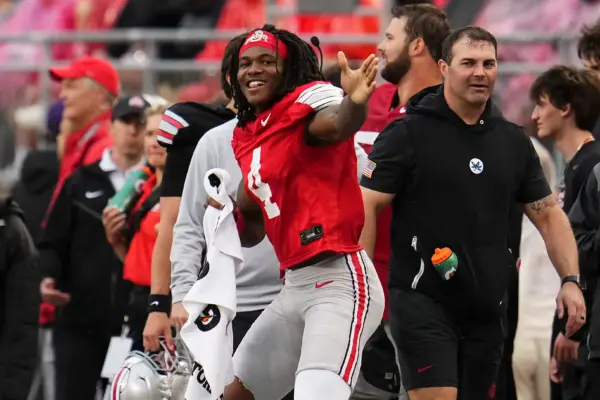
Johnson is coming off a season with over 1,400 rushing yards and nearly 400 receiving yards. He can handle touches, he can catch the ball, and he can keep the offense on schedule. He also had is share of explosive plays, even with a 70-yard run against Iowa.
Think of him as that complementary piece, the same role a player like Zach Charbonnet filled.
It doesn’t force Walker into volume. You’re maximizing his explosiveness.
The Goal Is Simple: One Explosive Run a Game
This offense doesn’t need to become run-heavy either.
But it does need this: One explosive run per game.
If Walker or Johnson can break just one big run:
- Linebackers start hesitating
- Safeties creep up
- The passing game opens up
That’s when the Chiefs’ explosive run game changes everything.
The Last Word on Why Walker Changes This Offense
This is why Kenneth Walker is the most important addition to this offense.
Not because of how many times he touches the ball, but because of what happens when he does.
If the Chiefs can truly pound the rock and create explosive plays on the ground, they’re not just more balanced. They’re more dangerous than they’ve been in years.
And that’s what makes this work.
Main Image: Kirby Lee-Imagn Images