The Washington Commanders draft grades are in. Washington did not walk into the 2026 NFL Draft with the luxury of sitting back and taking the best player available without a second thought. There were holes on both sides of the ball, and not a ton of picks to fix them. That usually leads to reaching, forcing things, or walking away with a class that feels incomplete.
Despite working with limited draft capital, Washington came out of the early stages of this draft addressing some of its biggest needs without chasing picks or overthinking the board.
Washington Commanders Draft Grades: A New Era on Defense
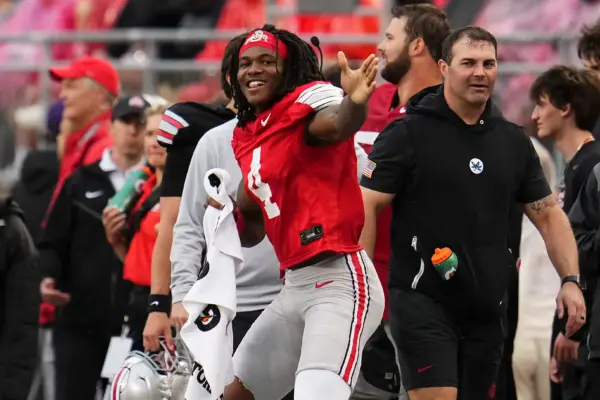
First Round (7th Overall): Sonny Styles, LB
Sonny Styles comes out of Ohio State football as one of the most unique prospects in the 2026 Draft, beginning his career as a safety before working his way to full-time linebacker. His movement patterns are a bit unique from other, more traditional linebackers. He looks every bit a defensive back on the field, but packs as hard a punch as someone who has played the linebacker position his whole career.
That athleticism and unique skillset is what allowed him to be seen as a top-tier prospect. At 6-5 and around 240lbs, Styles provides the size and speed needed to succeed at linebacker. He showed it throughout his final season at Ohio State football, which included 82 tackles, 6.5 tackles for loss, and an interception.
The testing numbers at the NFL Combine were where Styles’ game popped off the page however, including a 4.46 in the 40-yard dash and a vertical over 43 inches. These are simply not the numbers that are normally expected from a linebacker, and are numbers that coaches often have trouble designing a defense around the player, they are so unique. It is what makes this a fascinating choice for Washington.
Washington Commanders Draft Grade: A
Third Round (71st Overall): Antonio Williams, WR
The Washington Commanders did not go hunting for headlines with this pick, but taking Antonio Williams might end up being one of the more useful moves they make all weekend. Coming out of Clemson, Williams built his game on consistency more than flash. He is not blowing past corners on go routes, but he is almost always where he is supposed to be, and quarterbacks tend to like that. Quick feet, sharp routes, and an ability to find soft spots underneath make him the kind of receiver who quietly piles up catches while everyone is busy watching someone else.
There are some fair concerns about how he holds up physically over a full season, but when he is right, he plays like a safety valve you trust on third down. For a team that needed more reliability behind Terry McLaurin, this feels less like a gamble and more like a pick that ends up getting used a lot sooner than people think.
Washington Commanders Draft Grade: B+
Fifth Round (147th Overall): Joshua Josephs, EDGE
Washington still needed help on the edge, and Joshua Josephs gives them a developmental pass rusher with enough traits to make the pick worth it.
At Tennessee, he showed the burst and length teams look for off the edge. The problem is that the production was more flash than dominance. There were snaps where he looked disruptive and dangerous, then others where he got quiet for too long.
Washington needed more bodies who can get after the quarterback, and Josephs has enough upside to earn rotational snaps if he develops quickly. He does not need to become a star for this to work. If he becomes reliable edge depth, Washington did its job here.
Washington Commanders Draft Grade: B
Sixth Round (187th Overall): Kaytron Allen, RB
Washington’s backfield has been up and down, and behind the top options, there has not been a ton you can consistently rely on. Kaytron Allen gives them a different kind of runner than what they currently have.
He is not flashy. You are not drafting him for explosive plays or highlight runs. What he does is lower his pads, get downhill, and finish runs the way coaches want them finished. Short yardage, inside carries, keeping the offense on schedule, that is where he earns his keep.
There is not a ton of breakaway speed with Allen. Once he gets into the open field, he is probably getting caught. But he runs through contact, keeps his legs moving, and rarely puts the offense behind the sticks.
For a sixth-round pick, this is about adding a role player who can actually see the field. If he is able to make the roster, Allen has a clear path to touches if he does what he has always done.
Washington Commanders Draft Grade: B-
Sixth Round (209th Overall): Matt Gulbin, C
Interior offensive line depth has been an issue. When injuries hit, things tend to unravel quickly. Matt Gulbin gives them someone who can help stabilize that, even if it is not right away.
He is not overpowering defenders or tossing people around. What he does well is stay balanced, play under control, and handle his assignments without creating extra problems. At this point in the draft, that is valuable.
The versatility stands out, too. Being able to slide between center and guard gives Washington options when they start mixing and matching up front. That alone increases his chances of sticking.
There is going to be a jump in competition, and he will need time to adjust to NFL strength. But as a depth piece who can develop into a reliable backup, this makes sense.
Washington Commanders Draft Grade: B+
Seventh Round (223rd Overall): Athan Kaliakmanis, QB
Athan Kaliakmanis has the size and arm to at least make things interesting. There are stretches on tape where he looks comfortable pushing the ball and operating an offense without looking overwhelmed. Then there are other stretches where everything speeds up on him, and the decision-making slips.
Washington is not asking him to compete for anything right away. This is about development and depth. Sit behind Jayden Daniels, learn the system, clean up the rough edges, and see if anything clicks over time.
If it does, you might have a cheap backup with some upside. If it does not, it is a seventh-round pick. No one is losing sleep over that.
Washington Commanders Draft Grade: B