

These Carolina Panthers Draft Grades can provide so much context to fans worldwide.
As a teacher and coach, I constantly have to reset how people think about grades. The only truly bad grade is an F, which means you didn’t pass. Everything else shows some level of competency.
A lot of people see A’s and B’s as the only acceptable outcomes, but that’s not reality. Not every student, or in this case, every draft pick, will reach that level. And that doesn’t automatically make it a failure.
That’s the lens I use when evaluating draft classes.
- A — No-doubt starter, best player available, or perfect fit for a direct need
- B — Projected starter, strong value, or near best player available
- C — Solid move, but requires development; betting on projection
- D — Passable, but clear room for improvement in value, fit, or execution
- F — Missed pick; poor value or flawed process
With that in mind, this Carolina Panthers draft class isn’t about chasing headlines; it’s about building stability. The approach leans heavily into long-term structure over immediate return, which naturally creates mixed reactions.
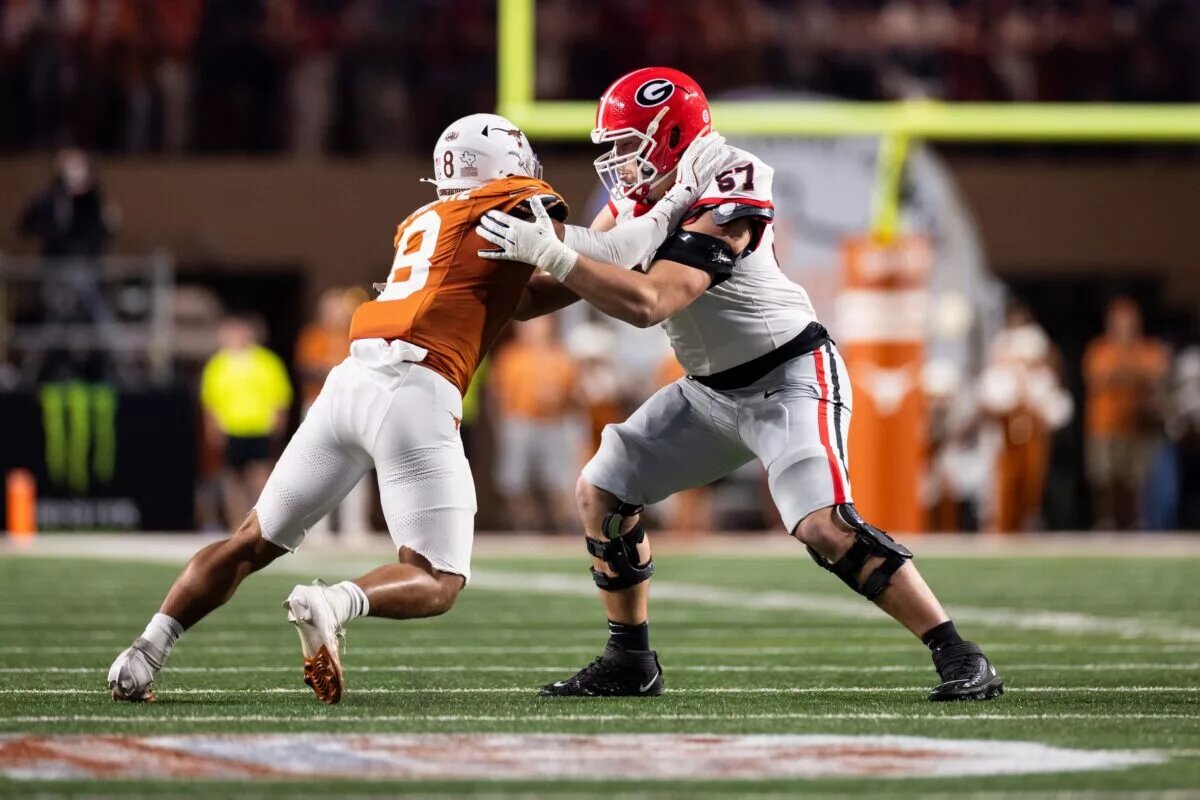
Round 1: Monroe Freeling, OT
Analysis
This reaction was always coming.
Freeling isn’t a headline player. He’s not a highlight generator, nor someone most fans circled going into the night. Because of that, there’s no instant visual payoff—and that matters on draft night.
So the reaction lands where you’d expect: underwhelmed.
But that reaction is rooted in expectation, not evaluation. Carolina didn’t draft for the moment—they drafted for how their roster functions over 17 games.
At this stage, the Panthers aren’t trying to figure out who they are. They’re trying to make what they are more consistent.
And that starts up front.
This wasn’t just about adding depth; it was about addressing structural risk along the offensive line. Between workload concerns and lack of long-term depth, one injury could disrupt everything, especially with a timing-based quarterback like Bryce Young.
Freeling becomes less of a luxury and more of a reinforcement.
He fits a clear prototype: length, movement ability, and developmental upside with real SEC experience. This isn’t blind projection; there’s functional pass protection already on tape.
Yes, he needs refinement. Anchor strength and consistency at the point of attack still need work.
But he has a playable floor, which allows Carolina to develop him without forcing the timeline.
That’s the key.
This isn’t a pick for draft night. It’s a pick for Sundays in November.
Draft Selection Fit
Freeling strengthens the most important structure on the roster: protection for Bryce Young. He adds depth, flexibility, and a long-term pathway at tackle without forcing immediate pressure to perform.
Grade: C
A functional, forward-thinking move that prioritizes long-term stability over immediate impact.
Round 2 (49th Overall): Lee Hunter, DT
Analysis
This pick leans into identity.
Hunter isn’t here to create splash plays—he’s here to make everything else work.
At 325 pounds with elite length and power, he fits exactly what this defensive front asks from its interior players: control gaps, absorb double teams, and keep linebackers clean.
His impact shows up most in the run game, where he provides something Carolina lacked—consistent interior stability.
As a pass rusher, the profile is limited. Most of his pressure comes from power, and his conditioning will need monitoring.
But that’s not his role.
Carolina doesn’t need every lineman to be a playmaker. They need players who keep the structure intact.
Hunter does that.
Draft Selection Fit
A clean scheme fit that reinforces defensive identity and raises the floor of the run defense.
Grade: B-
Strong role clarity and fit, but limited pass-rush upside caps the ceiling.
Round 3 (83rd Overall): Chris Brazzell II, WR
Analysis
This is where value meets need.
Brazzell brings vertical pressure, something this offense lacked. At 6’5” with deep speed and strong ball tracking, he forces defenses to stretch, opening up everything underneath.
That alone changes spacing for Bryce Young.
He was projected higher than this slot, making it a clear value pick.
There are still concerns, frame strength, past drops, and limited after-the-catch ability, but his role is defined early: stretch the field.
Draft Selection Fit
Adds a missing element to the offense while aligning with the value on the board.
Grade: B+
A strong value pick that immediately improves offensive spacing and long-term upside.
Round 4 (129th Overall): Darrell Lee, CB
Analysis
This is a traits-based developmental swing.
Lee brings length, ball production, and clear man coverage ability. But the inconsistencies—especially in zone awareness and tackling—are real.
He’s not a plug-and-play option.
Instead, this is a bet on coaching and development.
Draft Selection Fit
A depth corner with special teams value early and developmental upside on the outside.
Grade: C+
Good traits, but inconsistency limits immediate impact.
Round 5 (144th Overall): Sam Hecht, C
Analysis
This is a transition pick with purpose.
After losing Cade Mays, Carolina needed a plan at center. Hecht provides one.
He’s technically sound, consistent, and processes quickly—traits that matter at center. While he lacks ideal size and length, his fundamentals give him a strong floor.
There will be an adjustment period against NFL power, but the pathway to starting is clear.
Draft Selection Fit
A potential long-term starter who stabilizes the interior offensive line.
Grade: B
Reliable, technically sound, and positioned to grow into a starting role.
Round 5 (151st Overall): Zakee Wheatley, S
Analysis
This is where value and intent intersect.
Carolina traded up to get Wheatley, signaling belief in his upside relative to the board.
He brings length, range, and versatility, with the ability to play multiple safety roles. His growth in coverage is evident, though tackling consistency and play strength still need work.
This is a developmental starter profile.
Draft Selection Fit
Adds depth, versatility, and long-term upside to the secondary while contributing early on special teams.
Grade: B+
High-value selection with a clear developmental trajectory.
Final Draft Grade: B
This draft won’t win headlines, but that’s the point.
Carolina prioritized structure, depth, and long-term sustainability over immediate flash. They addressed key areas across the roster without forcing picks or chasing need for optics.
There’s a clear theme: reinforce the foundation, protect the quarterback, and build consistency across all three phases.
Not every pick projects as an immediate impact player. But multiple selections have clear paths to starting roles, and the overall process remained disciplined throughout.
This is what a “B” draft looks like:
Not perfect. Not flashy.
But functional, intentional, and built to last.