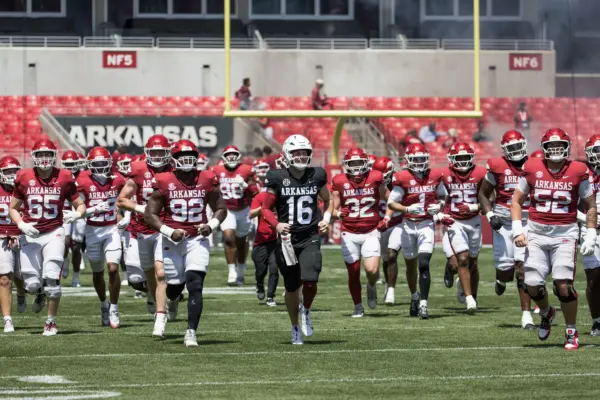


The SEC’s move to a nine-game schedule was marketed as a win for fans, television partners, and competitive balance. For Arkansas, it feels less like a celebration and more like a structural stress test of everything inside the program. The Razorbacks are coming off a two-win season, breaking in a new head coach, and staring at a 2026 slate that offers almost no safe place to quietly rebuild. We at Last Word now look at how this will affect Arkansas football vs the SEC in 2026.
Arkansas vs. the SEC; The Ultimate Stress Test
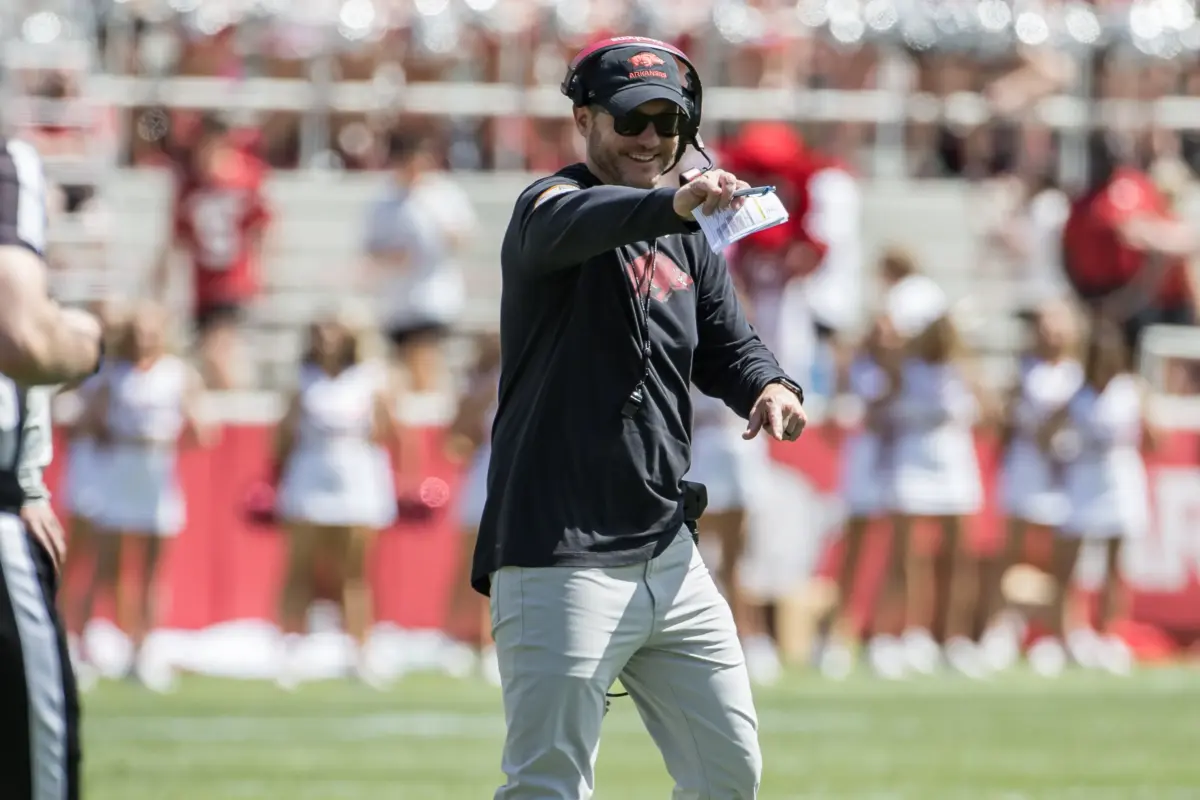
The 2026 schedule is the first full snapshot of that new reality. Arkansas opens the Ryan Silverfield era at home against North Alabama. From there, the Razorbacks immediately head west for a non-conference trip to Utah, a physical, trench-focused team that will test the Razorbacks’ toughness and depth before league play even starts. After that, Georgia comes to Fayetteville with its annual conveyor belt of NFL talent. That is followed by Tulsa, a Group of Six program with enough speed and maturity to punish sloppy execution. Only then do the Razorbacks dive into eight straight SEC games, a stretch that will demand depth, discipline, and emotional resilience.
Those league opponents—Texas A&M, Tennessee, Vanderbilt, Missouri, Auburn, South Carolina, Texas, and LSU—form a blended gauntlet of national brands, rising contenders, and peer matchups that will quietly decide whether Arkansas is actually moving forward or simply churning in place. Some of these Saturdays will function as measuring sticks. Others will be referendum games on the new staff. All of them will tell the rest of the league exactly where Arkansas fits.
A Schedule Built to Break the Middle
On paper, the schedule splits into three tiers, and each one reveals something about the SEC’s evolving philosophy.
The top tier is the true heavyweight group: Georgia, Texas A&M, Texas, and LSU. Georgia visits in Week 3 with national-title expectations and a roster that looks like an NFL minicamp. Texas A&M hosts Arkansas at Kyle Field, a place where any crack in your poise or preparation gets amplified by 100,000 maroon-clad critics. Texas, now a full SEC member, gets Arkansas late in Austin in what will be a charged, emotional setting. LSU comes to Fayetteville as part of the Razorbacks’ new annual opponent trio locked in through 2029. Against this group, Arkansas is not being judged solely on wins and losses. The deeper questions are about physical backbone, composure, and whether the Razorbacks can show any sign of narrowing a very real talent gap.
The second tier is where the season’s narrative will truly be written. Tennessee, Auburn, South Carolina, and Missouri sit closer to Arkansas in the SEC hierarchy, even if several are currently ahead. Tennessee comes to Fayetteville bringing tempo, pressure, and a system that exposes communication breakdowns. Auburn hosts the Razorbacks at Jordan-Hare Stadium, a venue that can swallow visiting teams when momentum flips. South Carolina travels to Fayetteville carrying its own questions about ceiling and identity. Missouri, now locked in annually, visits after Arkansas’ bye week, giving both extra prep time and additional emotional weight to a series that already irritates Razorback fans. These are the “prove-it peers.” If Arkansas wants to move from the bottom toward the middle, it has to start winning these games at home and stealing one or two on the road.
The third tier might not feature the biggest brands, but it carries a different kind of pressure. North Alabama, Tulsa, and Vanderbilt fall into the no-excuse category. North Alabama is the opener, and anything short of a clean, decisive performance will raise questions about focus and preparation. Tulsa is exactly the kind of Group of Five opponent that becomes dangerous if you let it hang around; a locked-in Arkansas should still handle it. Vanderbilt hosts the Razorbacks in Nashville in mid-October in a game both programs will privately treat as a must-have. In a nine-game SEC world, these are the contests you simply cannot drop if you want to talk seriously about bowl eligibility or sustained progress. Any time Arkansas has a realistic chance to be favored, it has to play like it.
What Arkansas Has to Prove to the League
Framed this way, 2026 is not just a test of Arkansas’ trajectory; it is an early test of the SEC’s new model. The Razorbacks sit on the fault line between the league’s haves and have-nots. Their response to this schedule will help answer whether a program with a limited margin can still climb in a world built around a nine-game gauntlet and a permanent trio of LSU, Texas, and Missouri.
Physically, the line of scrimmage will tell the truth. Georgia, Texas A&M, Texas, LSU, and Utah will attack relentlessly. If Arkansas is still getting shoved around, the scoreboard will show it clearly. If Silverfield’s emphasis on competition, development, and line play produces a tougher, more resilient group, that will be visible even in respectable losses. Competitive snaps against elite rosters matter when you are trying to convince both the conference office and recruits that your program is worth investing in.
Psychologically, Arkansas has to prove it can handle swing-game pressure. Tennessee, Auburn, South Carolina, Missouri, Vanderbilt, and Tulsa are not automatic wins or automatic losses. They are coin flips influenced by discipline, execution, and sideline decisions. Recent history is full of days when one mistake turned into a cascade. That cannot define 2026. The staff must manage the ends of halves better, clean up special teams, and keep one bad quarter from becoming a lost afternoon.
There is a rivalry component as well. Texas and LSU are not just logos; they are emotional reference points for this fan base. Missouri has become a thorn, with Arkansas too often on the wrong end of that series. The SEC’s decision to lock those three in as annual opponents ensures the Razorbacks will be compared directly to them every year. If Arkansas cannot at least make those games competitive, it will be hard to sell any story about real momentum.
In the end, this schedule is exactly what it looks like: a league betting that more big games are good for business. For Arkansas, it is something else entirely—a season-long interrogation of whether the Razorbacks are ready to be more than background in somebody else’s highlight reel. If Silverfield’s first team can fight to respectability, protect home field against the right opponents, and avoid disastrous slip-ups, we might look back on 2026 as the year the climb finally started. If not, it will feel like confirmation that in the new SEC, programs like Arkansas are being squeezed into permanent supporting roles.
Main Image: Brett Rojo-Imagn Images