
As we go through the cycles of those trying to fix college sports, we now land on the United States House of Representatives this week. Congress had done its third writing of the SCORE Act and will put it to a floor vote sometime next week. Assuming it passes the House (it will), it gets scheduled for a US Senate vote. It is not likely to get the 60 votes it needs in the Senate, but it will get close, and therein lies the conversation that has to be had.
The current framework of H.R. 4312 addresses a wide range of issues, from NIL, player transfers, coaches’ contracts, and the powers given, or not given, to the NCAA. It’s full name is The Student Compensation and Opportunity through Rights and Endorsements Act. There is a reason it gets shortened to The SCORE Act.
Can Congress Save College Sports
Transfers
From a standpoint of the transfer portal, it imposes changes in how and when student-athletes can transfer. It would require that an athlete be at a school for an entire academic year before transferring to another school. There would be no such thing as transferring into a school in time for the football season and then leaving for another program right after the season. If you are there for the Fall football season, you are at the same school through the Spring semester.
This is going to get weird right away. The college football transfer portal is open for the first two weeks of January. Mixing the two elements above means going into the portal before the Spring semester starts, but having to stay at your current place until the second semester is over. No Spring camp at your new destination. No competing for your spot with your future teammates.
The answer would be to move the portal window to late Spring. Plenty of coaches will hate that. They like having the team together in Spring, having their roster that will be the same in Summer and Fall.
Coaches Coming and Going
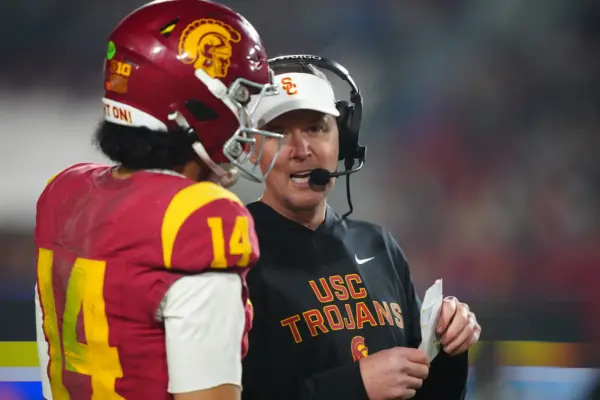
The SCORE Act would consider it tampering to approach a potential head coaching candidate while his team is still playing the season, including the postseason. It literally is referred to in the bill as The Lane Kiffin Rule. It would prevent coaches from bailing out on their current program before they have finished the season.
The NCAA would be authorized to charge a school with tampering, including penalties similar to what has been proposed for tampering with players…huge penalties to the athletic department and a barring of said player/coach from going to the new school. And before you jump up and down waving your hand wanting to discuss state employment laws, this bill statutorily “preempts state laws with respect to compensation, payments, benefits, employment status, eligibility, and academic standards applicable to student athletes.”
The Schools
The bill requires all athletic departments that earn at least $20 million to maintain 16 teams. That would minimize the cost-cutting, picking up a head of steam throughout DI sports.
The bill eliminates schools or other college institutions, like conferences or the NCAA, from restricting a student-athlete’s NIL earning ability. That would seemingly eliminate the College Sports Commission from the landscape. The House v. NCAA settlement last year created the board in order to implement an approval system for legitimate NIL and put a stop to the more bogus setups.
Ironically, the CSC won an arbitration case on Monday against 18 Nebraska football players, in which the committee rejected more than $1 million in NIL arrangements. The SCORE Act would eliminate such a screening process.
The Athletes
The SCORE Act makes it clear that the student-athletes are prohibited from being considered employees by the schools, the conferences, or the NCAA. The schools don’t want that headache because state employment laws would come into play in a constant cycle. Conferences could handle the employment segment of college athletics, but would prefer not to. This eliminates that equation and also takes collective bargaining off the table.
And here is the punchline, as it were. The bill authorizes the NCAA to enforce all of this. Once Ed O’Bannon beat the NCAA in federal court, allowing athletes to get Name, Image, and Likeness money, the organization has been getting beaten routinely in court. The O’Bannon case showed that the NCAA spent 80 years operating outside the bounds of federal antitrust laws. But the SCORE Act clearly states, “Compliance with the provisions of this bill is considered lawful under federal and state antitrust laws.”
Next
Once the bill passes the House, it will go on to the Senate, where it is unlikely to get the 60 votes needed for passage. Senators Cory Booker (D-NJ), Maria Cantwell (D-WA), and Richard Blumenthal (D-CT) have expressed opposition to limiting the voice of the college athletes. They, along with Bill Cassidy (R-LA), are working on a different version of the same plan. It’s called the Student Athlete Fairness and Enforcement (SAFE) Act. There is no formative piece of legislation from the Senate yet.
Main Image: NCAA