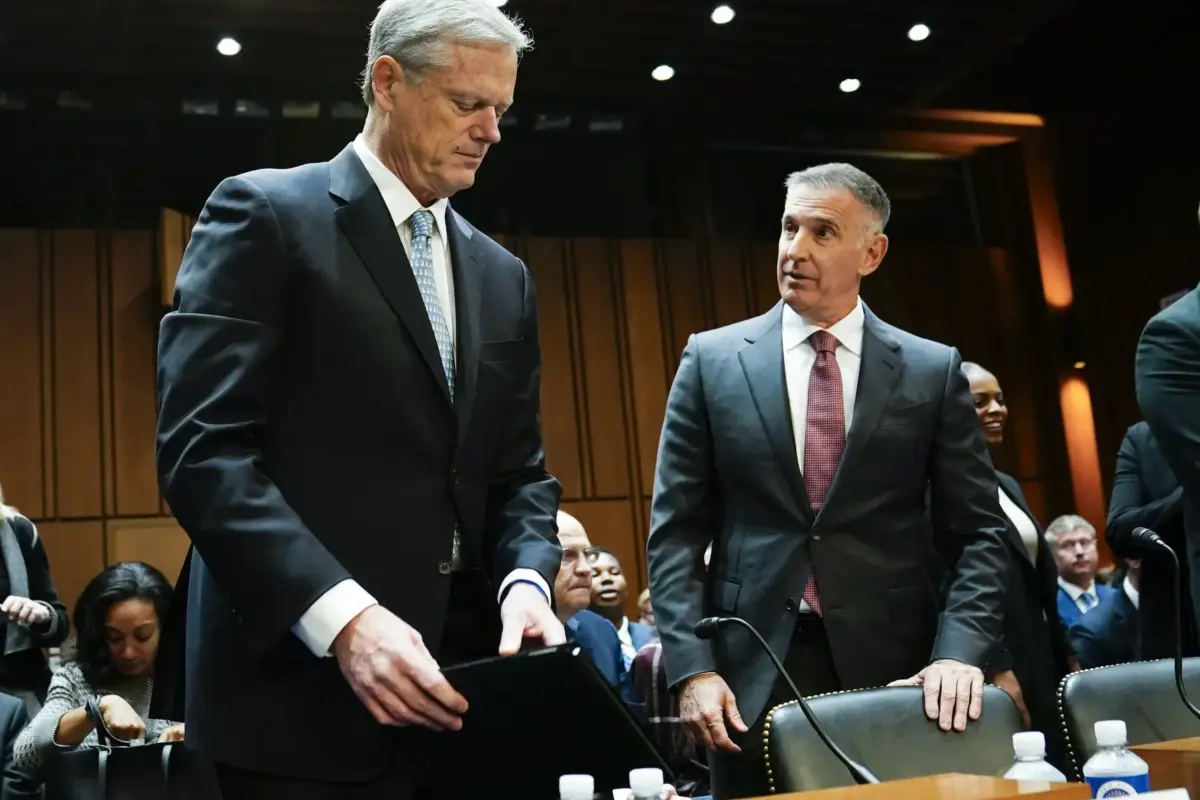

The President’s ad hoc commission to save college sports has put out its version of a white paper with its “formal” recommendations. This list is long and relatively inconsequential, other than admitting that none of what they want is possible without government intervention.
The President’s College Sports Commission Issues Paper Stating the Obvious
Ross Dellenger of Yahoo Sports was the first to get his hands on the memo. The reading of the details is interesting. The Presidential College Reform Committee wants a new enforcement arm for college sports rules, and one that would come under the guidance of the NCAA. The memo referred to it as a task force.
The task force would be made up of college administrators from across the country, as well as student-athletes serving two-year terms.
Some Stated Goals
The goal of the committee, and potentially the task force, is universal: long-term financial sustainability of college sports. How we all get there is unique.
Among the steps the committee would like to see is a banning of all efforts to circumvent the revenue-sharing cap. It currently sits at $20.5 million per school. But the contracts that a large number of athletes are signing give ownership of their name, image & likeness back over to the schools. The schools then monetize the NIL as a way to get around the $20.5 million in a way that is technically within the rules, if not within the spirit of the rules. The committee seeks to put an end to Collectives, which have been heavily responsible for the financial arms race in college sports.
Major Restructuring of the Current Model
The committee, as part of its short-term objectives, also seeks to put a salary cap on coaches, revise the College Football Playoff distribution model, and it wants to pull the Group of Six conferences and schools out of the playoff by giving them their own postseason.
The committee seeks to reconfigure the P4 conferences solely for the purpose of non-revenue sports. While the initiative lacks specifics, it is assumed that college football and men’s basketball would stay put where they currently reside. Women’s basketball is a revenue-positive program in some schools, but that number is in the minority.
The goal for the Olympic sports would be to put them back in the geographic region of origin. UCLA, USC, Oregon, and Washington would be playing West Coast schedules like they were back in the old Pac-12. Same for Stanford, Cal, Arizona, Arizona State, Colorado, and Utah. But under what conference governance? While the media contracts that the Big 10, SEC, ACC, and Big 12 are primarily built around football and men’s basketball. But all of the sports for each school are represented within the terms of the contracts. How do you separate some of them out?
Changing the Media Landscape
The committee sees itself, in the longer term, as being influential in the pooling of media rights. In other words, instead of each conference having its own television contract, the P4 conferences would have one agreement for college football and men’s basketball that covers everyone.
That is going to require some flexibility from ESPN. The media rights agreement with the ACC does not end until 2036, while the other three conferences have theirs end in five years. The philosophy sounds swell, but at some point, going to the market as one requires details. The committee doesn’t have those.
Putting Someone in Charge
There is also a proposal to create a permanent new governance for college sports, beyond the short and intermediate-term goals of the Task Force. The committee says it will study the NCAA, the task force, and the College Sports Commission, which is currently in charge of enforcing NIL rules. It would seek to create a 15-person committee with positions that term out. The permanent governance committee would include administrators from different levels of colleges and universities, and some athletes as well.
Authority
Buried deep in the midst of a lot of bullet points taken from someone’s whiteboard is the critical point to all of this. Any enforcement of these plans by the NCAA or any other body will require some level of antitrust exemptions granted by the United States Congress. The NCAA currently lacks such protection. Thus, a decade-plus of losing seminal cases in federal court.
This Presidential committee has never had any such authority. Its role, apparently, to this point has been to overstate what we have known for a couple of years in terms of the challenges and potential solutions. What it has not produced are the details needed to make it through those steps, in part, because it does not have the authority itself to do any of it.
It was odd to push this White Paper out on a Friday night that is usually designated as a “take out the trash” day. It’s when news dumps happen because people don’t follow the news as closely on a Friday night or Saturday morning. But here is the committee’s first significant crack at recapping what we all know already.
Main Image: Jack Gruber-USA TODAY