EDITORIAL: Representatives from the college sports, business, and media worlds are scheduled to gather in Washington DC at the end of this week for a summit on the state of college sports. The President of the United States has convened a group from a wide range of categories to theoretically address the problems that currently vex college athletics. The biggest issue for the summit to address is, “Why?” Why are most of them there, and what could they possibly lend to real and actionable solutions?
College sports are at a confounding crossroads. Name/Image/Likeness (NIL) no longer bears much resemblance to what Ed O’Bannon fought for 10 years ago, all the way to the US Supreme Court. Revenue sharing is the adjudicated rule based on the House v. NCAA settlement. But schools violate it every day, and there is no singular entity with the authority to rein them in. And the portal, with a two-week window, has turned into 24/7/365 free agency with lawsuits and a grotesque amount of tampering by college coaches.
College Sports Leaders To Convene at the White House; But Why?
To begin with, there are 37 people on the list. One is not attending due to a schedule conflict, so 36 people are expected to attend. If each one took only five minutes with their name and background information, and whatever thoughts they could express in that time period, this meeting would be 180 minutes, or three hours, in length. It is currently scheduled to last half that length.
And then there is the list itself. It is meant to be diverse. A better description would be “puzzling.”
The Attendees
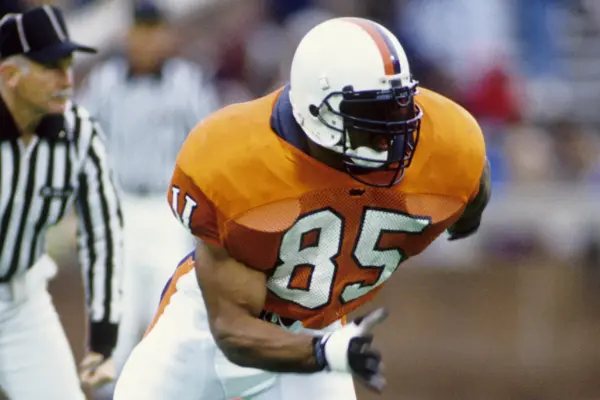
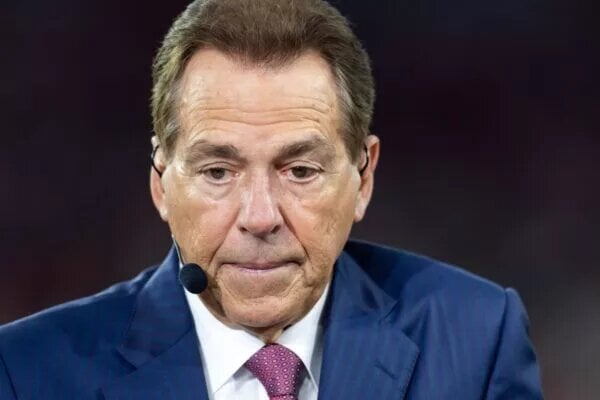
The athletes and coaches category is represented by golfers Tiger Woods and Bryson DeChambeau; former college football head coaches Nick Saban, Mack Brown, and Urban Meyer; former college football players Tim Tebow and Charlie Ward; and former NFL coach and former TV guy Tony Dungy.
DeChambeau played college golf at SMU more than a decade ago. Woods left Stanford to turn pro in 1996. NIL, the portal, revenue-sharing, etc., did not exist when they were in school. They come from a position of very limited familiarity with the current system. But they are golfers whom the current POTUS likes, so they are in. Tebow and Ward played at Florida and Florida State, respectively, long before the current issues became issues, and have never had to experience the current rules. Tony Dungy has zero college coaching or administrative experience and played for the University of Minnesota 50 years ago. Saban, Brown, and Meyer could have viable input. Brown, in particular, was very erudite at the end of his coaching career about transfer portal issues.
There are four professional sports executives on the guest list. NBA commissioner Adam Silver, New England Patriots president Jonathan Kraft, former New York Islanders general manager Lou Lamoriello, and New York Yankees president Randy Levine. Other than being FOPOTUS (friends of POTUS), it is unclear what they could possibly lend to the topic. The issues at hand are very specific to college sports. Roger Goodell is not on the list. His response would likely, and appropriately, be “Not my pig, not my farm.”
Conference Leaders
To be fair, there is a list of real stakeholders scheduled to attend the meeting. The commissioners of each Power Four conference will be there. NCAA president Charlie Baker will be there. It’s not a far trip for him, as he has had to spend most of his tenure in DC asking for legislative help from Congress. Notre Dame athletic director Pete Bevacqua, Wake Forest athletic director John Currie, Iowa State athletic director Jamie Pollard, Oklahoma athletic director Joe Castiglione, and Indiana athletic director Scott Dolson are expected to attend. Both logical and viable.
Mountain West commissioner Gloria Nevarez and American Conference commissioner Tim Pernetti are also on the invite list. Nevarez will not be attending due to a schedule conflict. That leaves Pernetti as the only Group of Five representative. Pernetti may be a short timer as he is reported to be a finalist to take over the NFL players’ union.
There are 10 FBS conferences in total. The P4 are each getting their representation. The remaining six conferences, the G5s, the ones getting destroyed by the current system, get one seat at the table.
The Politicians
There are three politicians on the guest list. Not a single one of them is someone currently working in Congress on college sports legislation. Florida Governor Ron DeSantis, former Secretary of State Dr. Condoleezza Rice, and Trump advisor and podcaster Boris Ephsteyn.
Wildly disparate state laws regarding NIL make a sitting governor a viable choice. Dr. Rice was once a member of the college football playoff committee. And did we mention that Ephsteyn has a political podcast?
The Networks and Investors
A group of media and financial investment executives made the list. Fox Sports CEO Eric Shanks and ESPN chairman Jimmy Pitaro are vital to any solution. It is the money from their networks that created years of conference realignment. It is also that money that primes the pump for schools to have the financial resources to pay the revenue-sharing mandated by House v. NCAA.
The dollar sign category of attendees also includes Gerry Cardinale, the founder of RedBird Capital, Blackstone chairman David Blitzer, and Marc Ganis, a financier who drives revenue for new professional sports stadiums and arenas. It is also worth noting that RedBird Capital owns the digital media site Front Office Sports, which routinely posts pro-college sports-labor union pieces.
School Representation
And lastly, there is a category of participants being dubbed “University Leaders.” It is a small collection of university administrators. Former Clemson president Jim Clements, Tennessee president Donde Plowman, Nebraska chancellor Jeff Gold, Kansas chancellor Doug Girod, and Texas Tech board chair Cody Campbell will be there.
With Nevarez opting out, Plowman is now one of only two women on a panel of 36 people representing, in one form or another, college sports. But it is Campbell who stands apart in this group. His actions are a part of everything that is wrong with college sports right now, and none of it is his fault.
The former Texas Tech and Indianapolis Colts player is the founder of Double Eagle Energy Holdings. He has become a billionaire through the acquisition of oil and gas assets. And his alma mater has reaped the benefits. When college boosters decided to blow through the pure intent of NIL and create collectives to provide legalized money laundering capabilities for athletic departments, Campbell was at the forefront. He essentially gave the Texas Tech athletic department his credit card with no spending limit. To some, it soils the collegiate system. But all he is doing is taking advantage of there being virtually no enforceable rules right now. If he were at your school, you’d love him for it.
Campbell has become a constant voice in the president’s ear about what ails college sports. He says his plans would save not just the revenue sports, but all of the Olympic/non-revenue sports. He now considers himself a close advisor to the president.
Where Are the Players?
What is notably missing from the list of invitees is any current or recent college athlete, the people actually living in the system. There are also no current college coaches or general managers, the people having to spend time every day managing a new payroll system with players constantly asking for more money or suing for more years of eligibility. There are also some who say athlete labor and legal representatives need to be heard from. Labor representation is lacking in general. Out of 300,000 Division I athletes, approximately .006% claim to have anyone arguing their labor rights. And as for the attorneys fighting for unfettered free agency and unlimited eligibility, well, they are easy enough to find. Spend an hour on X/Twitter, and you will see them boosting their billable hours, opining on the circumstances for their clients.
The list, as it currently stands, could easily be cut from 36 people to 22 if you eliminate the names that really don’t bring much to the table. Having too many people there so they can thank POTUS for having the meeting does not move solutions forward. As it is, the president has no jurisdictional power over college sports. There is no executive order that can be enforced in the system. So what is the point of this meeting? It’s a fair question, and the answer is to be determined. But if the right people are at the table, and only the right people, maybe an idea comes out that starts a movement toward correcting a badly broken system.
Main Image: Jack Gruber / USA TODAY NETWORK