
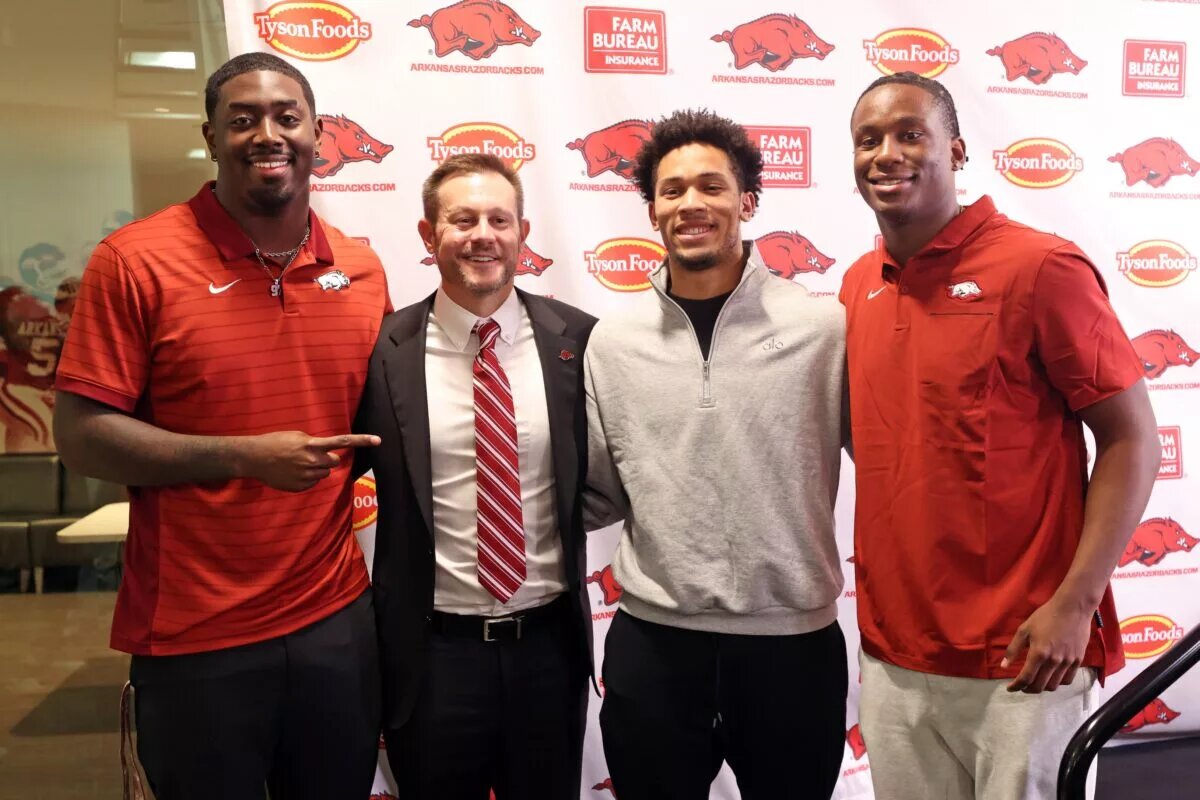

Arkansas did not just hire an offensive coordinator when it brought in Tim Cramsey. It imported an offensive worldview. That vision now shapes which quarterbacks get real attention, which receivers become featured weapons, and which running backs actually matter when the game is on the line. If you want to understand where Razorback recruiting and roster building are headed in 2026, you start with Cramsey’s system, not a depth chart or star rating.
Cramsey’s Fast Break: Why Arkansas’ Offense Isn’t Built for Everyone
The Cramsey Quarterback
For years, Arkansas tried to sell tradition, facilities, and vague talk about a “new era.” Under Ryan Silverfield and Cramsey, the pitch is sharper. Do you fit what this offense demands, and are you willing to live at its pace? If the answer is no, the staff will move on. If the answer is yes, the snaps, touches, and tape can sell themselves.
On paper, Cramsey runs a veer‑and‑shoot style attack that fans call fun until they see what it demands from the guy behind center. This is not a caretaker role. The offense wants a scorer at quarterback, not a traffic cop.
That is why redshirt sophomore KJ Jackson is such a natural focal point for 2026. He has the frame and arm to drive vertical throws and threaten defenses deep. His early action last season showed he could push the ball downfield with confidence, not just survive on checkdowns. He still has to prove he can process fast enough to live in a system that rarely slows down. He does check the basic boxes: size, arm strength, and enough mobility to extend plays instead of dying in a collapsing pocket.
Cramsey’s ideal quarterback can rip seam balls and hit throws outside the numbers. He must make decisions at a tempo without melting down after one mistake. Mobility here is functional, not flashy. It is about punishing soft edges when defenses overplay the pass and buying an extra beat when protections fray. If Jackson can marry his physical tools to that mental load, he becomes more than a placeholder. He becomes the prototype Cramsey sells on the portal and in high school living rooms.
Receivers and Backs Built for Stress
If quarterbacks are scorers in this scheme, the receivers are accelerators. Cramsey’s past offenses leaned on slot weapons and boundary threats who could turn simple concepts into explosive plays. Defenses were often a step behind the tempo.
In Fayetteville, that puts a spotlight on a returner like wideout CJ Brown. His choice to stay gave Arkansas a proven SEC target just as the new staff arrived. Brown brings experience and reliability. In this offense, he projects as an outside receiver who must sell vertical on every snap and block with conviction on the perimeter.
Inside, Arkansas will chase receivers with short‑area burst and courage. Size still matters, but suddenness matters more. Cramsey wants players who can catch crossers in traffic and pop quick screens for six to eight yards. Those plays keep the chains ahead of schedule as the tempo never slows. That profile is already reshaping the transfer and high school boards. There is more emphasis on yards after catch and less on old‑school possession traits.
In the backfield, junior running back Braylen Russell becomes even more valuable. His decision to return for 2026 gave Arkansas a physical SEC runner who has shown he can handle volume and short‑yardage punishment. In Cramsey’s world, that power has to be paired with versatility. Russell has flashed pass‑game ability. If he can expand his route tree beyond basic checkdowns and swings, he becomes the kind of back who forces linebackers into bad decisions on every snap. Cramsey’s best offenses use backs who can align in the backfield, motion wide, run wheels and angle routes, and still pound inside zone when the box count is right.
How the System Filters the Portal
The transfer portal once meant scrambling for any skill player with numbers. Under Cramsey, the system itself is the filter. A quarterback with big stats in a slow, pro‑style offense may not translate if he has never lived in true tempo or read the whole field. A receiver who piled up catches on hitches and slow‑developing concepts may struggle when he has to sprint into wide splits and adjust routes on the fly. A back who never left the backfield becomes a constraint on a playbook built to spread defenses thin.
Arkansas can now ask sharper questions before it even picks up the phone. Have you played in pace? Can you handle seventy or eighty snaps without losing focus? Do you have real film running vertical routes, option routes, or multiple alignments? If the answer is no, the Razorbacks are less likely to gamble, even if the stat line looks pretty. Cramsey’s scheme trims the portal board before the first conversation and pushes the staff to chase fit instead of just names.
Inside a Recruit’s Decision
Picture a composite skill recruit with two real offers. At Arkansas, Cramsey is queuing up cut‑ups of an offense that snaps the ball with thirty seconds still on the play clock. The quarterback throws forty times. Receivers might see ten to twelve targets. A back like Russell can touch the ball on runs, screens, and designed routes in the same game. The pitch is blunt. You want volume, you want film, you want a shot at Sundays, this is where you come. You will not be hidden here, but you will not be protected either.
At another school, the promise is comfort. The offense will be slower. The reads will be simpler. You might get ten touches instead of thirty. Mistakes will be contained. Games will unfold at a pace that feels safer. There is structure and predictability, but less ceiling. You might finish your career as “solid,” yet rarely as the focal point that defenses fear all week.
In his own head, that recruit has to decide what he really wants. Do I want thirty touches and eighty snaps in Cramsey’s tempo, knowing every mistake happens in front of the whole league? Or do I want fewer chances in a safer system that may never fully showcase me? Arkansas is betting big on kids who choose chaos over comfort and reps over reassurance.
Rewiring the Razorbacks
That is why calling Tim Cramsey just a new offensive coordinator misses the point. He is a sorting mechanism. His system decides which quarterbacks like KJ Jackson are worth building around, which receivers in the mold of CJ Brown fit the vision, and which backs like Braylen Russell justify NIL investment and design attention. Arkansas is not trying to convince every offensive player in America. It is targeting the ones who hear that challenge, see that pace, and cannot walk away from it.
If the Memphis blueprint takes root in Fayetteville, the Razorbacks’ future offenses will not just look faster on Saturdays. They will be built around players who chose the hard road on purpose because they believed living in Cramsey’s fast break was their best path to becoming the scorers this system demands.
Main Photo: Nelson Chenault-Imagn Images