
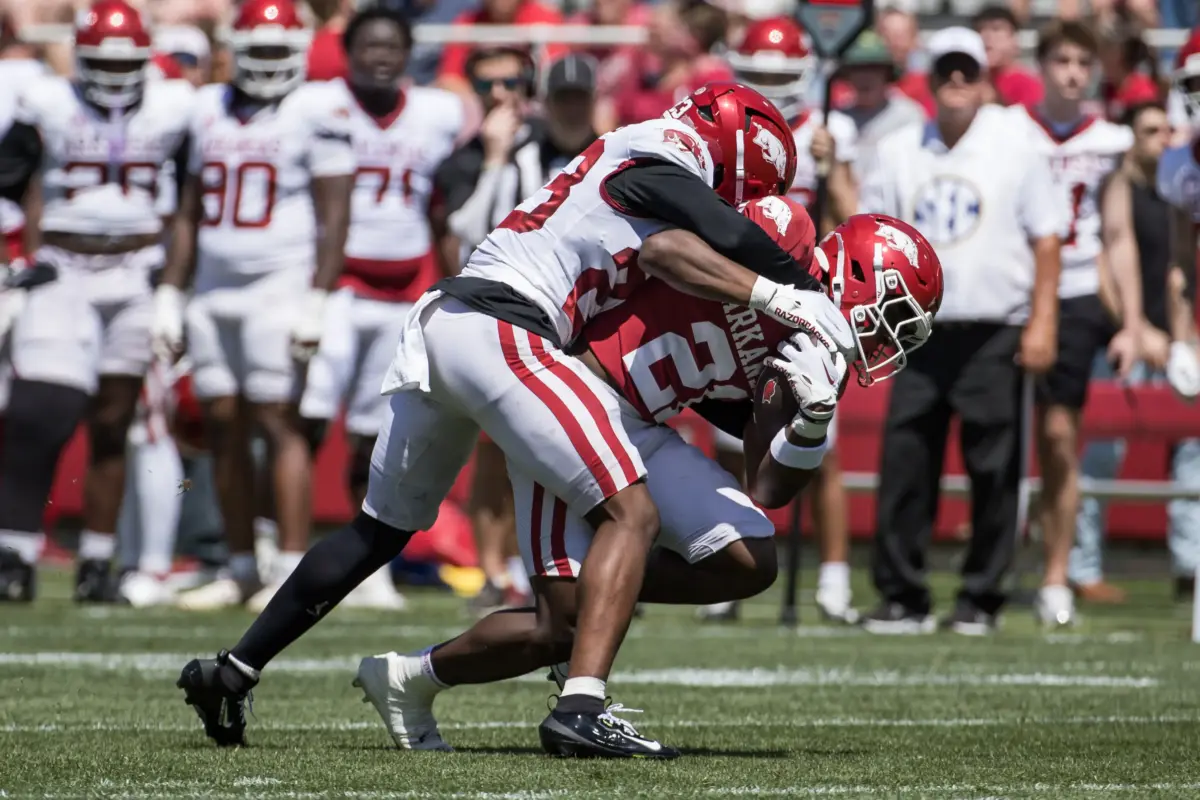

For years, fans have watched the same Arkansas toughness problem and defensive issues repeat: missed tackles, blown coverages, third downs that turn into back-breakers, and fourth quarters where the Razorbacks run out of gas. Hiring Ron Roberts as defensive coordinator is not just about changing play calls. It is about changing that reality. Roberts brings an aggressive, demanding defensive philosophy that will either harden this roster or expose it.
Ron Roberts’ Defense
Arkansas’ Toughness Problem
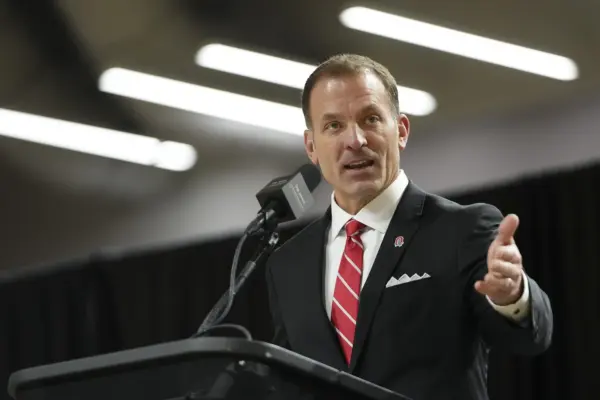
Roberts’ résumé is long and varied—head coach at the FCS level, defensive coordinator at programs like Baylor, Florida, Auburn, and Louisiana. He is known as a teacher and schematic tinkerer, someone who blends multiple fronts with simulated pressure and coverage disguises. His defenses are built to confuse quarterbacks, force negative plays, and make offenses hesitant. They are not passive by design.
What He Inherits Up Front
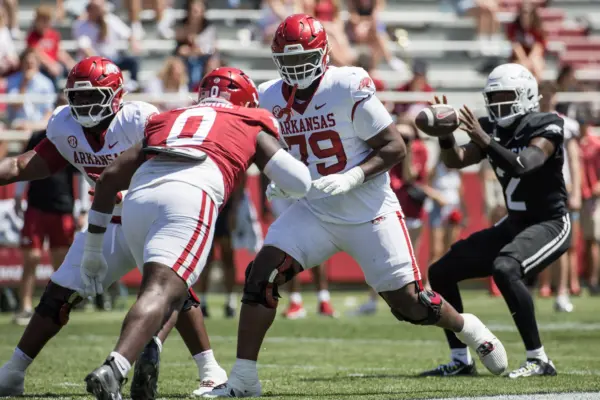
At Arkansas, Roberts inherits a front seven that has struggled to consistently control the run or generate pressure without sending extra bodies. That is exactly where his scheme can help, but only if the players can handle the demands placed on them. The defensive line group—anchored by names like David Oke inside and Quincy Rhodes Jr. and Charlie Collins on the edge—has to become more than just rotational. It has to be the engine.
Roberts will ask his linemen to jump between alignments, attack gaps, and create movement that sets up linebackers to make plays. That sounds great on paper, but it requires discipline. Linemen cannot freelance. If a call asks them to cross the face of a guard or occupy space for a delayed blitz, they have to do it precisely. Otherwise, gaps open and the aggressive intent backfires.
Linebackers like Bradley Shaw and Phoenix Jackson will be at the center of everything. They have to read quickly, fill decisively, and tackle cleanly. In Roberts’ system, the second level cannot be hesitant. The whole design is built on forcing the issue, not waiting to react yards downfield. If Shaw and Jackson buy in and execute, Arkansas’ defense can look significantly faster and more physical, even if the overall talent level remains a step behind the league’s elite.
The Pressure on the Back End
Aggressive fronts only work if the secondary can hold up. That places a heavy load on defensive backs like Jahiem “Joker” Johnson, La’khi Roland, Shelton Lewis, Christian Harrison, and Khmori House. They will be asked to handle man coverage, pattern-match concepts, and quick adjustments when Roberts spins the coverage wheel post-snap.
The good news is that several of these players arrive with experience and proven ability. The challenge is knitting them into a unit that communicates and trusts what it sees. If even one defensive back is out of position in a pressure look, the coverage can collapse and turn into a big play. That is where Arkansas’ toughness problem becomes mental as much as physical—can this group stay locked in across four quarters of high-stress assignments?
Roberts is not the type of coach to dial everything back just because the roster is still developing. His track record suggests he will coach to his identity: attack, disrupt, and force offenses to be perfect. For Arkansas, that may lead to some volatile moments early. There will be busts. There will be plays where a gamble does not pay off. Over time, though, the goal is to raise the baseline. Fewer easy yards. Fewer free completions. More hits on the quarterback and more drives that end before they ever get rolling.
Success for Roberts in year one will not simply be about total defense rankings. It will be about visible changes: better tackling, more organized pre-snap looks, improved third-down stops, and a sense that Arkansas is no longer the “get right” opponent for struggling offenses. If the Razorbacks start to look harder to play against, even in losses, that will be a sign that Roberts’ philosophy is taking hold.
Arkansas hired him to fix more than a scheme. Ryan Silverfield hired him to help fix a mindset. Whether he can do that with this roster, in this league, is one of the biggest questions hanging over the 2026 season.