
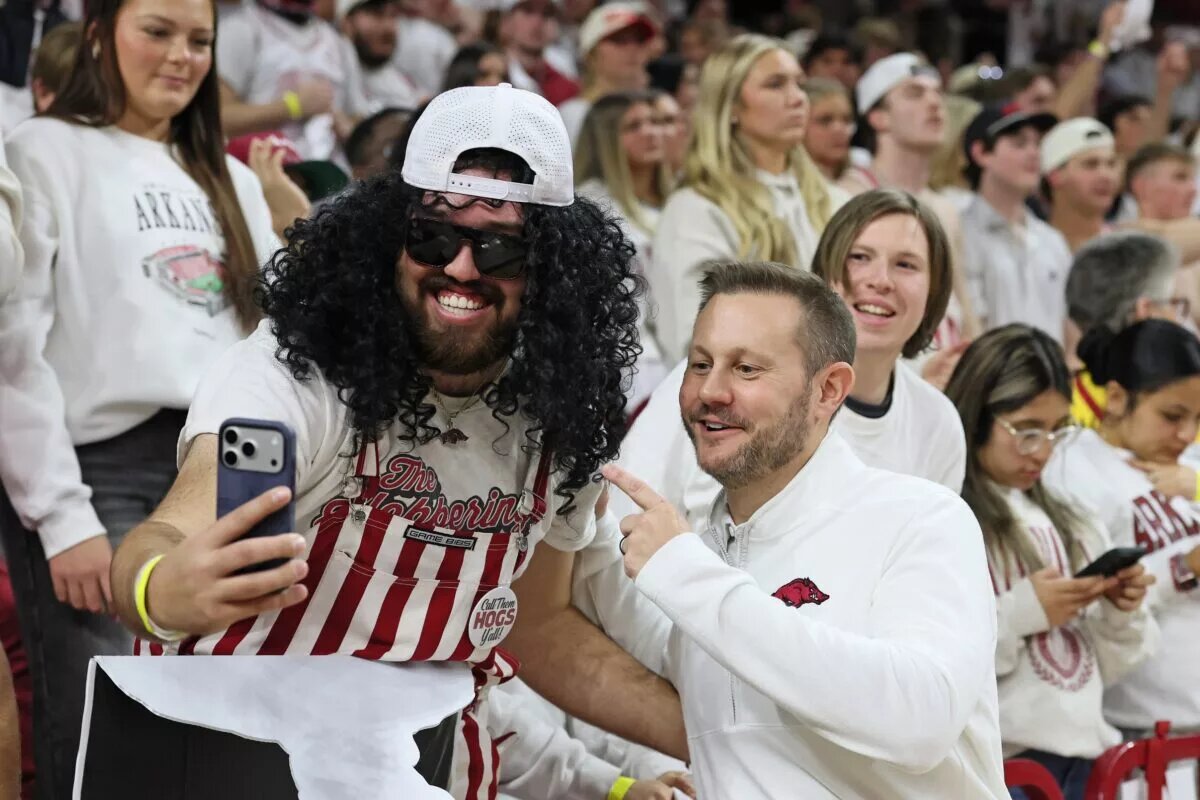

Arkansas didn’t just change coaches this offseason. It changed how it plans to survive.
After years of steady frustration, the Razorbacks pressed reset again. This time, the fight isn’t for hype or headlines. It’s for identity. Ryan Silverfield inherits a roster still bruised from an SEC season that exposed every soft spot. His first year in Fayetteville offers no easing in. It’s a climb straight into one of the nation’s hardest schedules, with no cushion and no time to stumble.
If Arkansas looks different this fall, it won’t be because of slogans or staging. It’ll be because the program finally addressed the cracks instead of painting over them.
Can Ryan Silverfield’s Transfer Overhaul Save Arkansas in Year One?
A Program at a Crossroads
There are rebuilding years, and there are reckoning years. Arkansas is squarely in the second camp. Recent seasons have made one truth unavoidable: the Razorbacks drifted too far from what SEC football demands.
Silverfield’s job goes beyond playbooks or depth charts. It’s about restoring that sharp edge — the grit and identity that once defined the program. He takes over a fan base that still believes deeply but has grown tired of waiting. The call now is for direction, not comfort.
Why Silverfield Fits
Silverfield isn’t a headline hire. He’s a grinder, and that may be exactly what Arkansas needs. His track record at Memphis proved he could win without blue-chip recruiting classes. He built physical, reliable teams that knew who they were every Saturday. That steadiness now becomes essential in Fayetteville.
Arkansas can’t out‑recruit Alabama or Georgia on raw talent. Its path is through evaluation, development, and cohesion. Silverfield’s blueprint is to build quietly, stay the course, and play with purpose, which fits a program desperate for a firm footing.
Finding Strength in the Trenches
For years, Razorback football was built from the inside out. Then that identity vanished. The line of scrimmage stopped being a weapon and started being a liability. Protection broke down. Tackles were missed. Games turned into track meets. The roster wasn’t built to win.
Silverfield knows the fix starts up front. His first test isn’t the scoreboard. It’s how Arkansas looks in the trenches come Thanksgiving. If the Razorbacks finish blocks, hold ground, and make SEC opponents earn every yard, the turnaround will be real, even before the record fully shows it.
The Portal Solution
Silverfield attacked the transfer portal like a man on a deadline. There was no time to wait for high school development. Arkansas needed experience and size immediately. The focus wasn’t star power. It was plug‑and‑play readiness.
Veteran linemen with double‑digit starts anchor the rebuild, giving the offense something it lacked — stability. At the skill spots, a proven quarterback and seasoned receivers bring maturity and options. The roster now has players who’ve already lived SEC‑level Saturdays.
A Brutal Schedule as an Accelerator
The 2026 schedule offers no warm‑up act. It’s Georgia, Texas, and SEC heavyweights stacked against a team learning on the fly. That’s why the transfer class matters so much. Surviving that slate with the old roster would’ve been reckless.
Now, the rebuild and the schedule go hand in hand. Added depth and power on the lines, more speed outside, and a balanced approach to tempo. All are meant to help Arkansas stay in games longer. The portal won’t promise upsets, but it gives this program a chance to stand toe‑to‑toe rather than hang on.
Defense, Depth, and Closing Power
Defensive changes mirror the same urgency. Silverfield loaded the back end with longer corners and experienced safeties for versatility against both spread and power looks. The front seven adds transferred linebackers and edge players with live‑game experience — a direct response to last year’s late‑game collapses.
Games often turn on a single third‑down stop in the fourth quarter. This roster was rebuilt with that scenario in mind — to have enough gas left when it matters most, finally.
Culture and the Long Game
Beyond the roster overhaul, Silverfield’s biggest challenge might be internal. The Razorbacks need to clean up the details — pre‑snap mistakes, sideline confusion, and fading focus. The culture has to tighten before the win column can follow.
Fans want to believe again. The portal class is a quick bridge, not a shortcut. The real rebuild will take time and patience, centered on toughness and habits, not quick fixes.
If by November the Razorbacks play with purpose — competitive, cohesive, physically relentless — then this season will have done its job. It will mean Arkansas finally stopped patching leaks and started charting a path forward.
Because for once, survival isn’t the story anymore. Revival is.
Main Image: Nelson Chenault-Imagn Images