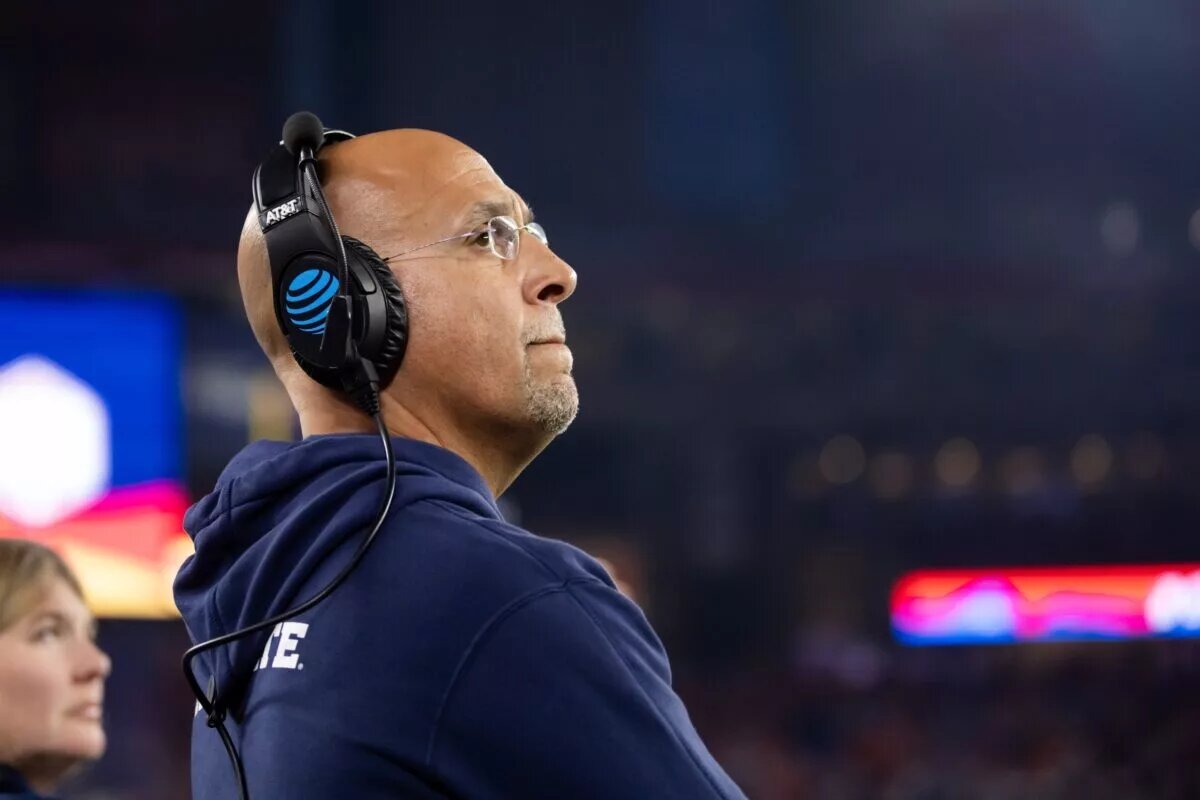

Penn State football’s growth has been uneven through two weeks. James Franklin’s latest comments showed optimism in some areas, but also exposed lingering concerns with the deep ball, offensive rhythm, and overall efficiency. Special teams drew praise, while the defense showed signs of progress under Jim Knowles. On the other hand, the offense remains inconsistent, and one comment about deep-ball philosophy stood out as a flashpoint. As the Nittany Lions prepare for Villanova, the focus is less about the result and more about how this team plays.
The Deep Ball Debate
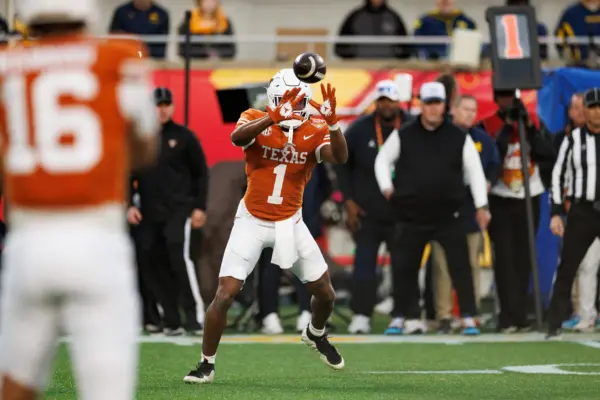
Franklin reaffirmed his long-held approach to the vertical passing game. If the quarterback cannot hit a receiver perfectly in stride, it is better to leave the throw short. The reasoning is that an underthrown ball allows the receiver to adjust and creates opportunities for defensive pass interference.
The method can occasionally flip field position, but it is a risky philosophy for Drew Allar. Still settling into rhythm as a starter, Allar needs confidence built through accuracy, not hesitation. Coaching him to purposely underthrow erodes that development. Franklin pointed to Devonte Ross’s touchdown against FIU as evidence of the approach working, but the bigger picture is different. To contend at the highest level, Penn State must connect on deep passes, not rely on flags to bail them out.
For Allar, the goal should be repetition and precision. Every deep rep that lands in stride builds confidence in both quarterback and receiver. Underthrows may win isolated plays, but they do little to establish the kind of explosive passing identity that Big Ten contenders will need down the stretch.
Drops Stall Explosiveness
Franklin acknowledged Penn State “had too many drops” during the FIU game. These miscues, coupled with inaccurate throws, contributed to a poor third-down showing and stalled any offensive rhythm. Penn State converted just 3 of 12 third-down attempts, including multiple incomplete passes on manageable distances. When receivers aren’t catching, drives and momentum disappear. It’s a detail that the Jugs machine alone can’t fix.
O-Line Must Match Game Speed
Franklin said he saw more physical play from the offensive line in Week 2, but the tape still shows a group that needs to move faster and finish with more consistency. Some of this may trace back to training camp. In today’s college football, live periods are rare. Rep limits and thud drills are designed to keep starters healthy, but the tradeoff is that linemen may not hit the ground running once live action begins.
That could explain why Penn State’s line looked sluggish in the opener and only slightly improved last week. They were not unphysical in camp, but were they physical enough? Franklin expressed confidence that the group will settle into form as the year goes on, but until it does, the run game will remain inconsistent, and Allar will face more pressure than necessary.
Defense Shows Strides, Still Untested
The defense has not given up a touchdown through two games, and in Week 2, it looked more efficient in executing Knowles’ adjustments. The unit played faster, and younger players like Chaz Coleman continued to develop. Franklin credited veterans Zuriah Fisher and Zion Tracy for stabilizing the group, and the results have been encouraging.
Still, there are caveats. The run fits have not been perfect, and those mistakes could become costly against stronger opponents. More importantly, the secondary has not been tested by a true passing attack yet. Villanova may not provide that challenge either, which means Penn State’s corners and safeties will likely enter Big Ten play without a true stress test. The early dominance has been real, but it comes with an asterisk.
Villanova Brings Continuity
Franklin praised Villanova’s program stability, noting head coach Mark Ferrante’s decades-long presence and the staff’s experience. Offensively, the Wildcats run an RPO-heavy system with graduate transfer quarterback Pat McQuaide and sophomore running back David Avit. Senior lineman Stephane Voltaire adds size and leadership to the front.
Defensively, Villanova uses a three-man front with disguised coverages and blitzes on nearly 40 percent of snaps. Linebacker Shane Hartzell and defensive tackle Obinna Nwobodo stand out on film. Franklin emphasized the need to prepare with respect, even if Penn State will enter the game as a heavy favorite.
Balancing Standards and Perspective
Franklin closed by talking about balance. Appreciating wins while still pushing for improvement. He reminded players that many top teams have already been tested, but Penn State’s own flaws must be addressed. The Lions are 2–0, but the tape does not yet look like that of a playoff contender.
For Penn State, Villanova is less about the scoreboard and more about showing growth. The offense needs rhythm, the O-line must play at true game speed, and the deep passing game requires real execution rather than manufactured penalties. If the Lions can check those boxes, they will take more than a win out of Saturday. They will take steps toward being the team they need to be when the competition stiffens.
Main Image: Mark J. Rebilas-Imagn Images