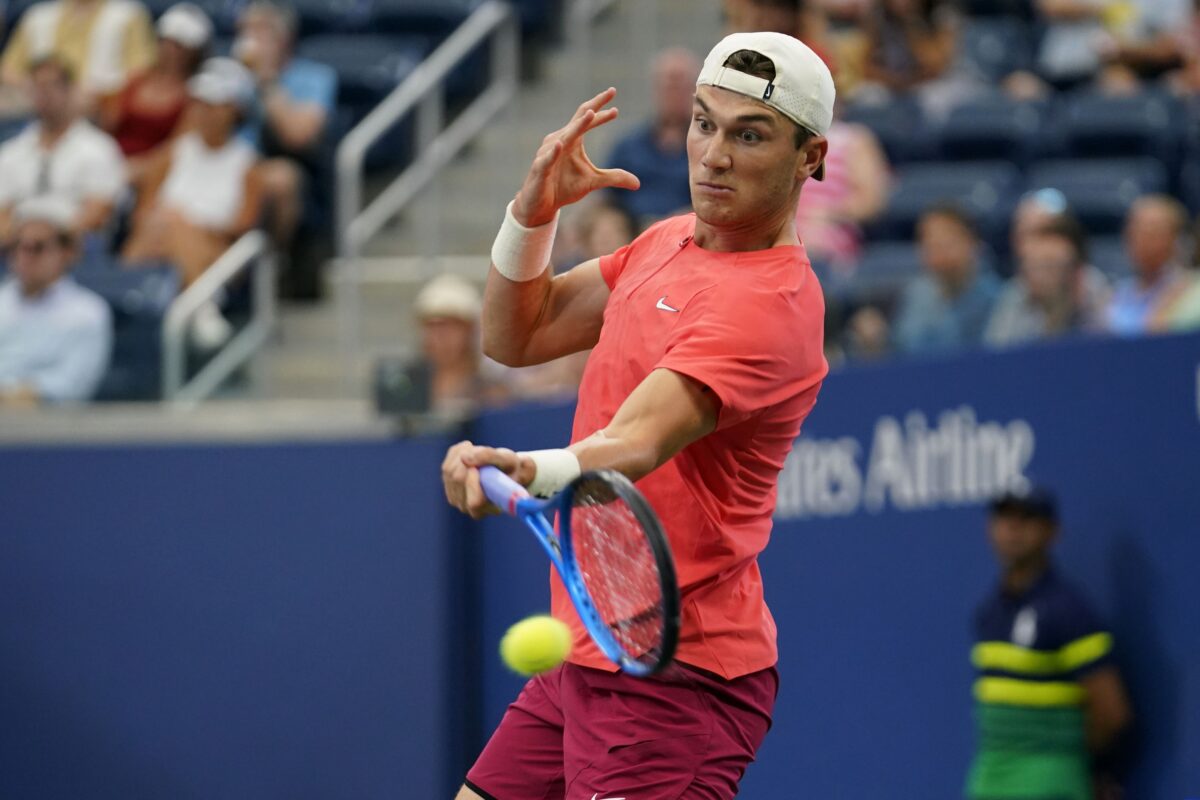
The ageless former Wimbledon finalist Marin Cilic stunned top-five seed Jack Draper in the second round of Wimbledon on Thursday. Draper, the British No. 1, was expected to reach the second week of the tournament, but instead it was Cilic who surged into the third round with a comprehensive performance, winning 6-4, 6-3, 1-6, 6-4. With a stronger service game and clutch returning—especially when jumping on Draper’s second serve—Cilic was clinical, only faltering in the third set before returning to control. Full of belief and playing in front of his family, Cilic hit 53 winners and took the initiative against the 23-year-old Draper, who has now suffered three exits in the second round of Wimbledon. His best result in a Slam remains the 2024 US Open semifinal.
Cilic’s Comeback Overshadows Draper’s Promise
Cilic managed to limit Draper’s ability to serve and volley, frustrating the Brit with flat groundstrokes and aggressive positioning. His win serves as inspiration for fans of a past era, a reminder that experience and precision still have a place in the modern game. But for Draper, the loss was another missed opportunity at his home Slam and once again raised questions about his ability to play freely under pressure. Despite being ranked in the top five, Draper is yet to reach the second week at Wimbledon.
The Weight of the Home Slam
Only players representing the United States, Australia, France, or the United Kingdom know what it means to play under the microscope of a home Grand Slam. For many top players, that burden has proved insurmountable. Since 2004, Andy Murray remains the only man to win a Grand Slam title in his home country. His Wimbledon victories in 2013 and 2016, along with his gold medal at the London Olympics, created unforgettable scenes. But those achievements came after years of heartbreak, including the 2012 Wimbledon final loss to Roger Federer—where he won the first set but nothing more.
Australia hasn’t produced a male champion at the Australian Open since Mark Edmondson in 1976, despite two world No. 1s in Lleyton Hewitt and Pat Rafter, and more recent stars like Nick Kyrgios and Alex de Minaur. Pat Cash (1987) and Hewitt (2005) were competitive finalists, but Stefan Edberg and Marat Safin denied them the crown.
France’s last men’s singles champion at Roland Garros was Yannick Noah in 1983. Since then, a parade of talented Frenchmen, including Henri Leconte (1988 finalist), Sebastien Grosjean, Gael Monfils, Jo-Wilfried Tsonga, and Richard Gasquet, have failed to lift the trophy at Roland Garros, despite reaching quarterfinals and beyond.
In the United States, Andy Roddick’s 2003 US Open title at 21 years old still sets the standard. Since then, contenders like James Blake, Mardy Fish, John Isner, Sam Querrey, Taylor Fritz, Tommy Paul, Frances Tiafoe, and Jack Sock have all competed at the highest level but failed to capture Slam glory at home.
Britain’s Ongoing Wimbledon Struggle
Of all the nations with a home Slam, perhaps none has a more emotionally charged relationship than Great Britain does with Wimbledon. Before Murray, the likes of Tim Henman and Greg Rusedski repeatedly came up short on Centre Court. In the current generation, Cameron Norrie, Dan Evans, Kyle Edmund, and now Draper shoulder the weight of national hope. Draper, once a Wimbledon boys’ finalist in 2018, looked poised to make a lasting impact on the senior stage. In 2021, he debuted with a respectable four-set loss to Novak Djokovic. In 2022, he won a grueling five-setter in the opening round but lost to de Minaur in the second. A shoulder injury sidelined him in 2023, and in 2024, he suffered a straightforward second-round loss to countryman Norrie. Norrie remains alive in the current tournament.
This year, he entered the tournament with hope. A dominant win over Sebastian Baez in round one—the most lopsided Wimbledon victory of his career—offered promise. But against Cilic, despite a blip of hope coming back from two sets down to take the third set, Draper lacked answers when it mattered. After the match, Draper told Sky Sports, “(The result) highlighted to me this year that I really struggle on the grass. I think the hole in my forehand showed up, for sure. I wasn’t able to deal with his pace of ball into my forehand. I was over-spinning a lot.”
Is It Technical or Mental?
Draper has all the weapons to succeed on grass—big serve, solid forehand, and respectable net play. But his inexperience in managing pressure on the big stage showed. He struggled to adjust tactically and allowed Cilic, a player who hadn’t competed at Wimbledon in four years, to dictate the match’s rhythm. Draper’s frustration reflects both technical shortcomings and the weight of emotional expectation. Playing at home means more media duties, packed press rooms, high-profile match scheduling, and sold-out stadiums—even for practice sessions. It creates a cauldron of pressure that not every player can endure, one that hinders most players ability to play with confidence at home. Draper stated in the press conference that Cilic “bullied” him in the match.
Looking Ahead for Draper and the ATP’s Home Hopefuls
Later this summer, American stars like Taylor Fritz and Tommy Paul will face similar pressure at the US Open. Draper, currently ranked No. 4 in the world, remains the highest-ranked man with a home Slam, and expectations will only grow heavier in the years ahead. British fans continue to believe he can be the one to carry Murray’s legacy forward. But Thursday’s loss was a stark reminder of how difficult it is to win at home, no matter how talented you are. Murray did it, while competing against all-time greats like Novak Djokovic, Roger Federer, and Rafael Nadal, all while overcoming chronic injuries and carrying the expectations of an entire nation.
Draper would be wise to turn to Murray not just for advice, but for mentorship, as he looks to shape the next stage of his career and finally break through at Wimbledon.
Main Photo Credit: Danielle Parhizkaran-USA TODAY Sports