

Stefanos Tsitsipas won Gstaad on Sunday, beating Raphael Collignon 6-4 6-7(3) 6-3 in two hours and 17 minutes to claim his 13th career title and his first since Dubai in early 2025. It ended a drought stretching back 16 months, a stretch that included the second split from his father, a brief and failed experiment with Goran Ivanisevic, and a ranking slide that had him starting the week at No. 85 in the world. He needed three sets in three consecutive matches to get to the final, outlasting Jerome Kym, Arthur Rinderknech, and Aleksandr Shevchenko along the way before closing out Collignon in the final. The trophy might be real. What it tells us about where Tsitsipas actually stands is a much narrower conversation.
What Actually Worked This Week
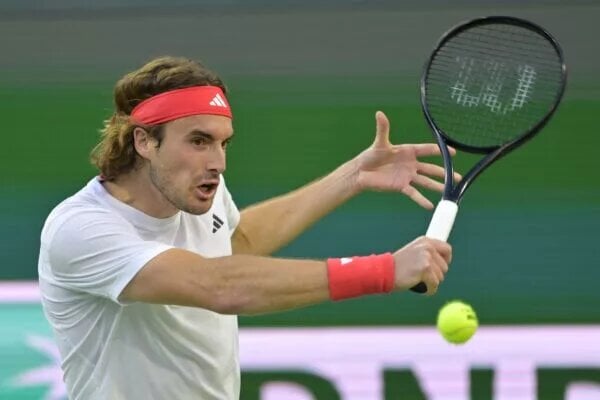
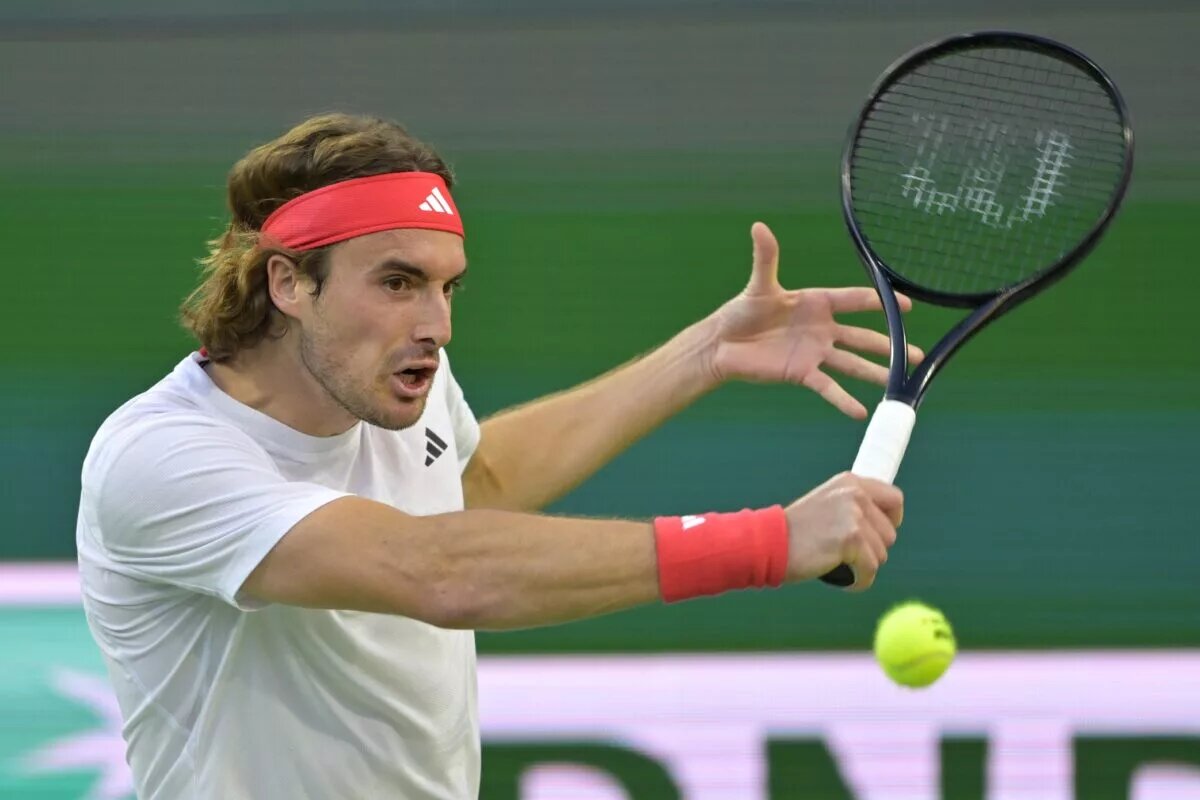
Gstaad sits at altitude, and the thinner air there produces a version of clay that plays noticeably faster than the tour’s usual dirt, with serves skidding through and forehands carrying extra pace off the bounce. That detail matters enormously in explaining what Tsitsipas actually did well this week. His serve was sharp throughout, and by the final he was landing it consistently. The forehand was the standout weapon all tournament. Commentary throughout the week kept circling back to the same observation: his forehand was firing again, dictating rallies, ending points early, doing the kind of damage it used to do routinely when he was a top player.
That was not a surprise. A serve-forehand combination benefits disproportionately from quicker conditions, because it shortens the amount of time an opponent has to get into a rally and neutralise the advantage. Tsitsipas, at his best, has always been a front-foot player who wants to dictate from the first or second shot rather than construct patiently from deep. Gstaad’s altitude gave him exactly the conditions that reward that instinct, and for one week, his two best weapons were allowed to do what they do without much interference. He beat four players in a row who all pushed him to three sets, which speaks to genuine competitive resilience regardless of the conditions helping him.
Stefanos Tsitsipas is still not elite
What Gstaad Also Exposed
The uncomfortable part of the week is what happened whenever the ball went to his backhand. That side of Tsitsipas’s game has been a well-documented vulnerability for years, exploited relentlessly by the players at the very top of the sport who can load heavy topspin to that wing and force him into defensive, one-dimensional slices under pressure. Nothing about Gstaad suggested that weakness has been repaired. If anything, a week of close three-set matches against opponents ranked outside the elite tier of the sport made it more visible, not less: even players like Rinderknech and Shevchenko, neither of whom possesses a genuinely elite topspin forehand, were able to generate break chances and disrupt his rhythm by targeting that side of the court repeatedly. Against Collignon in the final, it took a second-set collapse in the tiebreak to remind everyone that the level was not consistently there even in a tournament he ultimately won.
This is the part of the Gstaad week that gets lost in the relief of ending a sixteen-month drought. A title against a field of this composition, an ATP 250 draw with zero top players and a first-time finalist across the net in the championship match, is a confidence result. It is not evidence of restored elite form. The gap between beating Collignon, Rinderknech, and Shevchenko on a fast clay court at altitude and competing with Jannik Sinner, Carlos Alcaraz, or Novak Djokovic on a hard court or a slower clay surface remains enormous, and nothing about how he won this week closes that gap in any structural sense.
A Confidence Booster, Nothing More
Tsitsipas spoke about the emotional weight of the win in his immediate on-court interview, and there is no reason to begrudge him that. Two years of chronic back trouble, a public and repeated family rupture, and a ranking crash from No. 3 to No. 85 will make any title feel enormous, regardless of the field it came against.
But the honest read of Gstaad has to separate the emotional significance from the competitive signal. He won a title. He did not solve his backhand. The forehand and serve carried him through a week where the conditions amplified their effectiveness and the opposition, while credible, did not include a single opponent equipped to consistently attack his weakest wing at the level required to punish it.
What Stefanos Tsitsipas has earned in Gstaad is momentum, ranking points, and a psychological foothold heading into the North American hard-court swing. What he has not earned, on the evidence of this single week, is any claim to being back among the sport’s elite. Gstaad was a good week. That’s all it was.
Main Photo Credit: Jayne Kamin-Oncea-Imagn Images