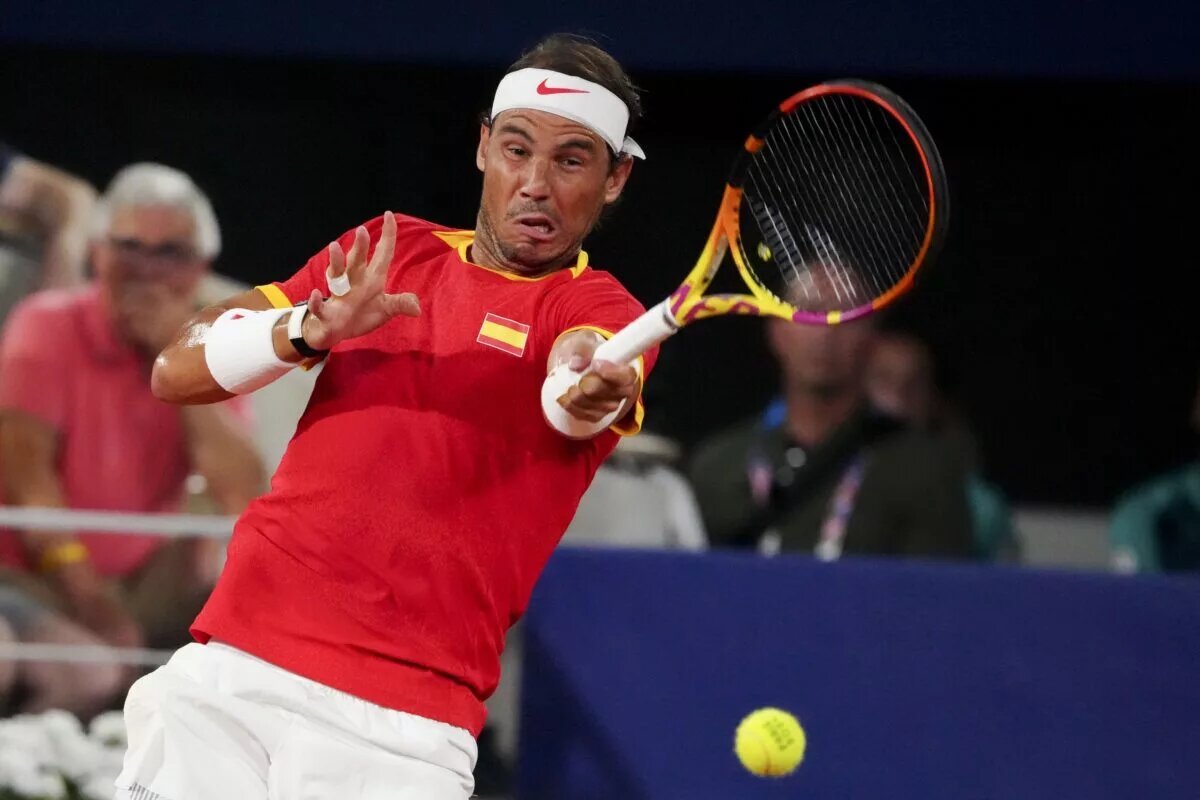

22-time Grand Slam champion Rafael Nadal dominated men’s tennis alongside his fellow Big Three rivals for over two decades, a historic run that saw the trio collect a combined 66 major titles and more than 100 Masters 1000 trophies. Together, they contested 150 tour-level matches against one another, many of which are widely regarded not only as the greatest encounters of their generation, but also among the greatest matches in the sport’s history.
Nadal himself faced Roger Federer 40 times and Novak Djokovic, a men’s record, 60 times in singles competition. Each Big Three rivalry produced its own tactical patterns and stylistic battles, and now the Spaniard has opened up about how he prepared for what were the most important matches of his career.
Nadal vs Federer: A Defined Game Plan
Speaking about his rivalry with Federer, one he won 24 times out of their 40 meetings, Nadal admitted he had a clearly defined path to success, particularly in the early stages of their battles. Nadal explained:
“With Federer, the plan was clear, especially at the beginning: pressure his backhand with high balls repeatedly, until he stood still, waiting for the next shot, and then I could switch to his forehand. It was a mental effort for me, because I often saw the shot going the other way, but I knew that repeating it on the backhand would tire him mentally. I didn’t always feel like using that tactic, but it was the most feasible.”
History suggests the strategy paid off. Nadal not only finished with a winning head-to-head record against Federer, but also prevailed in what is widely considered the greatest match of all time — their epic five-set Wimbledon final in 2008.
Nadal vs Djokovic: No Clear Blueprint
While Nadal entered matches against Federer with a defined tactical blueprint, his rivalry with Djokovic offered no such certainty. Those encounters often hinged on form, confidence, and physical endurance, frequently turning into wars of attrition rarely seen on a tennis court.
“With Novak, it was more unpredictable. On clay, it was a bit more unpredictable than on hard courts. On hard courts, in my later years, when my body couldn’t handle certain efforts anymore, it was much harder. To have a chance, I needed my body to respond, and it wasn’t. I had to shorten points, and beating Novak in two or three shots was very difficult. I sometimes tried to be more aggressive with my serve, but it didn’t work. On clay, I did find solutions, and on grass, I also had chances, although I ended up losing those semifinals (at Wimbledon in 2018, he lost to the Serb in five sets). I felt my chances were better on clay or grass than on hard courts, especially in my later years.”
In total, Nadal won 29 of his 60 matches against Djokovic, making it one of the most closely fought head-to-head rivalries in sports history. Djokovic ultimately proved to be Nadal’s toughest challenge during the second half of his career.
With no future Big Three matches to ever be played, Nadal’s reflections offer a fascinating insight into how he approached each rivalry — three legendary careers that were not only defined by individual greatness, but by how they pushed one another to create what many consider the greatest era in the history of tennis.
Main Photo Credit: Kirby Lee-USA TODAY Sports